|
by Robin George Andrews from QuantaMagazine Website
Celcius Pictor for Quanta Magazine
but getting there will require a greater understanding
of
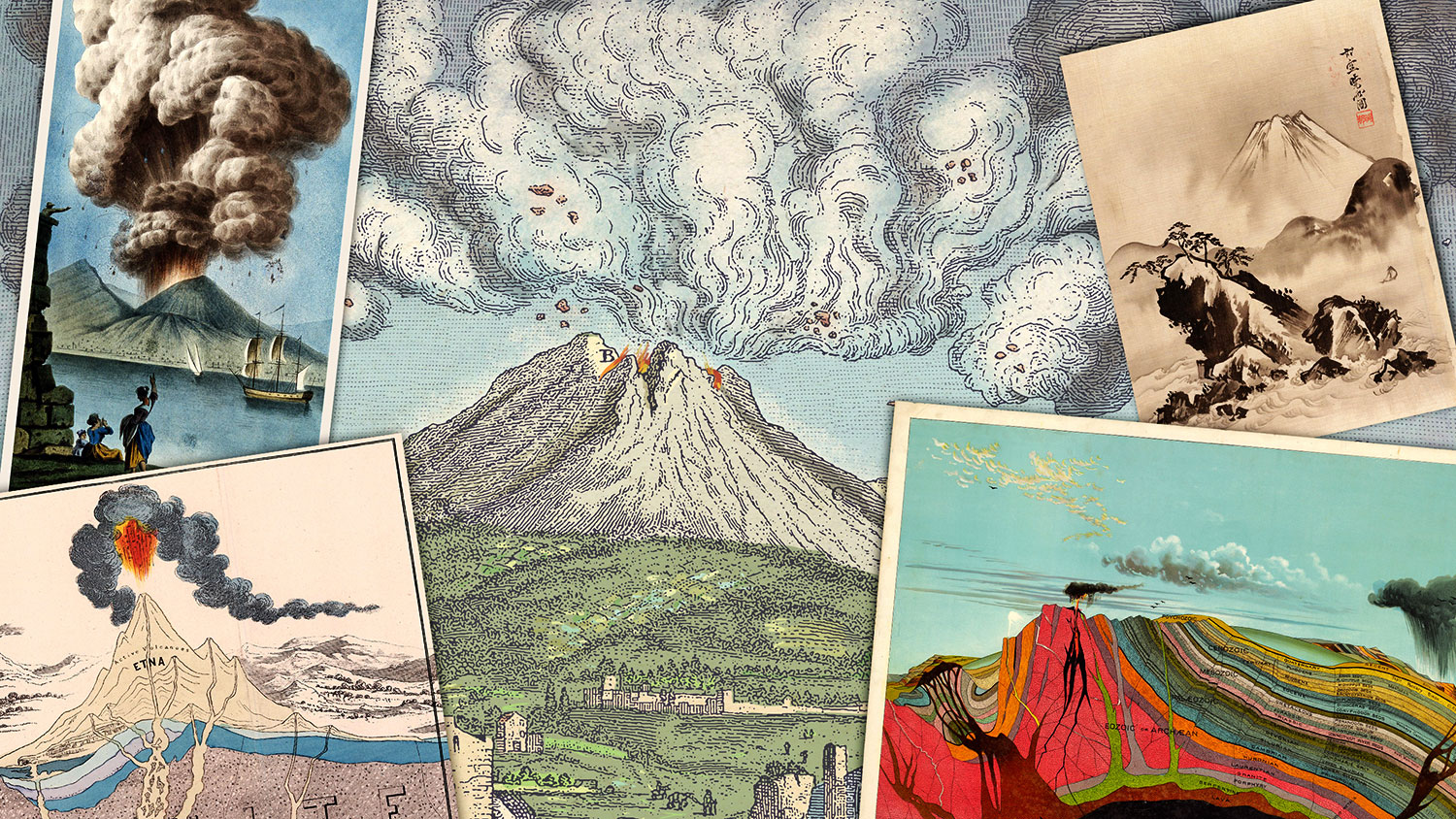
subsurface physics. of volcanoes erupting or dormant, in a variety of styles, including in cross-section...
In the summer of 1991, Pinatubo, a volcano in the Philippines, self-destructed.
The eruption started on June 12, and three days later it culminated in a tremendous explosion. By the time pyroclastic flows - incandescent avalanches of molten rock and gas - tumbled down its sterilized slopes, Pinatubo's peak had been obliterated and replaced by a 2.5-kilometer-wide chasm.
The eruption killed more than 800 people, mainly because roofs, weighed down by rain-saturated ash, collapsed.
But it could have been so much worse: About 250,000 people, across multiple cities and a sprawling U.S. Air Force base, lived in the volcano's shadow.
When Pinatubo started convulsing and belching steam in April of that year, scientists from the United States and the Philippines deployed an array of instruments that tracked the volcano's inner tumult.
In philosophy, "qualia" refers to the subjective qualities of our experience: what it's like for Alice to see blue or for Bob to feel delighted. Qualia are "the ways things seem to us," as the late philosopher Daniel Dennett put it. In these essays, our columnists follow their curiosity, and explore important but not necessarily answerable scientific questions.
By early June, ash and lava were escaping
Pinatubo's flanks, and an evacuation was ordered, just a few days
before the cataclysmic hammer fell. It was, in other words, a very
close call.
It was nothing
like a weather forecast; they couldn't say that on June 12, an
explosive eruption was going to occur with anything resembling
certainty, nor could they predict the evolution of that eruption.
The instrumentation is more advanced, machine learning has made interpreting data far more efficient, and scientists have a much better understanding of the magmatic plumbing that drives volcanism.
That's prompted me - as a professionally trained volcanologist who now writes a lot about the field - to wonder:
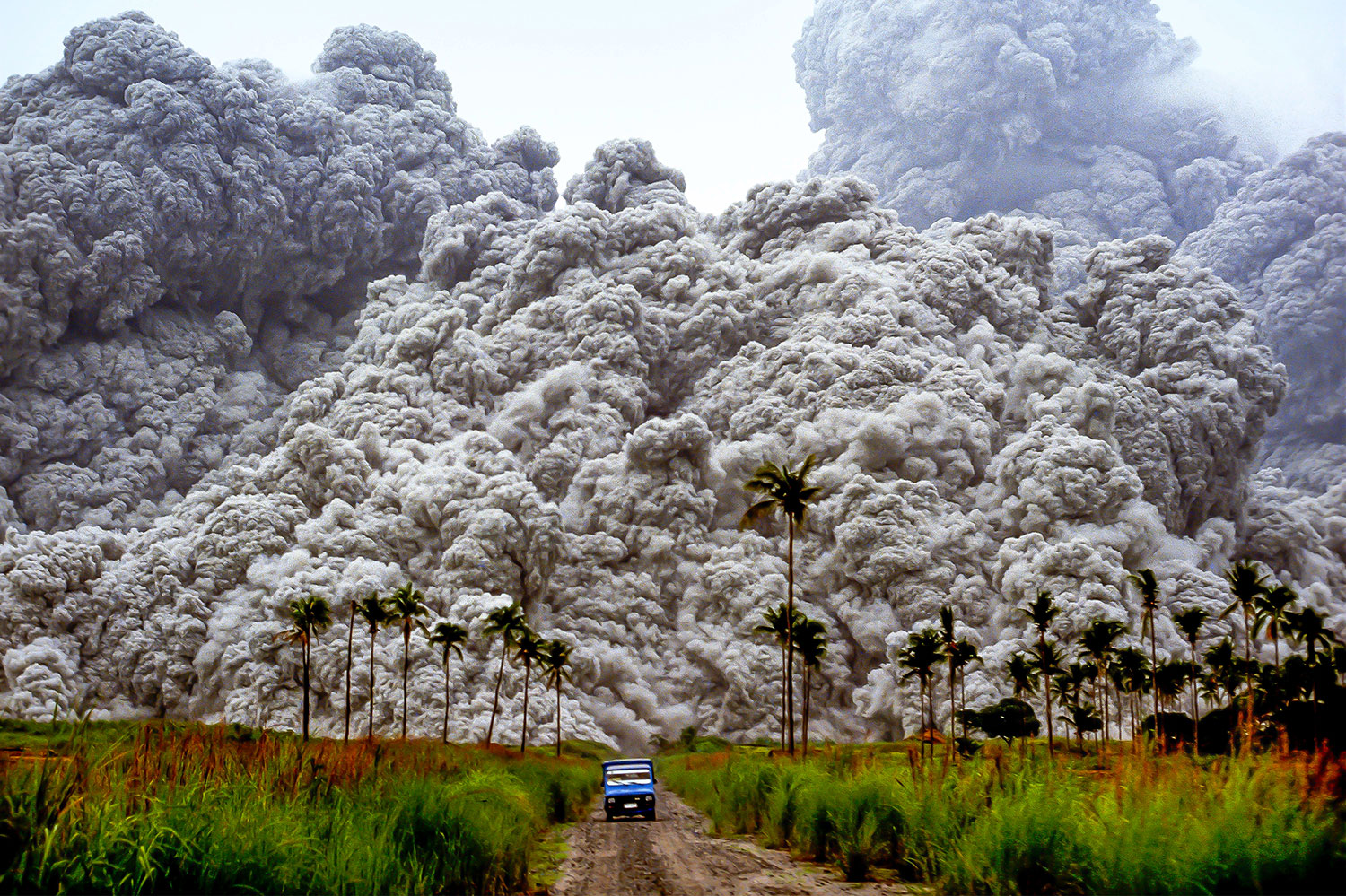
In this award-winning image, photographer Alberto Garcia captured a truck fleeing the cataclysmic eruption of
Mount
Pinatubo in the Philippines.
Today, we know that a storm of a certain magnitude will fall on a specific city in a few days' time.
I asked around, and I found both skepticism and a surprising degree of optimism.
Though sky watchers have anticipated the weather for millennia, contemporary scientific prediction of weather is a recent invention:
Today, meteorologists can take a pandemoniac system - Earth's atmosphere, oceans, and landforms - and make accurate forecasts up to two weeks into the future.
Weather affects more people than volcanism - namely, everyone, all the time - but some 800 million people live within 100 kilometers of an active volcano, and some (very rare) eruptions can also affect the entire planet.
Both weather and volcanism are complex systems that we want to understand, but the problems they present for forecasting are different.
The atmosphere is perpetually visible and measurable to meteorologists.
Magma, on the other hand, resides kilometers below Earth's crust, and at most, active volcanoes erupt once every few decades.
Each volcano is also unique. The architecture of the subterranean pathways that funnel magma to the surface, the chemistry of the magma, the cadence of eruptions, and the assortment of eruption styles differ from place to place. And eruptions don't have just one trigger.
The temperature and pressure of the magma reservoir, the weakness of the enclosing rock, the gas and crystal content, the depth of the magma, the regional motion of tectonic plates - these factors all contribute to whether a paroxysm happens or fizzles out.
But there is order buried in the chaos.
Can we find it?
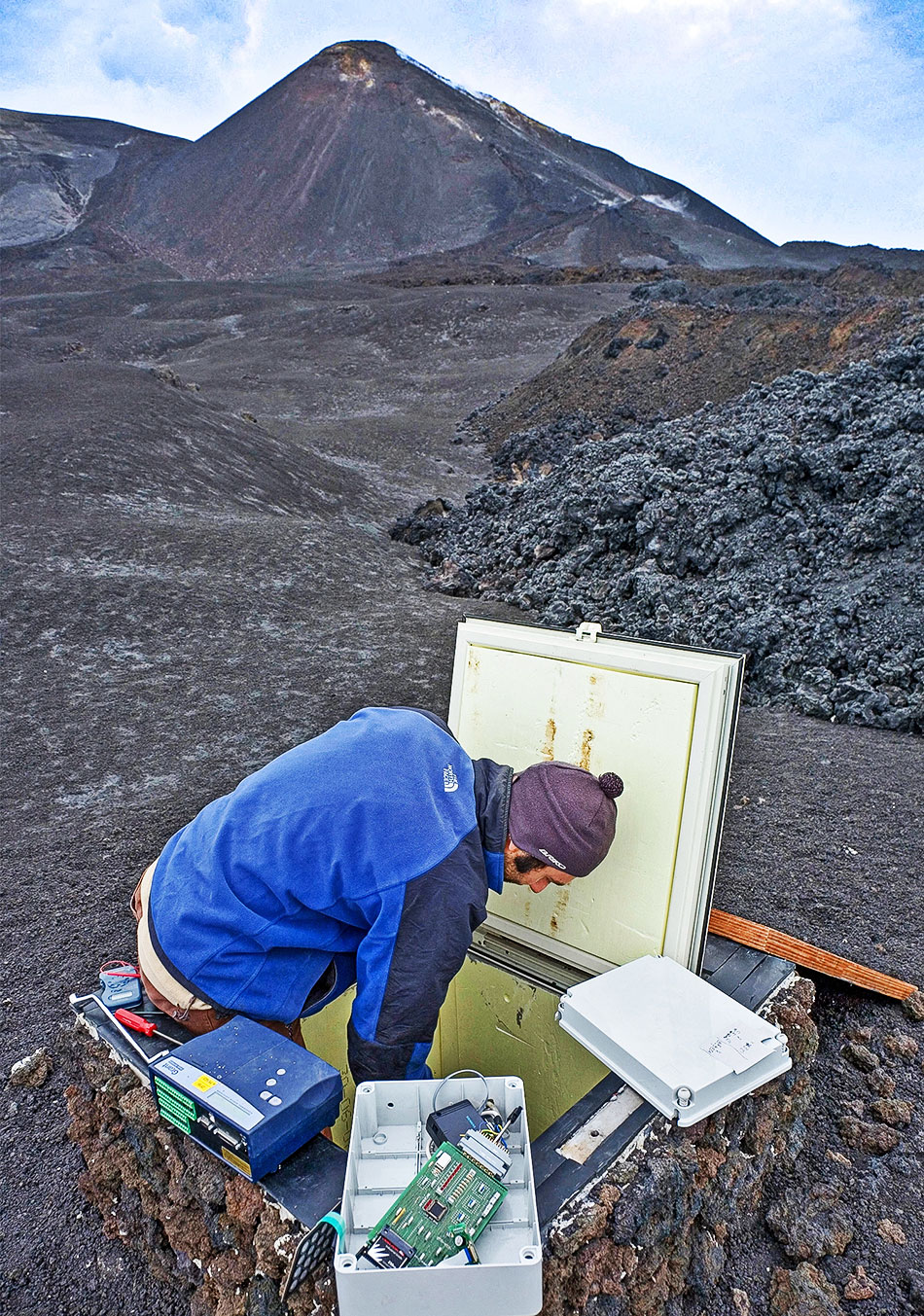
A volcanologist from the National Institute of Geophysics and Volcanology in Italy installs a gravitmetry station to measure
magma movement within Sicily's Mount Etna.
I imagine volcanoes as orchestras composed of hundreds of different instruments.
Forecasting eruptions isn't about hearing the music.
We already do that:
The challenge comes in knowing how the symphony will develop to a climax, long before it gets underway.
Today, at the most comprehensively monitored volcanoes, the best that volcanologists can normally offer is not prediction but a form of acute caution.
Often, alert systems - including those used by the U.S. Geological Survey - notify the public if a volcano is exhibiting heightened or escalating unrest.
But that doesn't mean an eruption is imminent.
On the other hand, some volcanoes prefer to ambush us, even when smothered in instrumentation.
Pockets of highly pressurized water trapped just below the surface can be heated by adjacent bodies of magma. If that pocket ruptures, a dangerous steam explosion follows, which can then unleash imprisoned magma.
This type of eruption often occurs with no discernible warning signs, and it's like a land mine going off next to a buried mountain of dynamite.
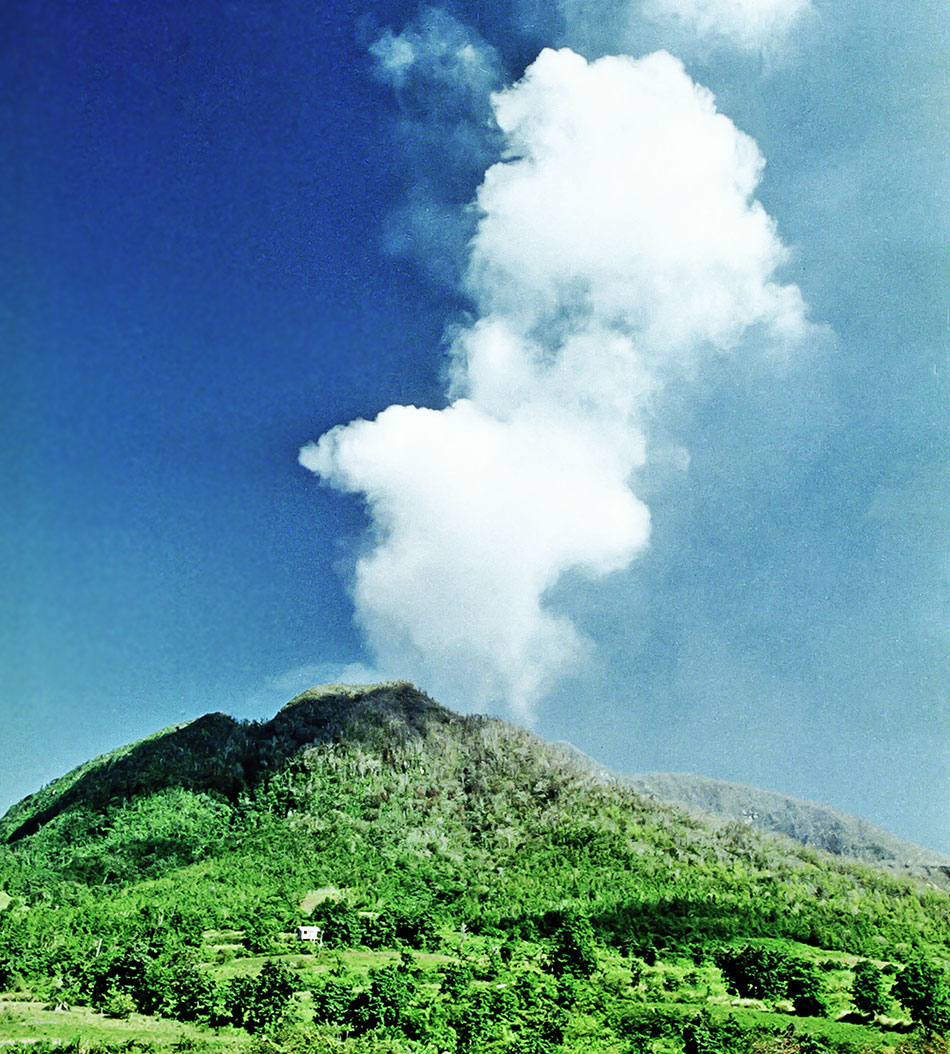
Small eruptions of the Soufrière Hills volcano on the Caribbean island of Montserrat
preceded destructive large
eruptions in 1997.
More predictive detail can come if a volcano has been studied over the course of several eruption cycles.
At certain peaks, such as Italy's Stromboli and Etna volcanoes, which regularly spout fountains of lava, scientists can confidently forecast an outburst.
Using seismology and ground deformation measurements, scientists at other volcanoes, including Hawai'i's Kīlauea and those on Iceland's Reykjanes Peninsula, can track magma migrating underground with such staggering precision that they know exactly where it will emerge as lava, to within an hour or so.
These are frequently active volcanoes, unlikely to produce a major explosive event, and people in surrounding communities generally know to be wary of them.
In most other cases, the earliest warning times - perhaps an hour or so before the eruption - aren't always enough to get people to safety.
Forecasting eruptions is a big ask because volcanoes cannot be reduced to simple models. They're baroque geologic beasts with hidden, labyrinthine plumbing.
Twenty years ago, during my first year as a geoscience undergraduate, a lecturer told me that predicting when and where the next major eruption would take place was a pipe dream - the implication being that volcanoes are far too idiosyncratic and mercurial to have much in common with one another.
That comment felt off even then.
Their schematics may differ.
But molten rock flows through all of them, and eventually, something cracks, breaks, and explodes.
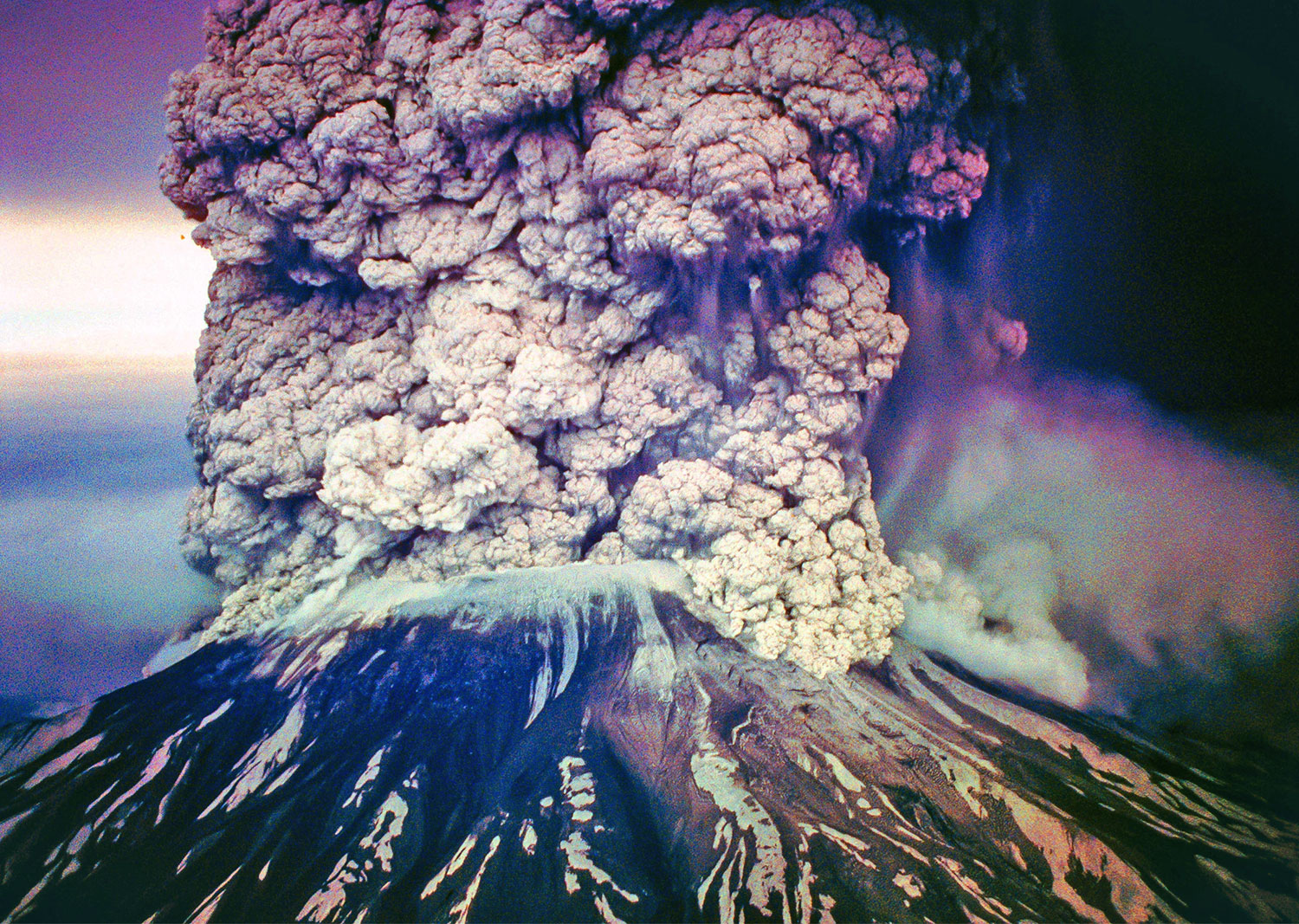
There were many signals that Mount St. Helens was going to erupt in 1980, but the form of the eruption was unexpected. The event led to the development of more sophisticated monitoring systems
in the United States.
Everyone I spoke to agreed that scientists still need to crack a vital piece of the volcano forecasting puzzle.
What causes a magma reservoir to transition from a stable state to catastrophic failure?
If those underlying equations can be discovered, perhaps we can apply them to all volcanoes and output values that tell us, with high accuracy, when the next eruption is due, and what its shape may be.
Scientists have already identified some of these governing equations, but they only apply after eruptions have begun.
Using more than a century of observations, researchers have largely derived the physics of volcanic hazards - particularly lava flows and pyroclastic flows.
For examples,
Today, they allow experts to predict, for specific volcanoes, where outpourings will emerge, how far the different kinds of flows will reach, and how quickly it will all happen.
This work saves lives, but it's a fraction of the forecasting dilemma.
Using our weather analogy, this is like saying,
Knowing when the storm will start requires getting at the subsurface physics of magma reservoirs.
For now, eruption warnings are based on recognizing patterns in measurable geophysical signals, such as an escalation of seismic activity, that precede eruptions. But correlation isn't enough for prediction if the patterns aren't consistent, which is often the case.
Johnson is part of a new project named Ex-X: Expecting the Unexpected, a multidisciplinary effort led by the University of Bristol to investigate the drivers of dangerous volcanic escalations.
Researchers are focusing on the volcanoes of the Eastern Caribbean, which erupt relatively frequently and can quickly transition from effusive-style, lava-heavy eruptions to sudden, catastrophic, explosive ones.
La Soufrière, on the island of St. Vincent, provided a recent example of this: In December 2020, the volcano began expelling a viscous mass of lava, which continued for several months.
Then multiple explosions threw pyroclastic flows down its slopes.
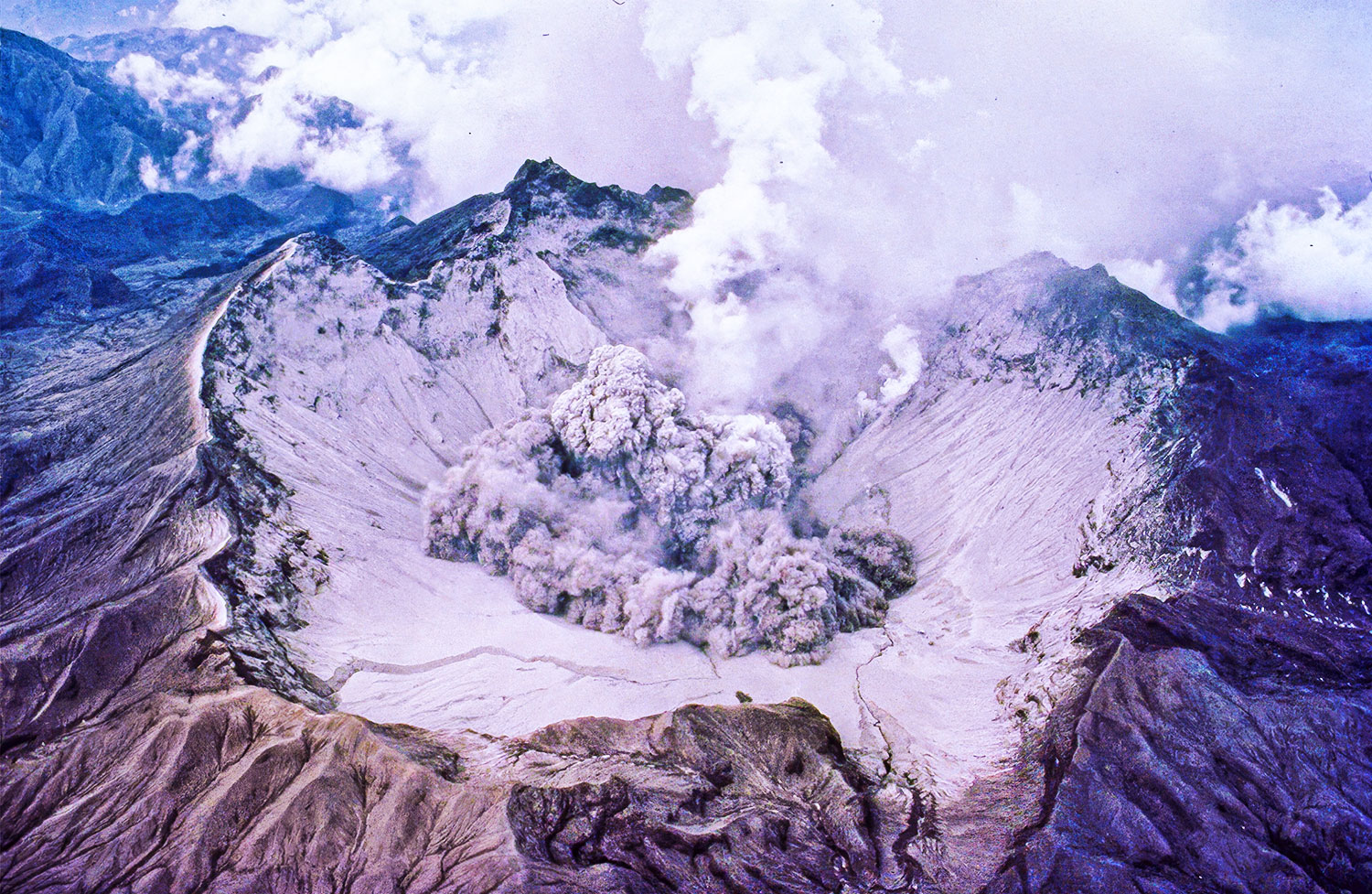
The eruption of Pinatubo in 1991 left a 2.5-kilometer-wide caldera where the summit has once been.
It is now
Lake Pinatubo.
As part of this work, hundreds of seismometers, as well as networks of fiber-optic cables, will be used to record even the tiniest of earthquakes, during periods of tranquility and unrest.
This monitoring effort will be aided by machine learning programs that will be taught to identify minute shifts in the seismic soundtrack of these volcanoes.
In recent years, these programs have been used to process a huge volume of data far more proficiently and efficiently than scientists can manage alone.
This work has already revealed myriad previously hidden magmatic pathways beneath volcanoes while also permitting scientists to track, almost in real time, magma barreling through the crust.
The idea of Ex-X is to gain unprecedented detail on how tiny changes in the behavior or position of magma can lead to eruptions. Those insights can, in turn, illuminate some of the underlying physics.
All these Caribbean volcanoes, diverse though they may be, could have a shared set of fluid dynamics equations. However, seismology won't be enough by itself.
Geochemistry is essential to this effort, too.
Today, scientists scoop up lava or ash, fresh or ancient, around volcanoes - both during an eruption and in the interregnum between them - to identify subtle changes in chemical makeup.
Scientists use sophisticated numerical models to simulate volcanic viscera, but this is still educated guesswork. Laboratory experiments, though, may be able to ground these models.
Replicating the most extreme phenomena in laboratory settings is not easy.
But in successful experiments in the fall of 2025, scientists re-created the conditions present at the birth of planets, complete with simulacra of magma and miniature hydrogen atmospheres.
Ideally, volcanologists want to try something else truly ambitious:
That is one of the objectives of the Krafla Magma Testbed in Iceland.
This literally groundbreaking facility is set to become the world's first direct magma observatory.
But deriving a unified theory of volcanism will require a geologic Manhattan Project.
First, a constellation of highly diverse volcanoes will need to be slathered in geophysical instrumentation and consistently monitored over multiple eruption cycles - meaning many decades.
Even many of the United States' most dangerous volcanoes, along the Cascades in the Pacific Northwest (home to the notorious Mount St. Helens, for example, and the precarious Mount Rainier), are only partly covered in a limited number of sensors.
With such a torrent of geophysical and geochemical information, scientists (aided by machine learning) can determine the commonalities that would allow them to derive foundational geophysical laws.
Then they can build the archetypal volcano model:
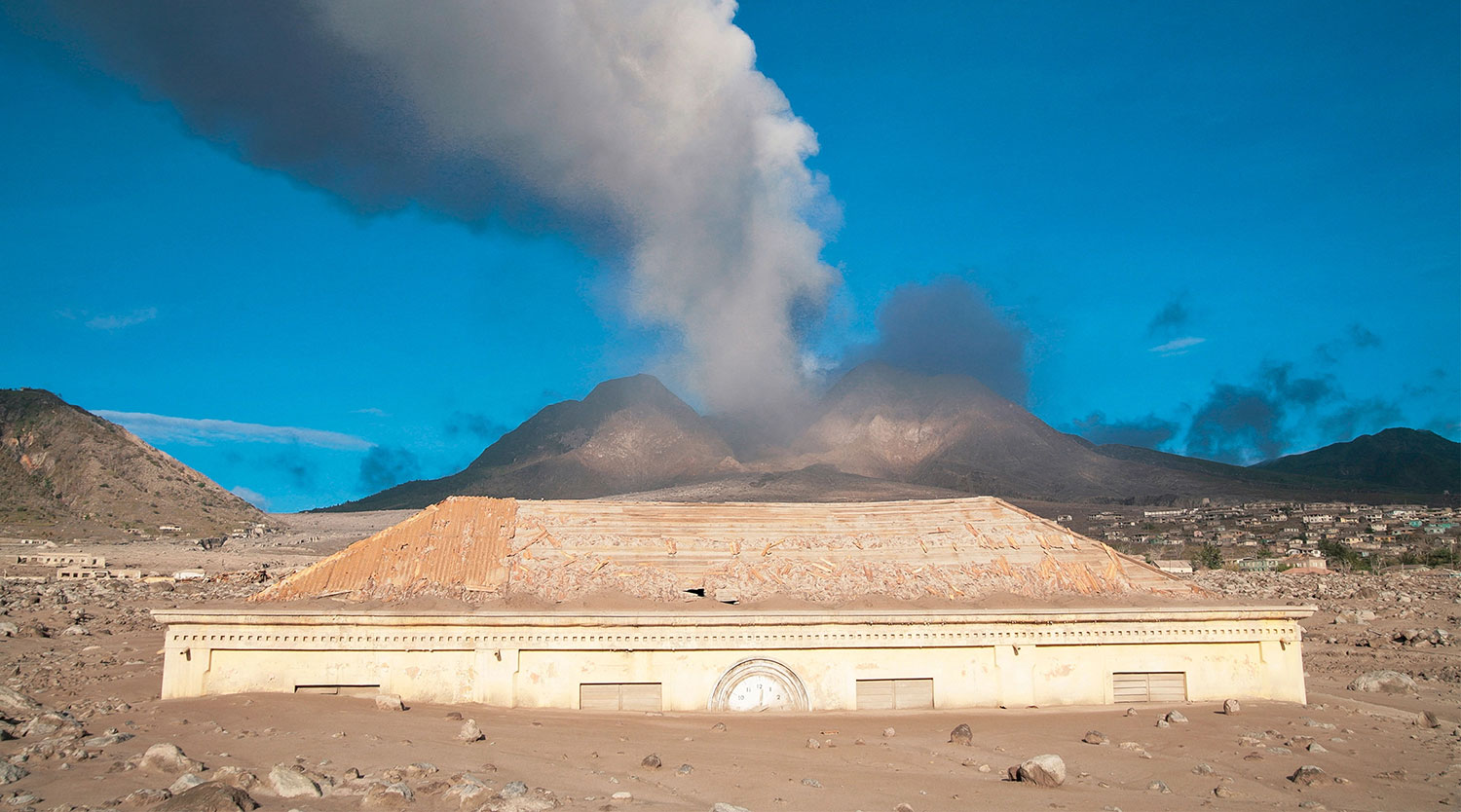
The Soufrière Hills volcano in Montserrat buried the small town of Plymouth
in 30 feet of mud and ash.
Let's say you're concerned about Japan's explosion-prone Mount Fuji.
Scientists could feed its current state of seismicity, its magmatic geochemistry, and the rate at which it's deforming into the model. Software driven by those governing equations could then virtually fast-forward the volcano toward its most probable eruption date, while also describing the likeliest eruption style and duration.
Some experts suspect that there may be several volcano archetypes - ones that prefer to throw out lava, for instance, or the especially explosive kind.
Either way, this eruption forecasting concept finds favor with several volcanologists.
But skepticism about accurate forecasting remains.
Other people I spoke with are more sanguine, suggesting that while certain volcanoes will always be troublesome - those that erupt once every few centuries, for example, or those that seem to go from silent to violent in a matter of hours - many eruptions should be forecastable.
Roman is part of the in-development Subduction Zones in Four Dimensions project, or SZ4D.
If sufficiently funded, this international effort will carry out an intense monitoring campaign along various subduction zones - vast areas where one tectonic plate dives underneath another, including sites in Chile, Alaska, and the Cascades - to study the triggers of major landslides, earthquakes, and eruptions.
She hopes that the underlying physics leading to each of these hazards will emerge.
SZ4D would be a colossal scientific undertaking. But similarly mammoth endeavors were needed to understand how the weather works, and how Earth's climate is rapidly changing.
You've got to start somewhere.
Every day, volcanologists perform scientific miracles to protect millions of people from eruptions.
It's thrilling for me to imagine a future in which people get not just hours, but days or even weeks to get themselves out of harm's way.
|