|
from ClassicalWisdom Website
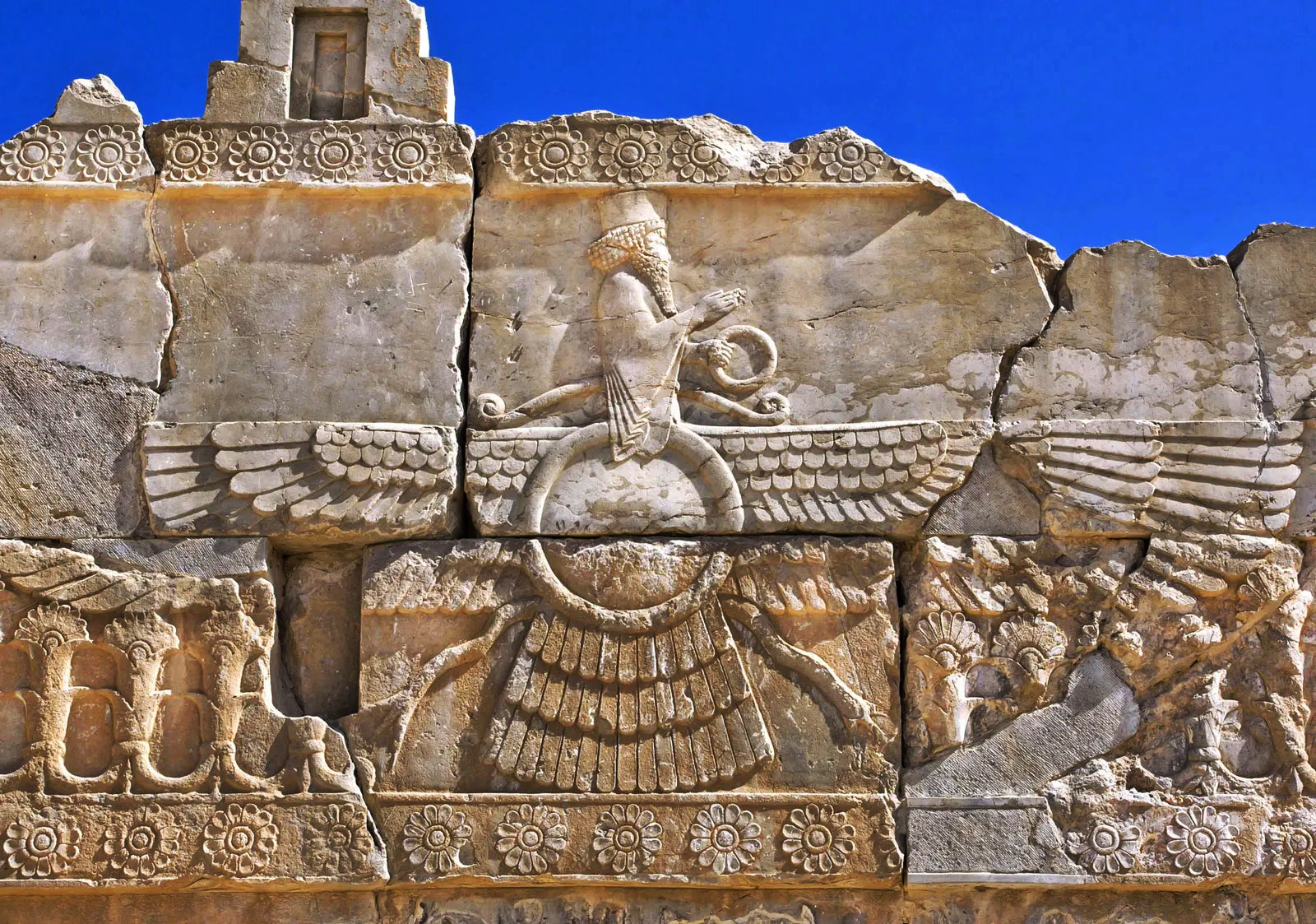
Persepolis, Iran: Relief of the Zoroastrian god Ahura Mazda at the ancient ruins of Persepolis, Iran.
Ancient Iran's Religion.
Thus Spoke
Zarathustra?
is one of the world's oldest religions.
Otherwise known as Mazadayasna by those who follow it, the roots of Zoroastrianism date back as far as the Second Millennium BC and served as the state religion of Persia and other Iranian Empires for more than a millennium...
Born under a Polytheistic religion, Zoroaster
received a vision of Vohu Manah (roughly understood as the
God of Good) who took him on a journey to the Amesha Spenta,
a cohort of divine entities and the Lord of Being and Wisdom
known as Ahura Mazda - the highest Deity in Zoroastrianism.
Zoroaster condemned the worship of multiple gods,
politically opened the wedge between Iranian and Indian Aryans in
Ancient Iran, and historically introduced the world to one of the
first monotheistic faiths.
And whilst the Zoroastrianism did its best to spread the concept of a singular God of Good and Wisdom throughout early civilization, another concept spread along with it:
Whilst they are not worshipped by the major
religions, Evil and spirits that represent Evil were
certainly considered as deities in Zoroastrianism and are still to
this day in the Big Three religions in the form of Demons,
Jinns, and Dybukks.
The battle between Good and Evil brings to light that most Monotheistic faiths are religions of Duality.
The influence of dualistic monotheism is evident
in the development of Heaven and Hell where reside the
Gods of Light and Darkness, who meddle in the
lives of men until all is destroyed in the days of Final Judgment.
Shortly after and during this time, deities such
as the Beelzebub emerged, a figure that later became Satan
of Christianity and Sheytan of Islam.
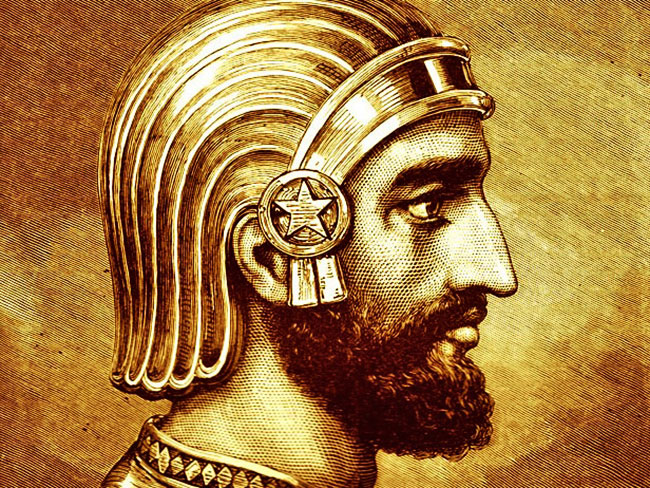
Cyrus the Great
Until the Persian influence, the Greeks believed that humans were merely puppets of the gods and the course of one's life was spun by the Gods of Fate.
After Persian Zoroastrianism reached their
shores, the Greeks began to speak of the power of the individual,
and how the choices we make in life had an impact on the quality of
our death.
When asked to think of an agent of the Gods, images of feathered Angels or Demons with Bat-like wings often come to mind.
Peri, (or Pari) are beautiful
winged women of Persian mythology. They could be likened to
Angels of Christianity, except for their origin.
Whist initially being described as spirits of
mischief, once introduced to Islam and incorporated into Turkish and
Armenian mythology, Peri became benevolent sprits that stood
in opposition to Jinns, Divs, and other spirits of
Darkness.
Religious texts speak of Peri in both
psychological and physical terms, describing instances of humans
being abducted by Peri to attend Divine social events, or Peri
appearing in dreams to deliver messages of importance.
In one legend, the Queen of Sheba is believed to be the product of such a union. However, due to the natural darkness that resides in all men,
The images of human and bird hybrids, or birds
sympathetic to humans, are not at all uncommon in ancient mythology.
Similar to the Peri, she is a messenger who
travels between heaven and earth, offering divine guidance to those
who are fortunate enough to catch a glimpse of her majesty.
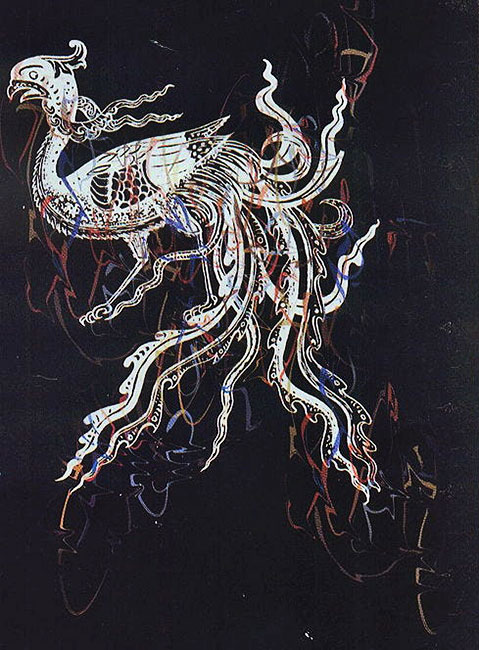
Simurgh is the precursor to the Phoenix
- a bird of fire that respawns from its ashes. She is the sum of all
knowledge, having seen the destruction and rebirth of the world many
times over.
The Houri are also reminiscent of the
Valkyrie, ancient Norse spirits described as beautiful women who
accompany those who died in battle to Valhalla. The Valkyrie are
depicted either with wings or riding the backs of winged-horses.
The Huma, a Divine Bird of Sufi and Diwan mythology and 'Bird of Paradise' in Ottoman Legend, bestows gifts on those deemed worthy and can foretell or bestow Kingship.
The Huma is androgynous, having both male and female attributes.
Again, the underlying theme of duality
resurfaces, and we are presented with a symbolic creature that
embodies masculine and feminine harmonies that reproduces by itself,
further representing the cycle of rebirth.
This, I believe, is the message of Zoroastrianism and the religions that have followed.
The wings of the Angels, Peri, and other winged creatures represent the Flight of the Soul, the Loftiness of Spirit and the Human Mind, in contrast with the physical world, materialism, and nature, as represented by human features, sympathies, and unions.
The symbology speaks of a human spirit that is
not born good or bad, but is shaped by the choices it
makes over a lifetime (or many lifetimes, according to Buddhists).
Nature cannot exist without these reproductive elements.
The Zoroastrian representations of bird-like creatures have developed to appeal to the inner nature of humanity.
Personal choice is central to the Zoroastrian text, as one has to earn their place in paradise, and personal responsibility for one's actions could not exist without some basic concept of free-will.
Zoroastrianism recognized that both Good and
Evil are central to human nature, and now, as was then, we are
vulnerable to external forces that challenge us to choose between
the two.
|