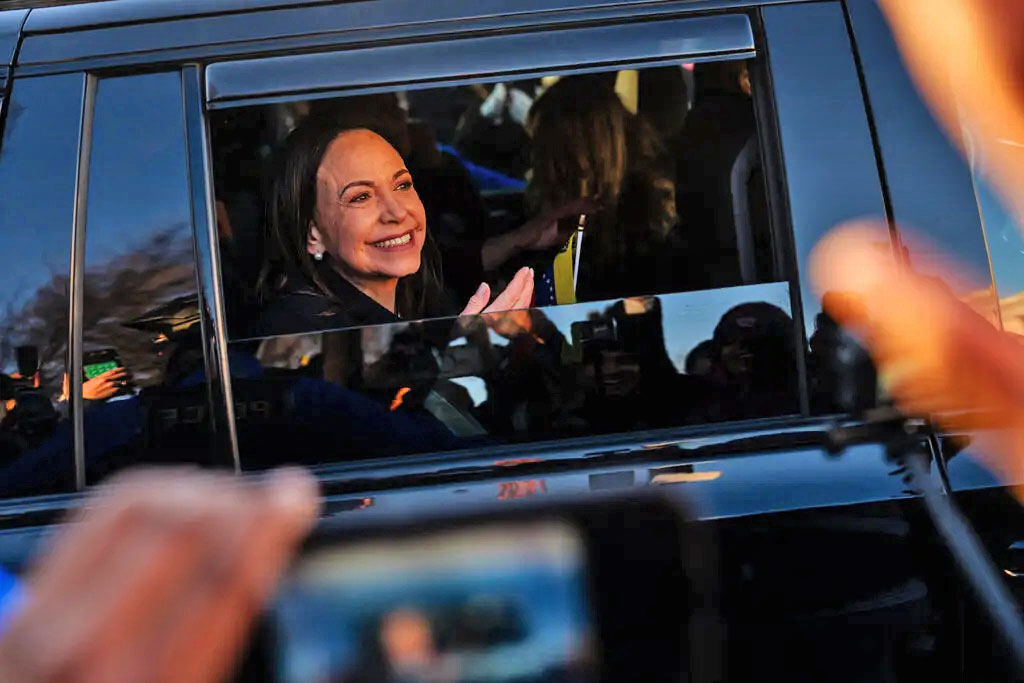
|

by Tyler Pager and Anatoly Kurmanaev
July 11, 2026
from
NYTimes Website
Article also
HERE
|
Tyler Pager, who
covers the White House, reported from Washington and
Caracas.
Anatoly Kurmanaev,
who covers Venezuela, reported from Caracas. |
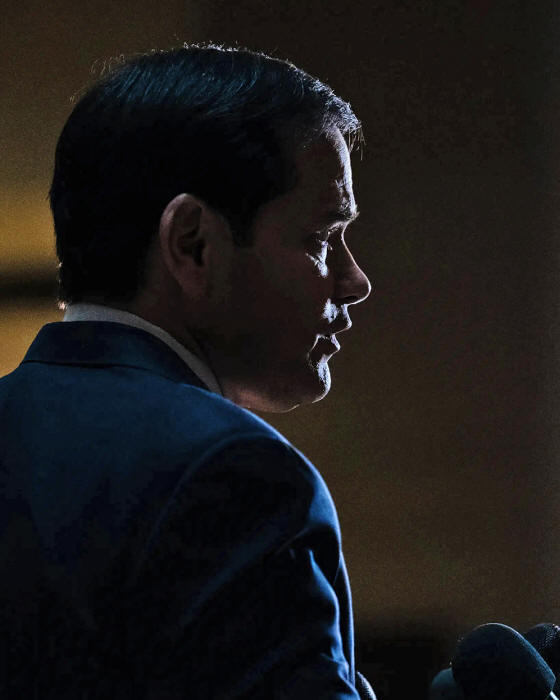
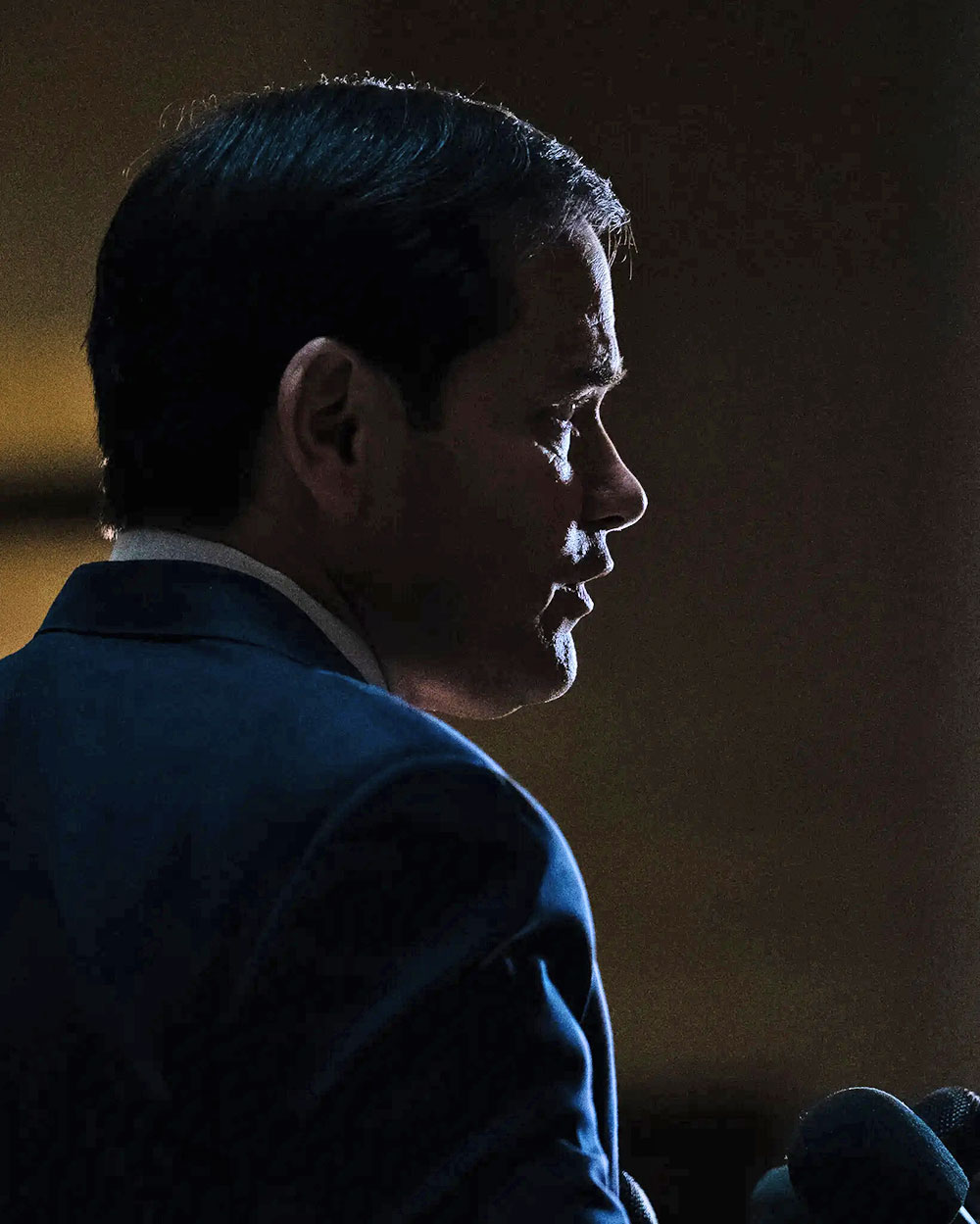
Credit: Eric Lee
for The New York
Times
The
secretary of state
effectively controls Venezuela's finances,
the
distribution of its natural resources
and its
government.
His grip
on the country
is a vivid
manifestation of
American
power in the Trump era.
President
Trump was sitting in the Oval
Office earlier this year with Secretary of State Marco Rubio
when an idea came to him.
Maybe he should dispatch Mr. Rubio permanently to
Caracas, the Venezuelan capital, where U.S. commandos had carried
out the proudest foreign policy achievement of Mr. Trump's second
term: the
capture of
Nicolás Maduro, the country's president.
Mr. Rubio could be the next leader of Venezuela, Mr. Trump
suggested.
And while the president's aides say he was joking
- and that he frequently teases Mr. Rubio about an overseas
assignment - the fact is that Mr. Rubio does not need to move to
Caracas.
He already runs Venezuela from Washington.
In the six months since U.S. forces blew open Mr. Maduro's bedroom
door and snatched him in the dead of night, Mr. Rubio has become the
de facto viceroy of Venezuela, holding sway over a
sovereign nation in a way that no American official has since L.
Paul Bremer III arrived in Baghdad in 2003 to run U.S.-occupied
Iraq.
Mr. Rubio now effectively controls Venezuela's finances, the
distribution of its natural resources and its government, according
to interviews with more than a dozen officials and people close to
both governments in Washington and Caracas, who provided details
about his involvement in steering the country's policies.
Many spoke on condition of anonymity to describe
private interactions and internal discussions.
While he has not visited Venezuela in person since the U.S. took
over, the secretary of state is deeply involved in the country's
day-to-day operations, keeping in close contact with
Delcy Rodríguez, who was Mr.
Maduro's vice president and now leads her country on an acting
basis, with the imprimatur of the United States.
The two exchange messages in Spanish on WhatsApp,
trading gossip, birthday greetings and selfies.
Despite the banter, the relationship between Mr. Rubio and Ms.
Rodríguez is far from a partnership.
It is a manifestation of Trump-era
American power, in which the winner takes all regardless of
sovereignty and international law.
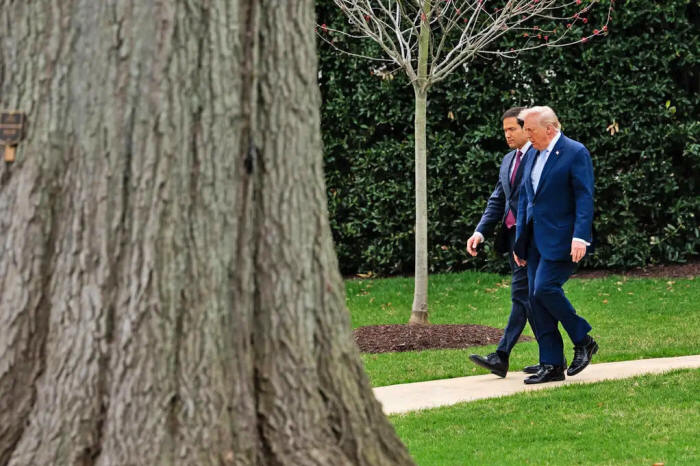
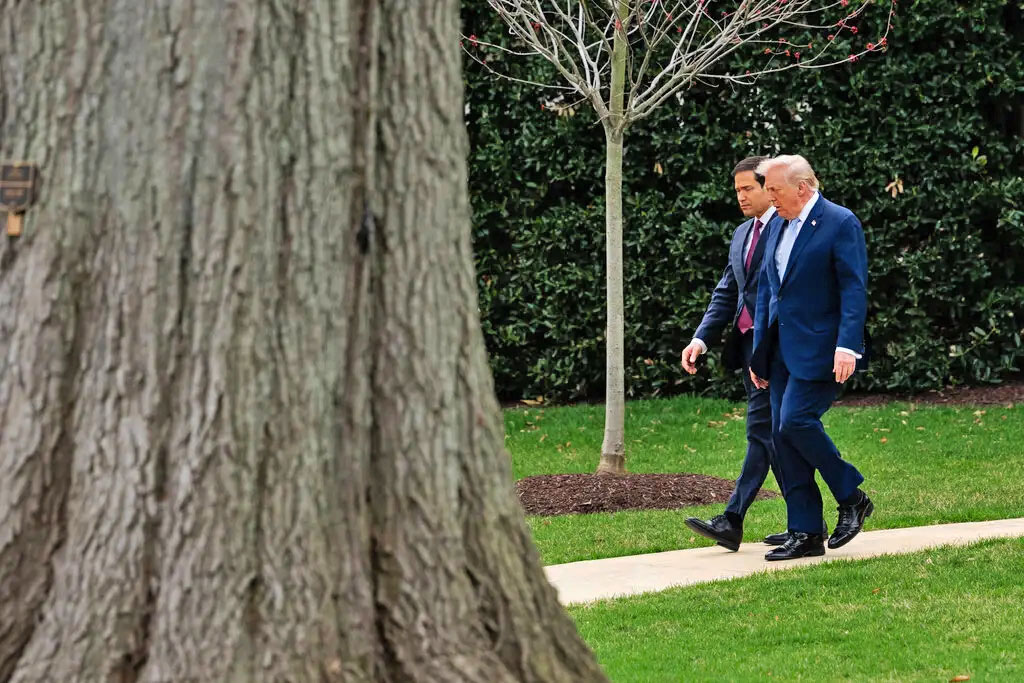
Mr. Rubio with
President Trump
at the White House in
March.
Credit: Eric Lee for
The New York Times
The Venezuelan government did not respond to a request for comment.
The Trump administration did not address
detailed questions about Mr. Rubio's authority in Venezuela. Mr.
Rubio has downplayed his role, and largely avoids discussing his
work. He declined multiple requests for an interview.
Tommy Pigott, a State Department spokesman, said in a
statement that,
"with renewed cooperation and sound economic
stewardship, Venezuela can re-emerge as a stable, prosperous
partner whose citizens benefit from its vast natural wealth and
strengthened ties with the United States."
The direct control over Venezuela's public
revenues, in particular, distinguishes Washington's influence there
from most other countries beholden to its military and financial
might.
The U.S. Treasury receives the revenue from most of Venezuela's
exports, then disburses it gradually to Venezuela through the
country's private banks, a relationship akin to parents handing out
allowances to children.
Mr. Rubio and his team set the conditions on what
that money can be spent on, and by whom.
This system has allowed Mr. Rubio to stop Venezuela's most egregious
corruption schemes. And it brings some benefits to the Venezuelan
government, which uses the effective protection of the U.S. Treasury
to receive revenues without being hounded by the numerous creditors
seeking repayment of billions in unpaid debt.
But the arrangement has also given Mr. Rubio immense leverage over
Ms. Rodríguez, who depends on the money to pay workers and prop up
the national currency.
He also oversees the application of U.S. sanctions on Venezuela,
deciding who gets to do business in the country and how. He has
worked to reshape the oil sector and boosted the access of U.S.
companies.
For her part, Ms. Rodríguez runs important
government appointments by him, such as the minister of defense.
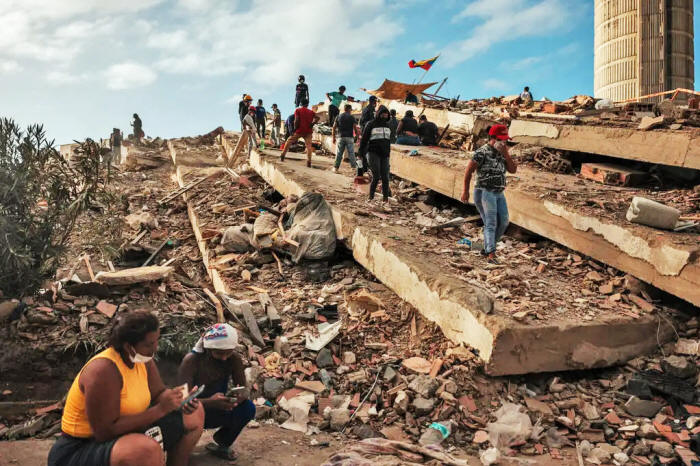
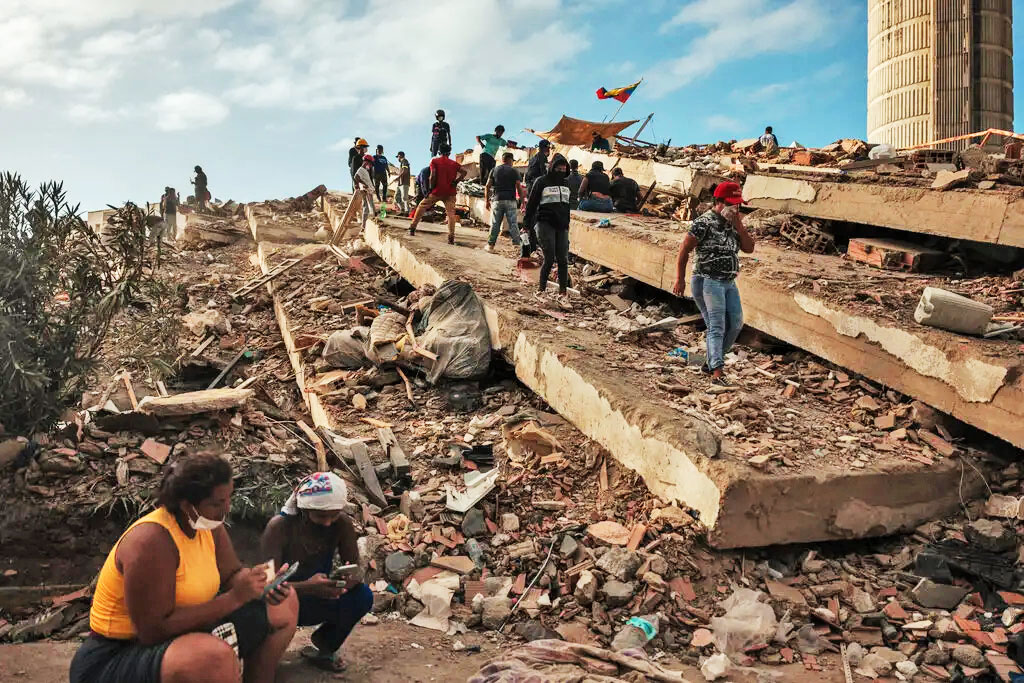
Searching for survivors at a
public housing complex
in
Caraballeda, Venezuela, after earthquakes last month.
Credit: Adriana
Loureiro Fernandez for The New York Times
Since two earthquakes struck Venezuela last month, Mr. Rubio has
sought to bolster the country's interim government.
The United States has sent 900 military personnel
to Venezuela, committed nearly $400 million in aid and delivered
crates of cash to the Venezuelan government.
The earthquakes have complicated Mr. Rubio's
stated mission to return Venezuela to democracy ("It's a setback in
that regard," Mr. Rubio acknowledged last month).
But the country's ability to recover is critical
to Mr. Trump's ultimate goal:
securing Venezuelan oil for U.S.
interests.
The arrangement is deeply unusual, unfolding 80
years after the United States relinquished its last sizable formal
colony, the Philippines.
But Mr. Trump has made clear he wants to return to an era of
American expansionism, musing about
taking control of Greenland, Canada and the Panama Canal.
He has found the most success in Venezuela. But there are risks.
Mr. Trump's critics accuse the United States of siphoning
Venezuela's resources and propping up an authoritarian government by
leaving Mr. Maduro's henchmen largely in place.
The arrangement also entangles the United States
in the fortunes of a deeply unpopular, unelected regime facing
increasingly restless clamor for political change.
"Secretary Rubio said that we are not at war
with Venezuela," Representative Sean Casten, Democrat of
Illinois, said to Treasury Secretary Scott Bessent during
a
congressional hearing in
February.
What authority, Mr. Casten asked, did the United
States have to control Venezuelan assets?
Mr. Bessent told Mr. Casten that he would get back to him.
Mr. Rubio's hard-nosed realpolitik in Venezuela is a sharp departure
for a man who spent his career fashioning himself as a champion for
democracy in Latin America.
He has said his goal is an eventual democratic
transition.
The outcome of the Venezuela foray could shape Mr. Rubio's political
future as Mr. Trump considers his successor.
'Make Venezuela Great Again'
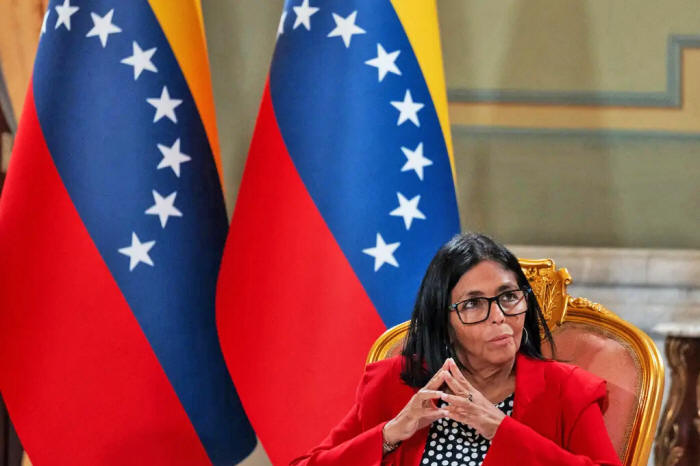
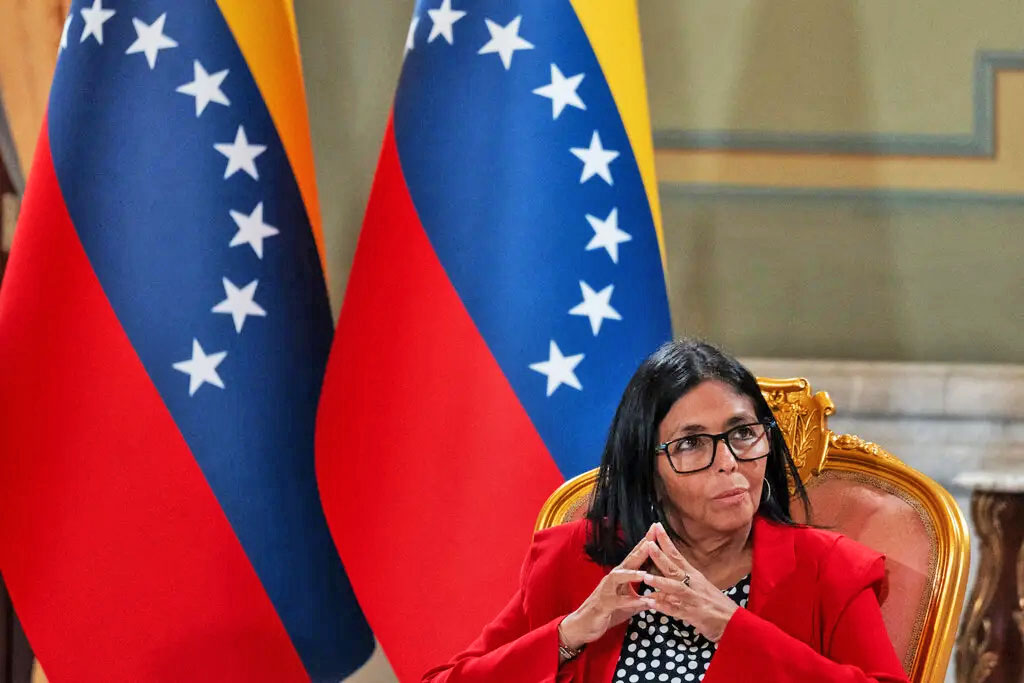
Delcy Rodríguez,
the interim president
of Venezuela, in April.
Credit: Todd Heisler/The
New York Times
In the early hours of Jan. 3, shortly after Mr. Maduro was captured,
Mr. Rubio reached Ms. Rodríguez by phone.
Speaking in Spanish, Mr. Rubio told her that she
had a choice between,
working with the United States or witnessing
a broader attack targeting Venezuela's infrastructure, military
bases and senior officials.
After some negotiation, Ms. Rodríguez agreed.
She told Mr. Rubio that,
"she's essentially willing to do what we
think is necessary to make Venezuela great again," according to
Mr. Trump.
The president said the United States would "run
the country" until there was a "safe, proper and judicious
transition" of power.
Days later, Mr. Trump told The New York Times in an interview
that,
he expected the United States to run
Venezuela for years...
At the center of the fulcrum is Mr. Rubio, dubbed
by other officials as "viceroy," the title given to the powerful
governors who ruled the Spanish empire until Venezuela and most of
its other provinces rebelled and won independence in the early 19th
century.
As Ms. Rodríguez started to set up her government, Mr. Rubio weighed
in on key personnel decisions, and encouraged her to purge Mr.
Maduro's family and business partners.
She followed through...!
Most Venezuelans expressed relief at Mr. Maduro's
downfall only to
watch in disbelief,
as the Trump administration struck an
alliance with most of his chief enforcers.
Inflation has fallen but remains the world's
highest, and the country's currency keeps losing value.
Millions are clamoring for new
elections, putting pressure on Mr. Rubio to move beyond economic
deals and bring political change. Investors are nervous about
putting capital into a system that could crumble at any moment.
Before the earthquakes, Ms. Rodríguez had been asking Mr. Rubio for
more financial autonomy and the scrapping of economic sanctions, to
reduce the domestic pressure on her government.
Mr. Rubio has been sympathetic to her arguments, but the U.S.
government has not released control.
Mr. Rubio's work with Ms. Rodríguez has provoked grumbling among
some career U.S. diplomats, Venezuelan Americans and Mr. Trump's
allies, who bristle at the idea that Mr. Maduro's chief lieutenant
is in power.
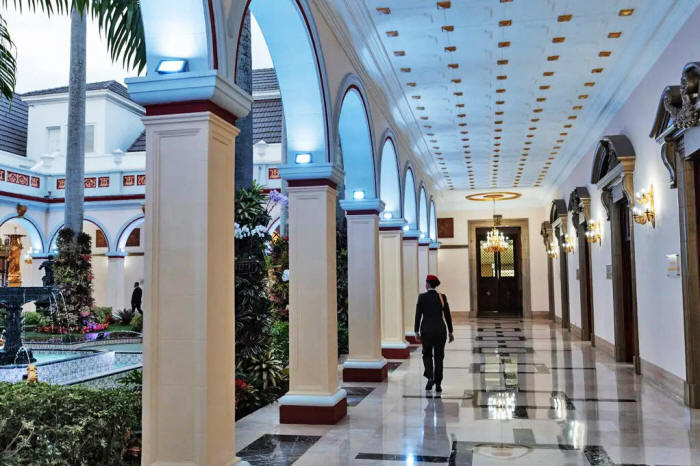
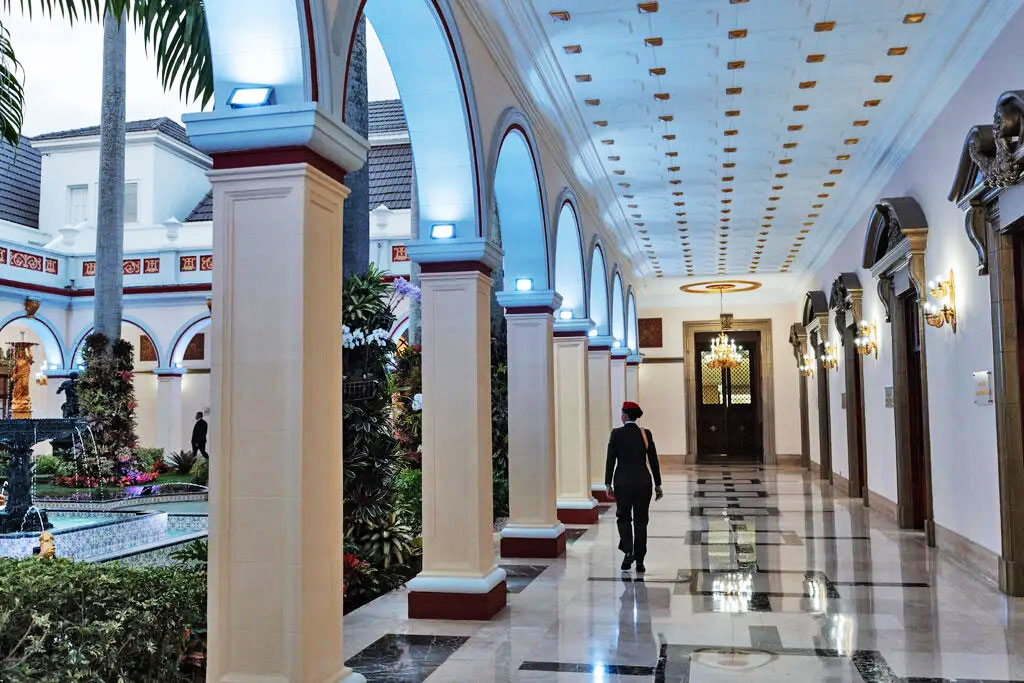
The Miraflores Palace,
where U.S. and
Venezuelan officials
signed an
energy deal in April.
Credit: Todd
Heisler/The New York Times
Mr. Rubio and other officials have dismissed those concerns,
pointing to how Ms. Rodríguez has followed nearly every order the
administration has made, especially those related to the country's
finances.
Venezuela sells much of its oil through two oil
trading companies,
...in an arrangement set up by
the Trump administration.
Mr. Rubio has largely eclipsed
Chris Wright, the energy
secretary, in opening up Venezuela's oil industry to foreign
investment, the cornerstone of Mr. Trump's vision for the country.
He has prioritized the arrival of new American
companies at the expense of European oil producers who were
already working in the country.
Ben Dietderich, a spokesman for Mr. Wright, said the
secretary has worked closely with Mr. Rubio, and has spoken
regularly with energy industry leaders and Ms. Rodríguez.
Washington's grip on Venezuela's economy extends beyond the oil
revenues.
Mr. Rubio's team drafts the licenses that provide
companies who want to do business in Venezuela with exemptions from
sanctions. Mr. Rubio has warned Ms. Rodríguez's government to
abstain from business with U.S. adversaries.
Following Mr. Maduro's downfall, for example,
Venezuela's state oil company has quietly taken over the operations
of the oil projects that it co-owns with Russia's state-run
Rosneft.
Rosneft did not respond to request
for comment...
The Trump administration has also successfully pressured Ms.
Rodríguez to turn over Venezuelans who have crossed the Justice
Department.
At the behest of the United States, Ms.
Rodríguez's government in February
detained Alex Saab, the
billionaire friend and business partner of Mr. Maduro, and approved
his extradition to the United States, after stripping him of his
Venezuelan passport.
Some officials believe the Justice Department wants to use Mr. Saab
to strengthen the case against Mr. Maduro, who has been charged with
various drug trafficking crimes.
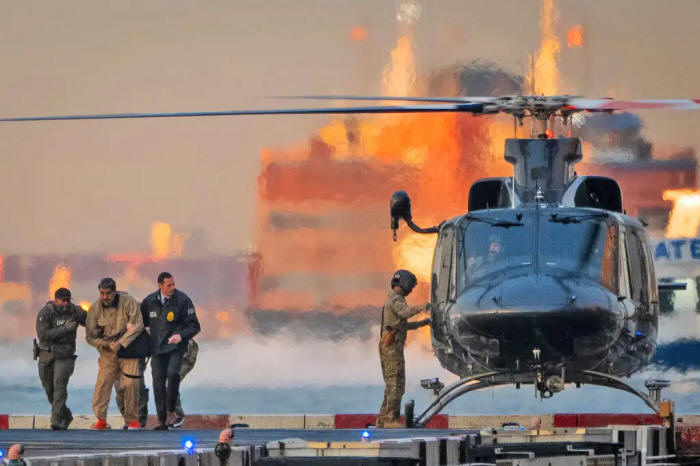
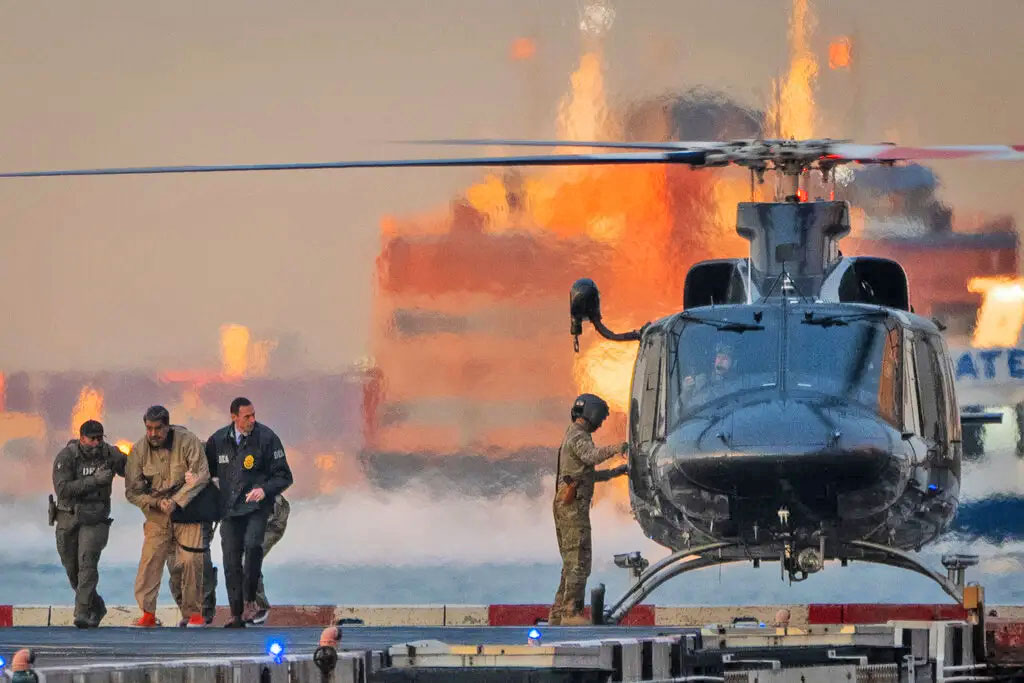
Nicolás Maduro,
the president
of Venezuela,
being taken to
federal court
in Manhattan in
January.
Credit: Vincent
Alban/The New York Times
And in June, the Rodríguez government helped the United States kill
a criminal boss with longstanding ties to Venezuelan officials,
according to several people familiar with the operation.
U.S. forces used the intelligence provided by Ms. Rodríguez's
officials to kill
Niño Guerrero, one of the
leaders of the gang Tren de Aragua, in a missile strike in a
remote area of southern Venezuela.
It was the first military collaboration between
the two countries in decades. The Venezuelan government later
recovered the gang leader's body and passed it to the United States.
The Trump administration has accused
Tren de Aragua of working with Mr.
Maduro to flood the United States with drugs and illegal migrants,
even though U.S. intelligence agencies last year
assessed that Mr. Maduro did not
control the gang.
The Trump administration even exerts control over Ms. Rodríguez's
public appearances and statements.
In May, Mr. Rubio announced that Ms. Rodríguez
would travel to India before the Venezuelan government mentioned it,
surprising Venezuelan officials and foreign diplomats.
When the Fox News anchor Bret Baier contacted Ms. Rodríguez
about participating in an interview, she told him that Mr. Trump
would have to approve. Mr. Trump loved that Ms. Rodríguez was
deferring to him, and has repeatedly recounted the story to others
when they ask about her, according to multiple people familiar with
his comments.
When the United States attacked Iran, Yvan Gil, Venezuela's
foreign minister, issued a
soft condemnation of the aggression
against Venezuela's longtime ally.
The Trump administration communicated to Ms. Rodríguez that the post
should be taken down, and warned her not to publicly support its
adversaries again. Mr. Gil
deleted the post hours after
posting it.
In effect, it was an admission that Venezuela
no longer set its foreign policy...
Mr. Gil did not respond to a request for comment.
Reassurance from Trump
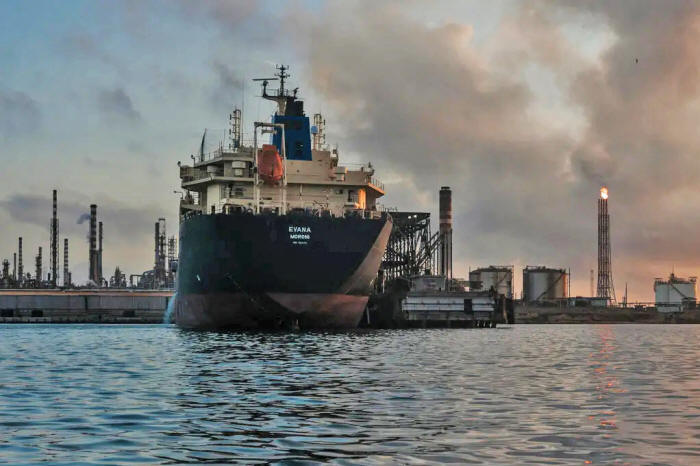
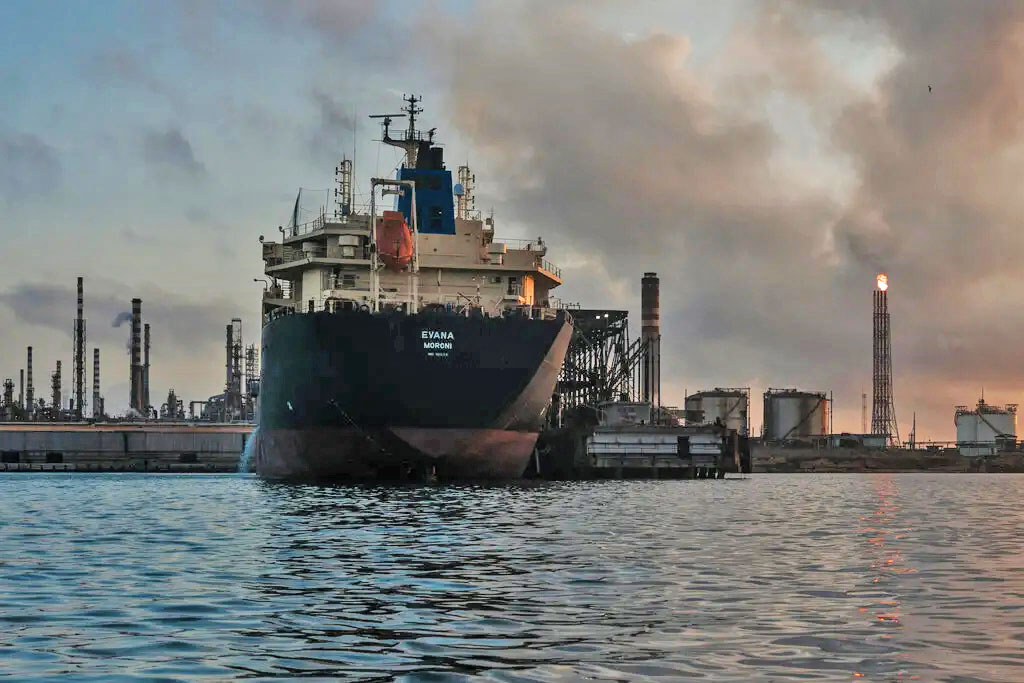
An oil tanker docked at the Cardón
refinery
in Punto Fijo,
Venezuela, in January.
Credit: Adriana
Loureiro Fernandez for The New York Times
Mr. Rubio was asleep in Bahrain last month when he was awakened by a
call from the White House Situation Room.
Two massive earthquakes had hit Venezuela, and
early images were grim. Entire neighborhoods were flattened, and
scores of people were missing.
Shortly after, Mr. Rubio spoke to Ms. Rodríguez, promising the full
assistance of the United States. American rescue teams were on the
ground two days later.
Mr. Rubio has described the administration's
plans for Venezuela in three phases:
Before the earthquakes, U.S. officials said they
were in the second phase, working to open up Venezuela to
international investment.
To further that goal, senior Trump administration
officials have traveled to Venezuela to meet their counterparts and
strike new energy and mining deals.
The resulting announcements, however, have
mostly been 'optimistic' outlines of potential investments...
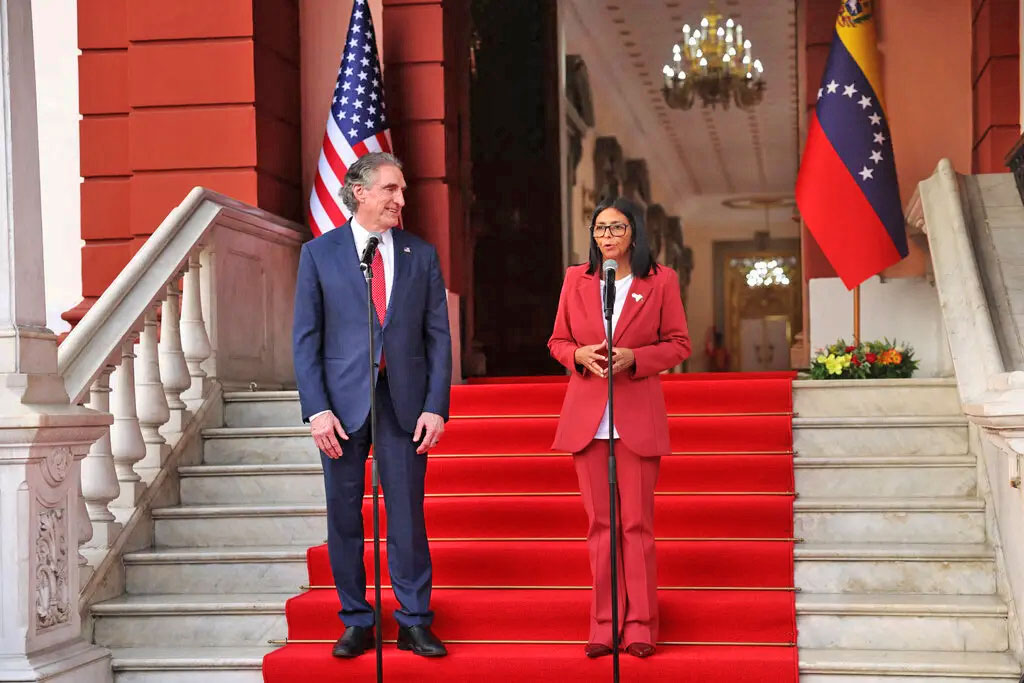
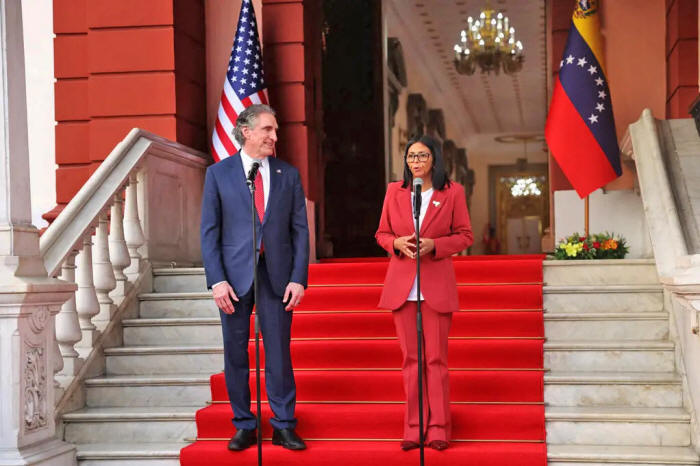
In March, Doug Burgum, the interior
secretary, visited Venezuela and met with Ms. Rodríguez at the
Presidential Palace.
During the visit, Mr. Rubio texted her to ask
how the meeting was going.
Ms. Rodríguez said it was going well, and
sent a selfie with Mr. Burgum.
But the meeting was overshadowed by damaging
news.
Reuters reported that day that
the Justice Department was quietly building a legal case against
Ms. Rodríguez...
Ms. Rodríguez's administration was shocked, and
sought clarification from the White House.
To allay Ms. Rodríguez's concerns, Todd
Blanche, then the deputy attorney general, called the report
"completely
FALSE."
But the Venezuelan government sought further
assurances.
So the next day Mr. Rubio texted Mr. Rodríguez
the link to a social media post from the U.S. president.
Ms. Rodríguez with Doug Burgum,
the interior
secretary, in Caracas in March.
Credit:
Leonardo Fernandez Viloria/Reuters
"Delcy Rodríguez, who is the President of Venezuela, is doing a
great job, and working with U.S. Representatives very well," Mr.
Trump wrote.
Ms. Rodríguez was pleased, and wanted to thank
Mr. Trump with a post of her own.
But first, she shared the draft with Mr.
Rubio.
She
posted it after receiving his
approval.
Before Mr. Maduro's capture, U.S. prosecutors had
been looking into many Venezuelan officials, including Ms. Rodríguez,
though it is unclear if those efforts have revealed evidence of
crimes.
The Associated Press
reported in May that,
the Trump administration told
prosecutors to stop investigating Ms. Rodríguez.
The success of the efforts to bring stability to
Venezuela, the second phase of Mr. Rubio's plan, largely hinges on
foreign investment.
But investors are cautious.
The oil sector is degraded and corrupt, and
Ms. Rodríguez's grip on power in uncertain.
The earthquakes have delayed the negotiations
for new oil contracts.
Mr. Trump appears unworried.
He has repeatedly suggested that Venezuela could
become the 51st state.
María Corina Machado
after
meeting with U.S. senators
in Washington
in January.
Credit: Eric
Lee for The New York Times
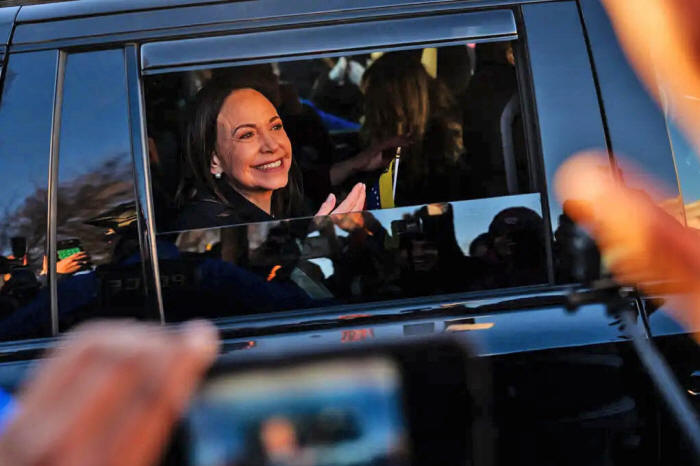
Who may lead the country on a more permanent basis is still deeply
uncertain.
María Corina Machado, the
exiled opposition leader, remains the country's most popular
politician.
But she has sworn enemies among Venezuela's
security and military officials, leading Mr. Rubio to bypass her
and settle on Ms. Rodríguez as the country's handpicked leader.
Once a staunch supporter of Ms. Machado, Mr.
Rubio has distanced himself from her in recent months.
The cooling relationship between the Trump
administration and Ms. Machado became an open breach after the
earthquakes. U.S. officials have refused to help her return to
Venezuela out of fear of stoking unrest.
The time frame for the final phase of Mr. Rubio's Venezuela plan,
the free elections, remains undefined.
When The Times asked Ms. Rodríguez in May
when she would hold elections, she said,
"I don't know. Sometime."
Political analysts say that Ms. Rodríguez may be
trying to run out the clock on the Trump presidency, hoping that the
pressure to hold the vote would fade under his successor.
For now, the question of when an election would be held is not in
her hands.
It is in Mr. Rubio's...!
|