|

by Sergey Poletaev
October 23, 2026
from
RT-English Website
|
Sergey Poletaev,
information analyst
and publicist, co-founder and editor of the
Vatfor project.
|

© AI-generated image
From ammunition depots
to digital
infrastructure,
a closer
look at Moscow's
expanding
air campaign
against
Ukraine...
The main theme of
the Russia-Ukraine conflict this
year has been the so-called 'war of cities', characterized by
mutual strategic strikes on targets in the rear.
In the first half of the year, Kiev had managed
to bolster its strike capabilities and even attempted to pressure
Moscow into accepting its terms for a ceasefire.
However, by fall, the situation shifted dramatically.
Russia began deploying new jet-powered drones,
such as Banderol and Geran-4/Geran-5 UAVs, and significantly
increased the intensity of its ballistic strikes.
Meanwhile, Ukraine has exhausted its stocks of
Western-supplied interceptor missiles, and its own domestically
produced air defense systems have proven ineffective against
high-speed jet-powered UAVs and ballistic missiles.
The Ukrainian propaganda widely published by liberal media outlets
portrays Russian attacks as indiscriminate and aimed at civilians.
In this article, we strive to demonstrate that
this is not the case...
We will examine the specific targets that
Russia has struck in Ukraine's rear, and the rationale behind
these attacks.
We'll also take a look at the targets it
deliberately avoids, along with measures taken to minimize risks
to Ukrainian civilians.
Industrial Enterprises
In the early years of the military operation, Russia targeted
Ukraine's defense industry facilities - both old Soviet plants like
Yuzhmash in Dnepropetrovsk and new, smaller enterprises focused on
drone assembly and munitions production.
In response, Ukraine began relocating and
dispersing production to any available industrial facilities or
even warehouses.
This strategy was openly discussed in Ukrainian
propaganda as a crucial element of resilience against Russian
assaults.
As Russia increased its striking capabilities, it adopted a broader
approach, targeting all industrial facilities based on a
straightforward principle:
if a facility can be used for drone assembly,
it qualifies as a legitimate military target...
The Russian Armed Forces launch an
'Oreshnik'
medium‑range ballistic missile
against the
Yuzhmash production complex
located in
Dnipropetrovsk, Ukraine
on November 21,
2024.
© Social media
Ammunition
Depots
Soviet military doctrine emphasized storing ammunition in
centralized depots far from residential areas.
Munitions were kept in shelters designed in such
a way that the destruction of one would not affect the others.
One of the largest such depots, the 65th
Rocket and Artillery Arsenal in Balakleya, sustained damage from
a series of explosions even before the military operation.
Control over it was handed from one side to
another multiple times.
It still contains tens of thousands of tons of
expired munitions, which have been repurposed for use in attack
drones.
The situation mirrors that of the industrial sector. In order
protect ammunition from airstrikes, it is moved out of the isolated
weapons depots and hidden in any available facilities.
Western missiles are transported from Poland to
these locations as well.
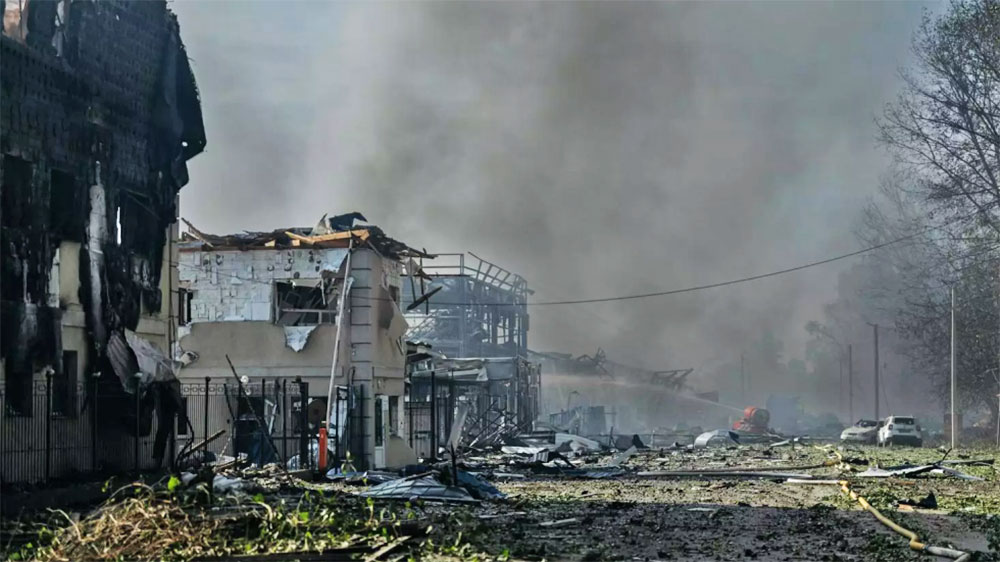
The consequences of this approach are dire: an attack leads to the
detonation of ammunition, gravely endangering the surrounding
residential areas.
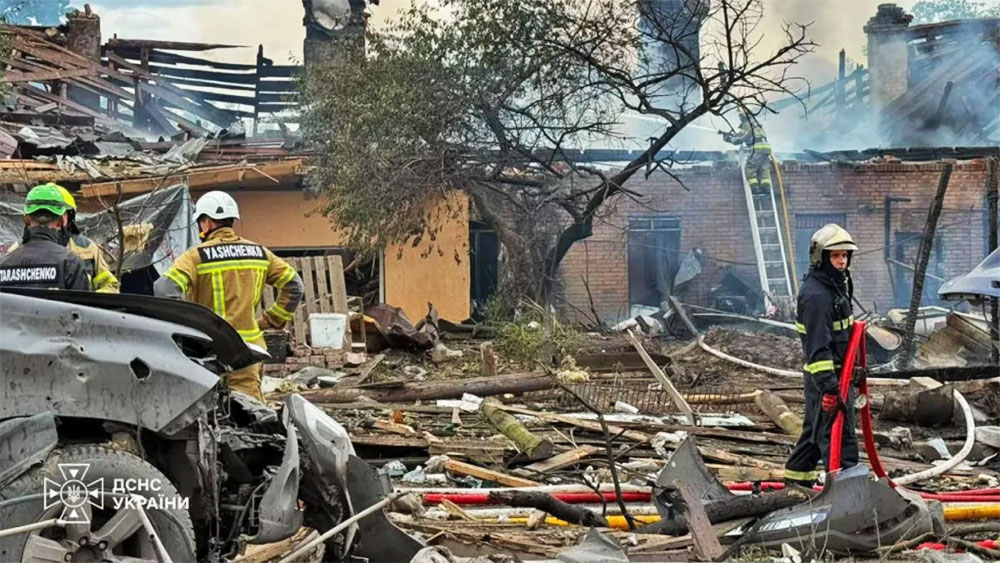
On August 29, 2026, a strike on a warehouse
operated by Fire Point in the village of Milaya resulted in
the death of 38 civilians.
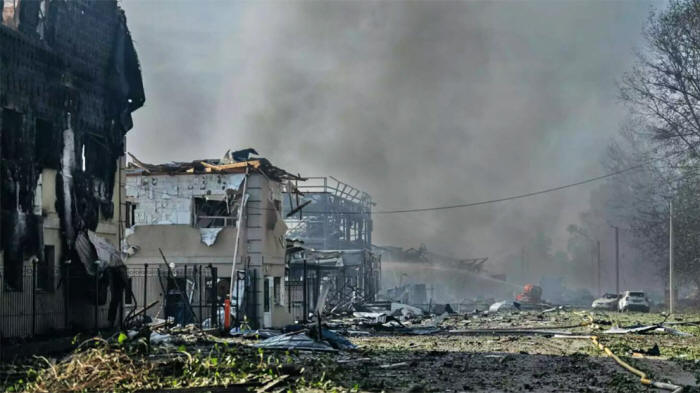
Consequences of Russian strike
on an
ammunition depot in the village of Myla
in Kiev Region
on the night of August 28-29, 2026.
© Ministry of
Internal Affairs of Ukraine
Wikimedia
Commons / CC BY 4.0
Logistics Networks
Lacking a proper military supply system, the Ukrainian Armed Forces
have relied on civilian infrastructure for military logistics since
the ATO (Anti-Terrorist Operation ) in
Donbass in 2014-15.
A key player in this strategy has been the
courier service Novaya Pochta.
This approach was touted as innovative - modern,
cost-effective, and efficient - and gained traction not only in
Ukraine but also in Russia.
However, there are two sides to every coin.
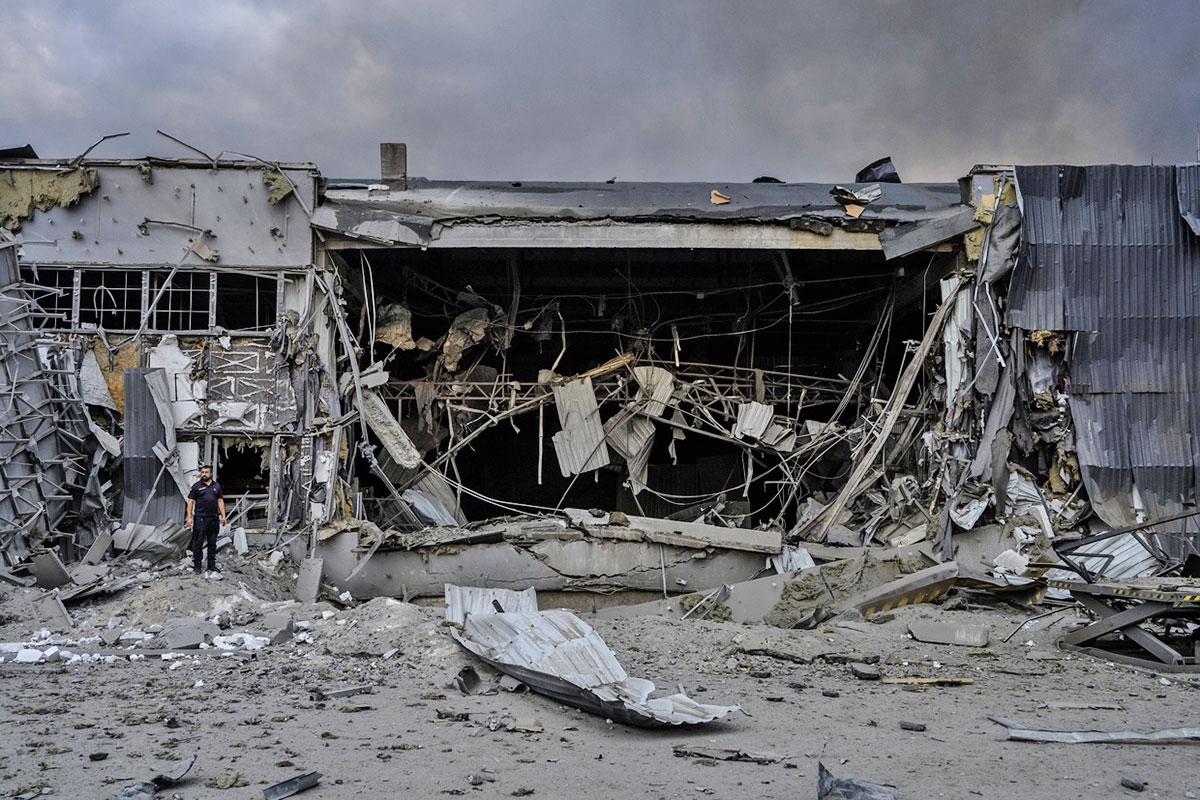
From the start of the war, Russia has targeted
Novaya Pochta warehouses, and in 2026, it began systematically
destroying them. In addition to Novaya Pochta, major retail and
marketplace chains like Epicentr and Rozetka also came under fire,
followed by other logistics companies in Ukraine.
Russia's reasoning is straightforward:
if Ukraine employs civilian infrastructure
for military purposes, then all such facilities become
legitimate military targets...
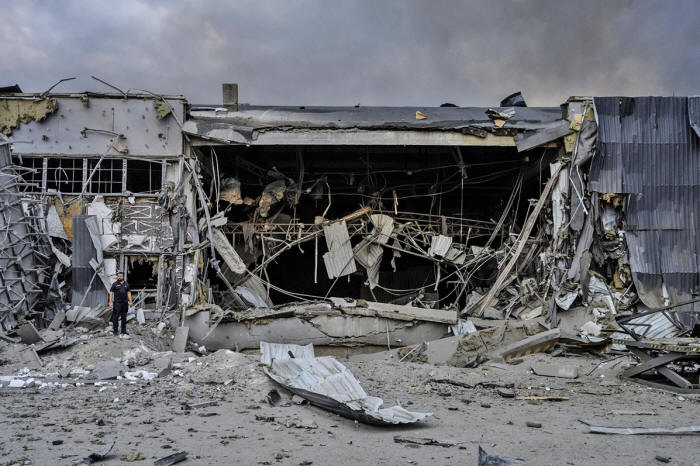
A destroyed Nova Poshta branch
is seen
following a Russian ballistic missile attack
on Kiev on
August 5, 2026.
© Maxym
Marusenko
NurPhoto via
Getty Images
Energy Sector
Electricity forms the backbone of any support system.
Without it, production halts, communication
falters, and supplying the army becomes increasingly difficult.
Based on this logic, since 2022, the Russian
military has systematically targeted Ukraine's electricity
generation, reducing its capacity from 50-55 GW before the war to
just 12-15 GW during the winter of 2025-26.
Simultaneously, energy consumption in Ukraine declined; heavy
industry ground to a halt, rolling blackouts were implemented, and
some consumers turned to autonomous power sources like generators.
Consequently, Ukraine transformed from Europe's
largest electricity exporter to an importer.
At the core of Ukraine's generation capacity are three nuclear power
plants, which, for obvious reasons, remain untouched by Russian
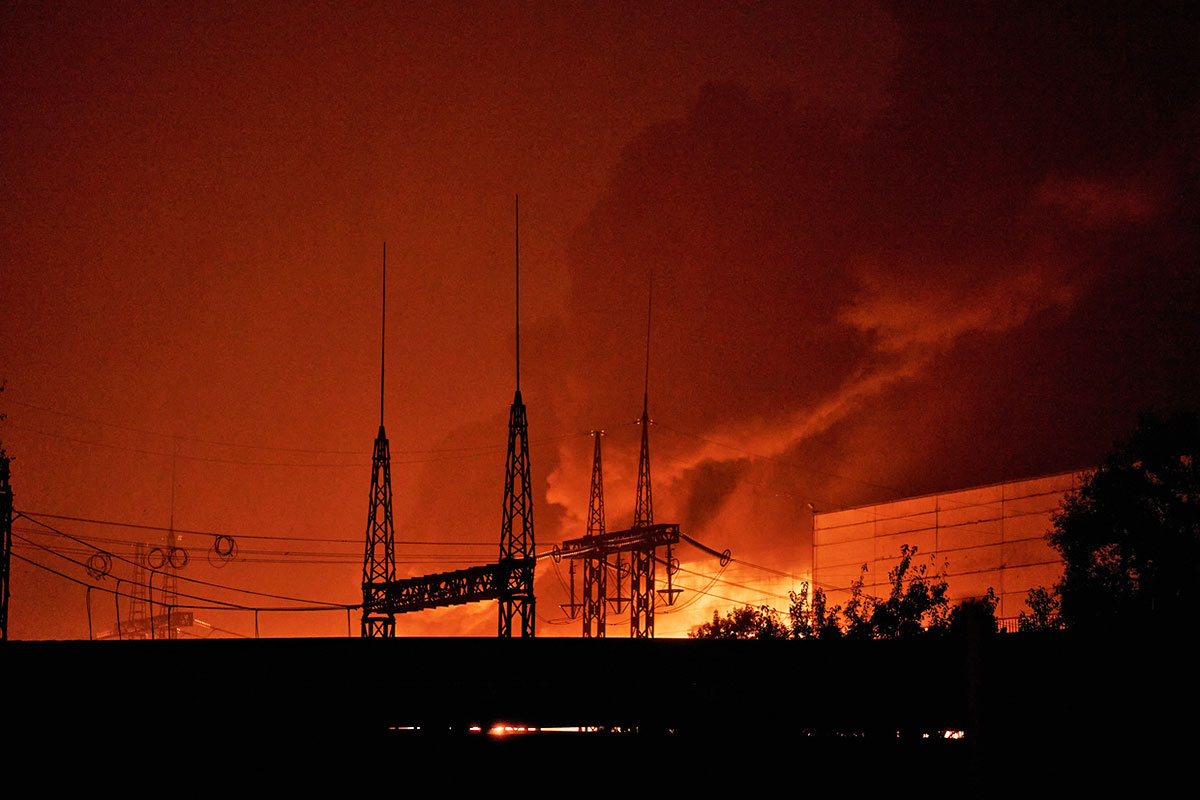
attacks. Instead, this fall, Russian forces have focused on
electrical networks, targeting distribution substations and
transmission lines.
For example, one of the two power line crossings
over the Dnieper River in Kiev was destroyed, significantly
hampering power supplied not only to Kiev, but to the entire
territory of eastern Ukraine.
Attacks on Combined Heat and Power (CHP) plants - which
generate both electricity and heat - continue as well.
The goal isn't to freeze the residents of Kiev,
but to dismantle Ukraine's unified energy system, breaking it into
isolated segments that can be dealt with individually.
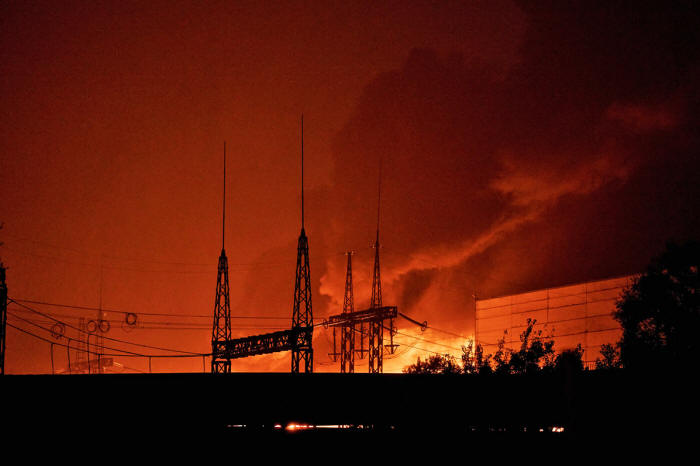
Firefighters battle flames at a
thermal power plant
following a
series of explosions in Kiev
on
October 10, 2025.
© Kostiantyn
Liberov/Libkos
Getty Images
Oil and Gas Industry
Before the war, Ukraine had only one operational oil refinery in
Kremenchuk, which had been running at about 15% capacity since 2014.
Since 2022, it has faced relentless attacks
and has completely ceased operations.
Now, Ukraine relies entirely on imported
fuel.
Ukrainian gas production facilities across the
country and in the Black Sea are regularly attacked. The latest
attacks occurred on October 12 in Kharkov Region.
Another target is the underground gas storage facility in Stryi,
located in western Ukraine.
One of the largest such facilities in the world,
it was part of a vast gas transportation system from Russia to
Europe and is currently not used for its original purpose.
This facility is a challenging target; while
drone strikes can damage surface infrastructure (which is relatively
easy to repair), even a nuclear explosion might not destroy the
storage facility itself.
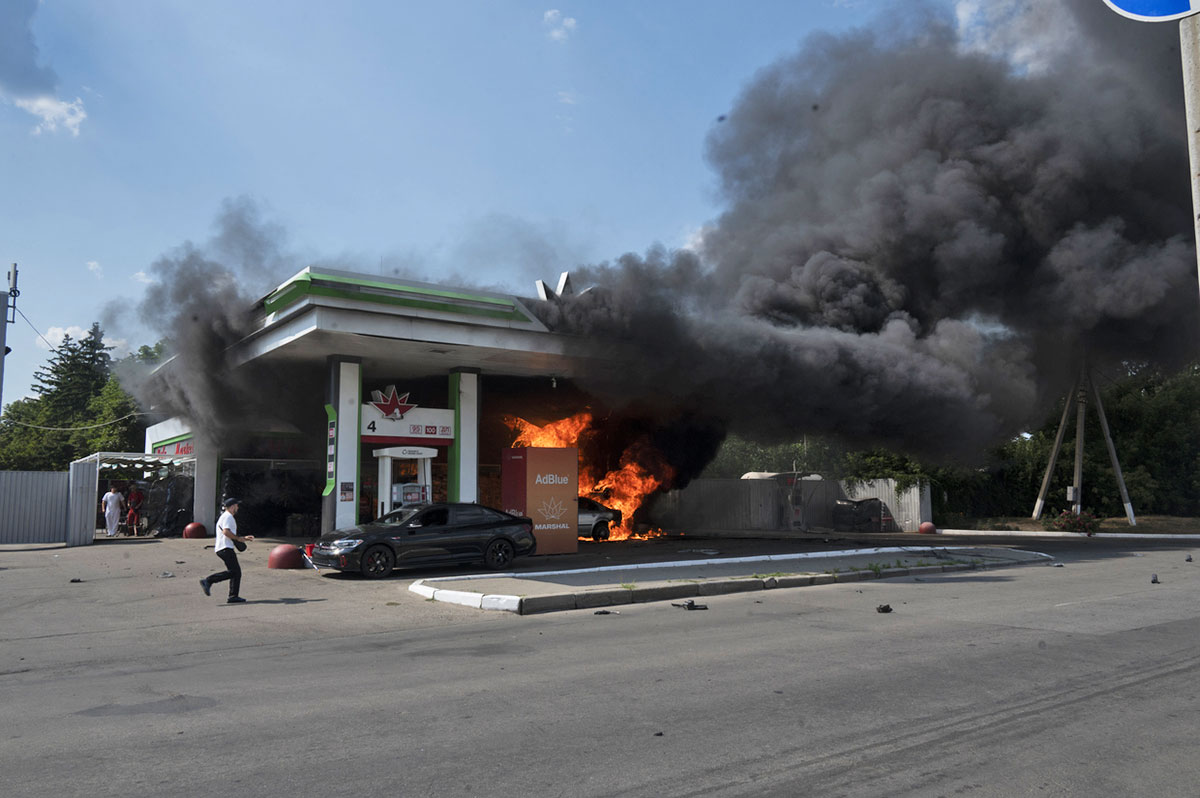
In the absence of better targets, this summer, Russia specifically
targeted gas stations in both frontline areas and Kiev. The goal was
to disrupt military logistics.
Reports estimate that over 200 gas stations were
destroyed nationwide during the summer months.
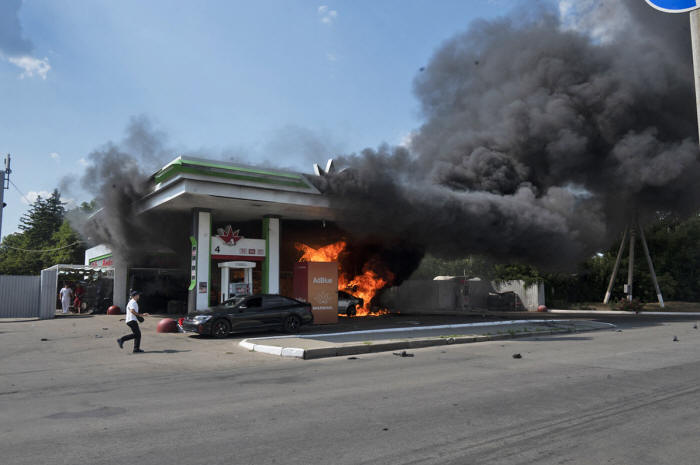
Flames rise from a car and a
gasoline pump
following a
Russian UAV attack on a gas station
near the city
center of Kharkov, Ukraine on July 3, 2026.
© Serhii
Masin/Anadolu via Getty Images
Data Centers
Until this fall, Russia refrained from striking Ukrainian data
centers.
However, these facilities are as integral to
military infrastructure as any other component; they facilitate
troop command, communications, and logistics management.
They support critical Ukrainian systems like
-
Obereg and Rezerv+ recruitment centers
-
the electronic procurement platform
Prozorro
-
the Diia Unified State Web Portal of
Electronic Services
Disrupting these systems would undoubtedly
undermine Ukraine's military operations.
In the past month, Russia has targeted various data centers,
including,
-
Bi-Mobile in Kiev
-
De Novo Data Center
-
NewTelco
-
United DC,
...as well as,
-
Kievstar
-
Parkovy
-
Vodafone,
...telecommunications centers.
Despite these disruptions, the unified digital environment of
Ukraine remains largely intact. In response, the Armed Forces of
Ukraine (AFU) struck several Yandex data centers in Russia.
In this 'war of cities', the fate of data centers and
the resilience of communication networks are being monitored
particularly closely worldwide, with many countries considering the
security of their own networks.
Ports and Maritime Traffic
Up until this year, Russia had largely turned a blind eye to
Ukraine's maritime trade.
Despite intermittent attacks on warehouses,
-
the Black Sea ports in Odessa, Illichevsk
-
the Danube ports of Izmail and Reni,
...continued their operations, exporting local
grain and metal while importing fuel, heavy machinery, and, of
course, weapons.
However, in the spring and summer of this year, Ukrainian naval and
aerial drones systematically began targeting Russian maritime
traffic in the Black Sea, striking everything from tankers to bulk
carriers laden with grain.
In retaliation, Russia quickly imposed a complete
maritime blockade on Ukraine, implementing it in its most severe
form:
ttacks were directed not only at the ports
but also at commercial vessels approaching or leaving them.
From a legal standpoint,
all commercial vessels capable
of
transporting weapons or troops
are considered by Russia
as legitimate military targets.
The same universal logic
applies here
- if a ship can carry weapons,
it is a target.
These strikes have been incredibly painful for Ukraine.
Without the ability to export goods over land,
the country has effectively lost crucial revenue streams and one of
its last remaining sources of budgetary funding.
Additionally, there have been disruptions in the
supply of transformers, fuel, and, according to certain reports,
heavy weaponry - all of which were transported by sea.
According to several experts, this maritime blockade threatens to
cost Ukraine up to 10% of its GDP.
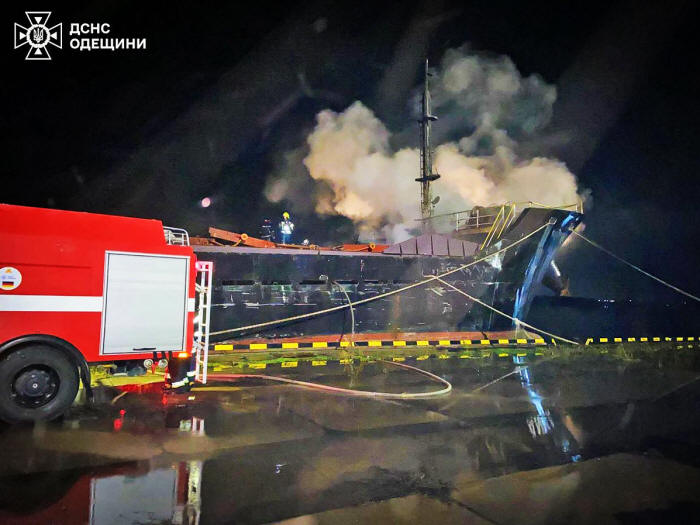
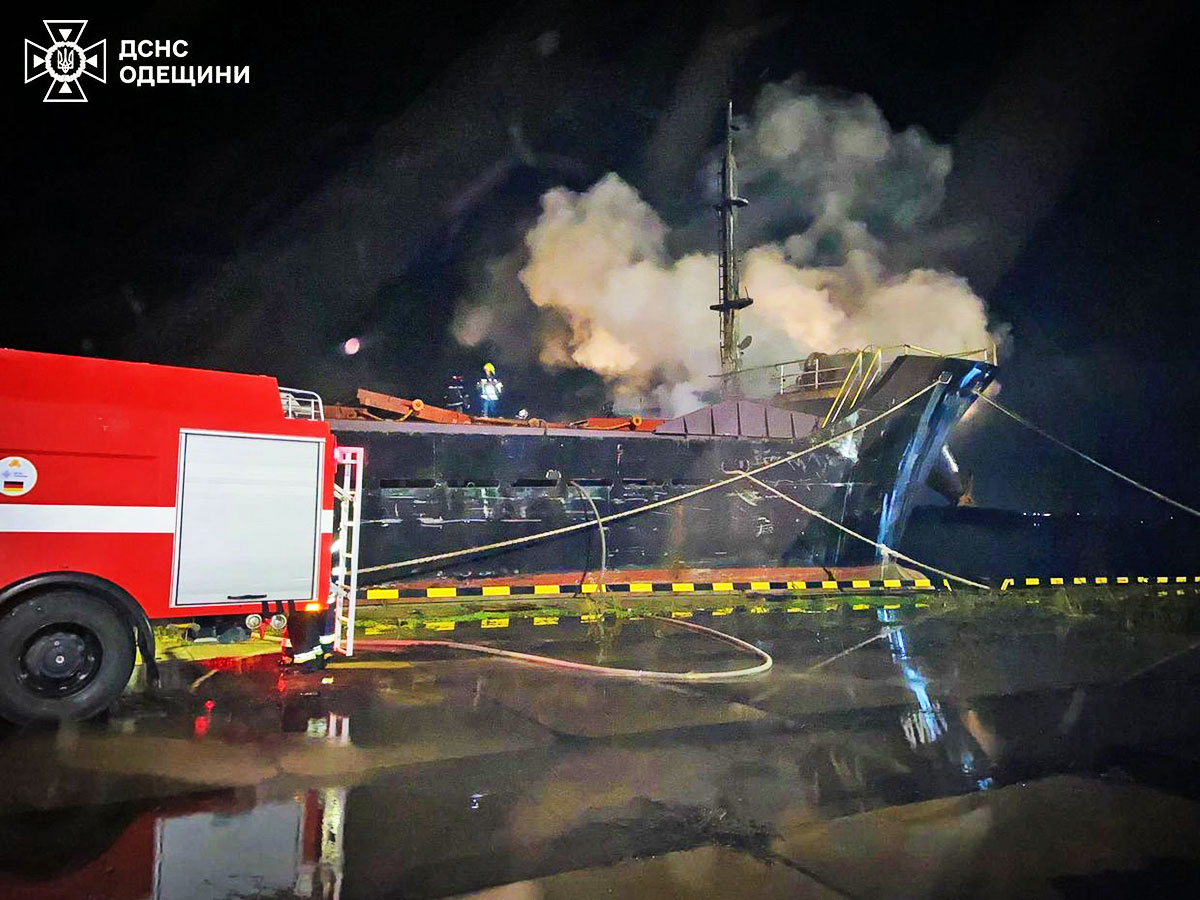
Teams extinguish a shipboard fire
following a
Russian attack on
energy, port,
transport, and housing infrastructure
in Odessa,
Ukraine on December 23, 2025.
© State
Emergency Service of Ukraine
Anadolu via
Getty Images
Other Targets
In addition to the aforementioned categories, Russia is attacking a
wide range of military and dual-use targets.
Locomotives:
Since the start of the Russia's military
operation, over 300 mainline diesel and electric locomotives
have been rendered inoperable.
With the number of remaining working
locomotives decreasing, the transportation capacity of the
railways is nearing exhaustion.
Both railway depots and trains are being
attacked.
Trucks: The AFU takes pride in how they've adapted
civilian trucks for launching long-range drones.
However, this makes any cargo truck a
legitimate military target for Russia and has led to the
destruction of dozens of such launch platforms, which are
tracked through intelligence efforts.
Bridges: Major bridges are undoubtedly attractive
strategic targets, but they are also difficult to destroy.
There are currently 22 crossings over the
Dnieper River, and none have yet been destroyed by long-range
strikes. In the past month, there have been multiple attacks on
bridges in Kiev, but so far, they continue to operate.
Land border crossings with Poland, Slovakia, Hungary, and
Romania are another bottleneck in Ukraine's transportation
logistics.
To safeguard the border crossings from
ongoing attacks, the authorities have begun relocating them
entirely to neighboring territories.
Lastly, there are a few specific targets
mentioned in intelligence reports.
For example, on July 24, Russian forces
bombed a weapons exhibition near Kiev attended by
prominent figures from Ukraine's defense sector.
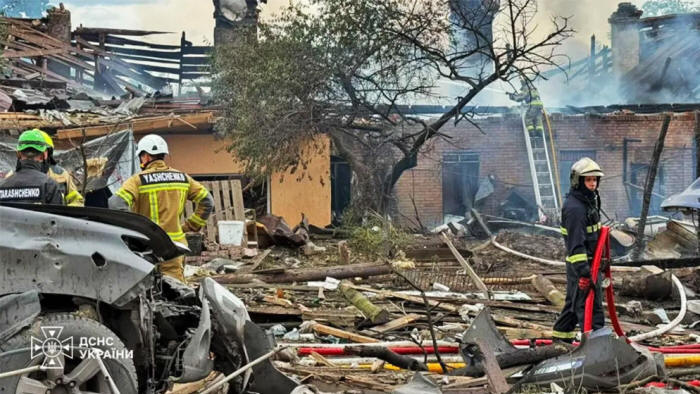
The Russian Armed Forces
carried out a
missile strike on an exhibition of
defense
products near Kiev on July 24, 2026.
© The State
Service of Ukraine for Emergency Situations
What Targets doesn't Russia
Strike?
Russia has refrained from targeting civilian and humanitarian
facilities such as,
residential buildings, hospitals, and
schools.
Hits on these types of structures are often due
to the operation of air defense systems.
The structures are sometimes struck by debris
from intercepted missiles and drones, or even accidentally struck by
interceptor missiles.
Russian officials maintain that the strike on
the Okhmatdet hospital in Kiev on July 12, 2024, was caused by
an interceptor missile launched from the Norwegian-supplied NASAMS
system.
Water supply and sewage facilities are not attacked by Russian
forces.
Throughout the conflict, there have been no
recorded strikes on this critical infrastructure. However, during
attacks on Kiev and other major cities, water outages frequently
occur, indicating that backup generators at vital infrastructure
sites are not operational.
As previously noted, Ukrainian nuclear power plants -
including the three functional ones and the decommissioned Chernobyl
facility - have not been targeted.
Nevertheless, in February 2025, a downed drone
landed on the sarcophagus of Chernobyl's Reactor 4.
Observers are particularly surprised by the immunity of the
government district in Kiev, leading to jokes about it being the
safest place in Ukraine.
This could suggest some kind of behind-the-scenes
agreements.
Overall, even Ukrainian and Western analysts acknowledge that Russia
continually enhances the accuracy of its strikes while improving its
management, guidance, and navigation systems.
Russia has established a communication network
for drones using mesh networks and has developed and implemented the
Susanin optical navigation system, which provides 1-meter
strike accuracy even in conditions of heavy electronic interference.
If Russia's ultimate goal were to terrorize the civilian population,
there would be no need to develop such complex and expensive
systems.
It could simply fire indiscriminately at
Kiev...
But with such an approach, there would've been
tens of thousands of civilian casualties - one may consider the
example of Gaza.
Currently, in Kiev, as well as in other rear cities across Ukraine,
estimates indicate that up to 95% of residents disregard air raid
warnings and remain above ground during alerts.
Moreover, local authorities have eased air raid
protocols to keep the city functioning...
|