|

by Ethan Siegel
October 05, 2026
from
Medium Website
Article also
HERE
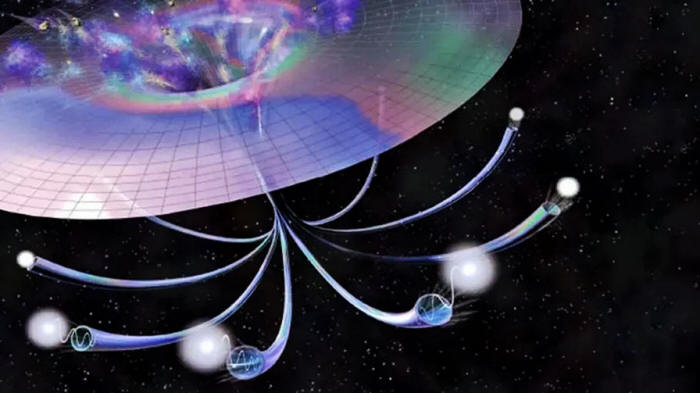
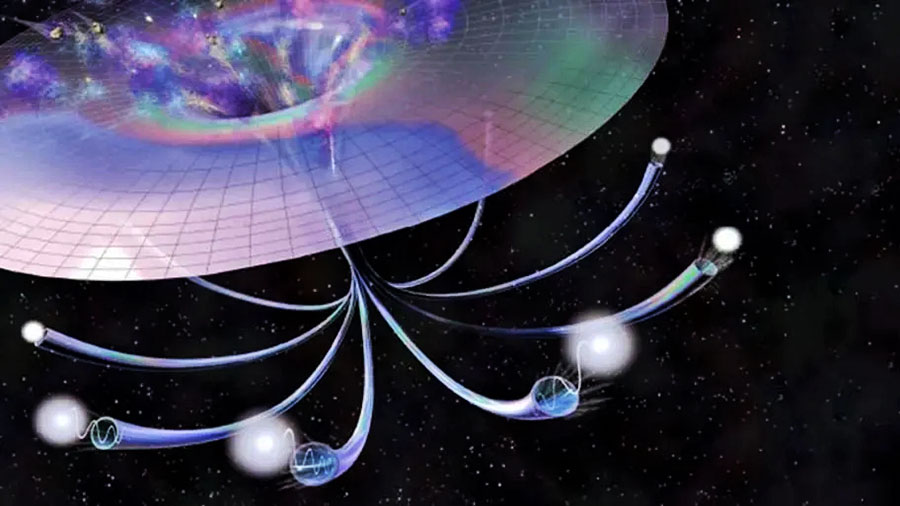
From a pre-existing state,
inflation
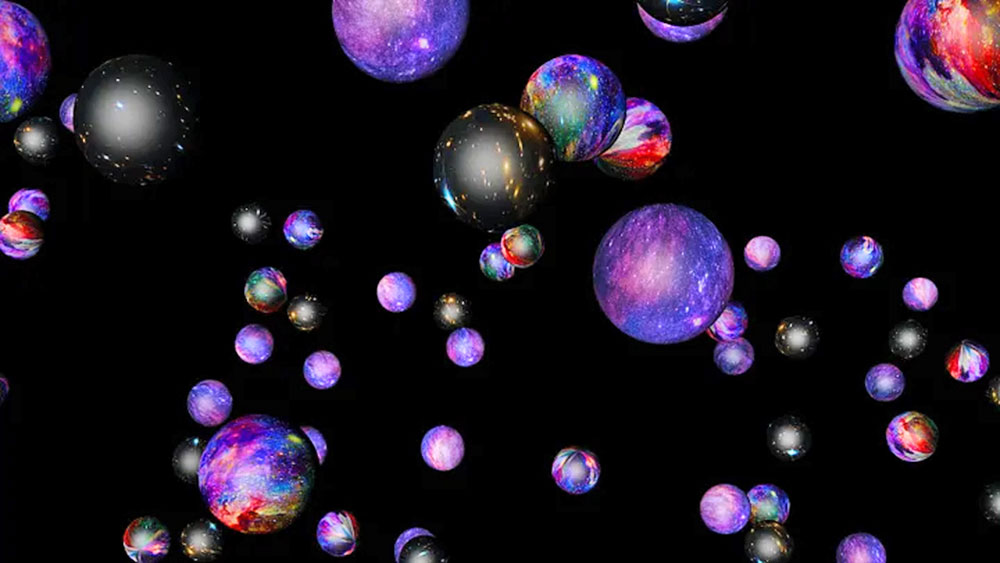
predicts that a series of universes
will be
spawned as inflation continues, with each one being
completely
disconnected from every other one,
separated by
more inflating space.
One of these
"bubbles," where inflation ended,
gave birth to
our Universe some 13.8 billion years ago,
with a very low
entropy density,
but without
ever violating the 2nd law of thermodynamics.
(Credit:
Nicolle Rager Fuller)
The
observable Universe
is 92
billion light-years in diameter.
These
pictures put just
how large
that is in perspective.
Quick take:
-
Here on Earth, our entire planet is a little under
13,000 kilometers in diameter, or about seven orders
of magnitude greater than the size of a single human
being.
-
But as we go up, to larger and larger scales, we
find that stars, stellar systems, star clusters,
galaxies, clusters of galaxies, and more show us how
insignificant human, and even planetary, scales
truly are.
-
Even with all we know, the vast abyss of the
unobservable Universe is larger than the cumulative
suite of all we can see. These images show how big
our Universe is on truly cosmic scales.
|
Cosmically, humanity is a mere drop in the Universe's
vast ocean.
|
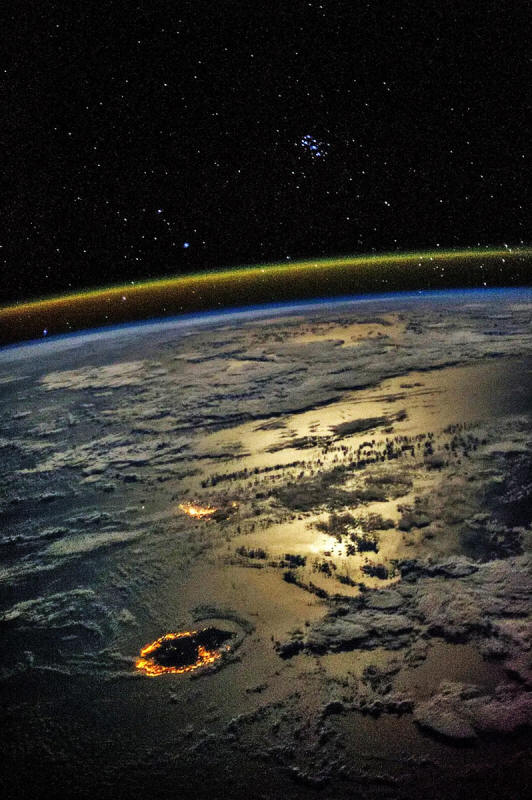
This image, taken from the
International Space Station by astronaut Karen Nyberg
in 2013, shows the two largest islands on the southern
part of the Mascarene Plateau:
Réunion, in the foreground, and
Mauritius, partially covered by clouds.
To see a human on Earth from the
altitude of the ISS, a telescope the size of Hubble
would be needed.
The scale of a human is less than
1/5,000,000 the scale of Earth, but Earth is just a
proverbial drop in the cosmic ocean, with a diameter of
only a little over 10,000 kilometers.
(Credit: NASA/Karen
Nyberg) |
Our civilization's entire experience -
excepting spaceflight - is confined to our planet: 13,000 km across.
|
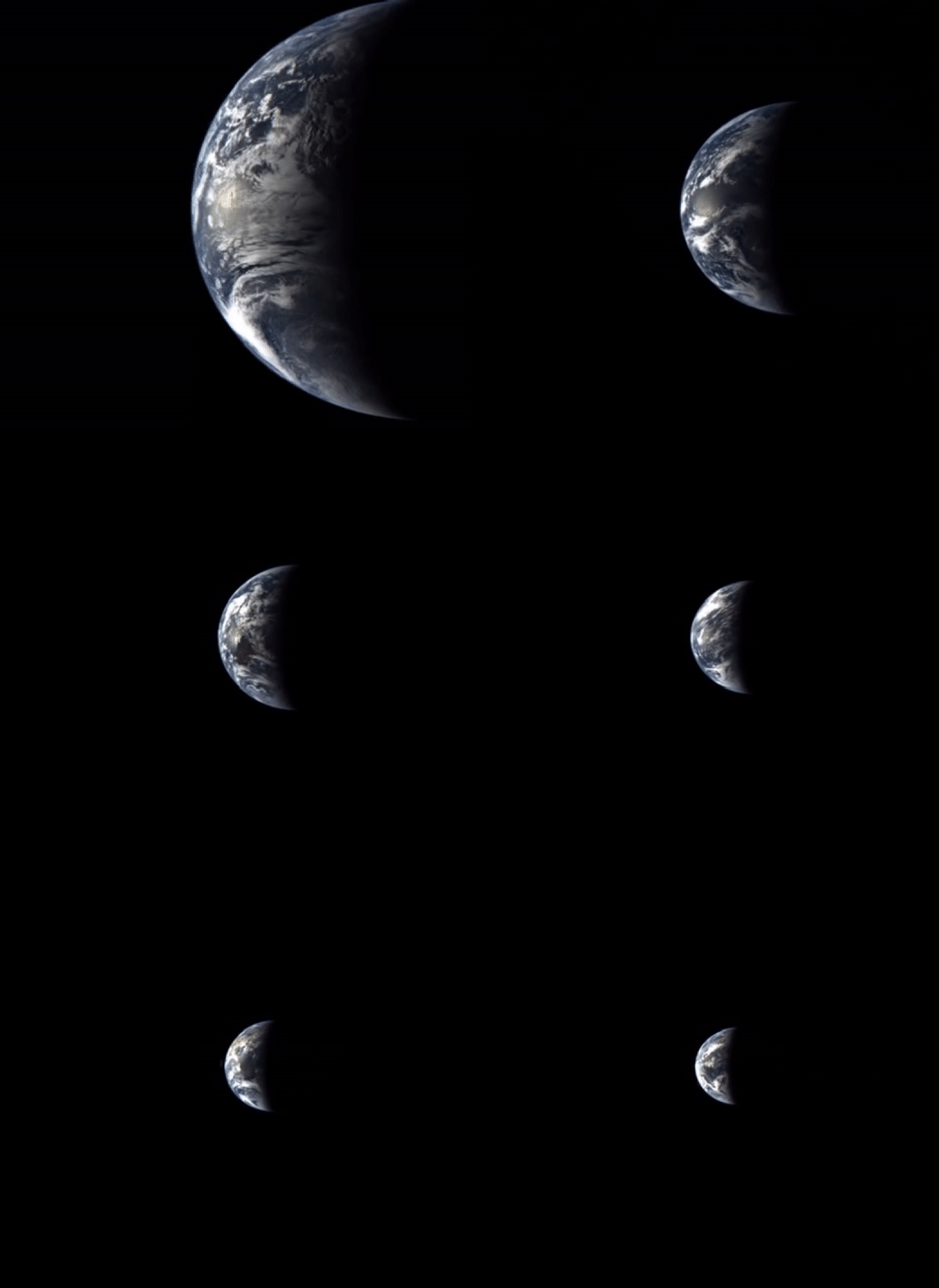
This view of the Earth comes to us
courtesy of
NASA's MESSENGER
spacecraft, which had to perform flybys of Earth and
Venus in order to lose enough energy to reach its
ultimate destination:
Mercury...
Several hundred images, taken with
the wide-angle camera in MESSENGER's
Mercury Dual Imaging System
(MDIS), were sequenced into a movie documenting the view
from MESSENGER as it departed Earth.
Earth, an oblate spheroid, rotates
roughly once every 24 hours on its axis and moves
through space in an elliptical orbit around our Sun.
(Credit:
NASA/MESSENGER) |
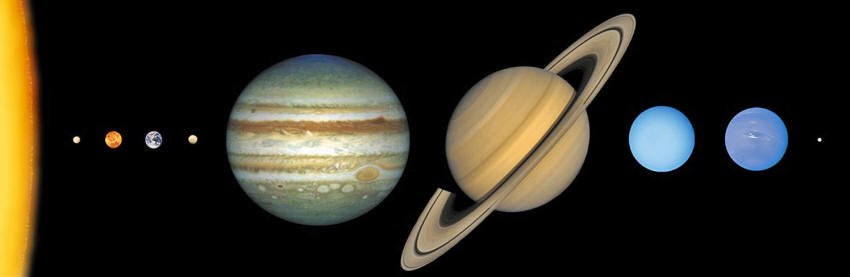
Even other planets routinely occupy volumes thousands
of times greater than Earth.
|
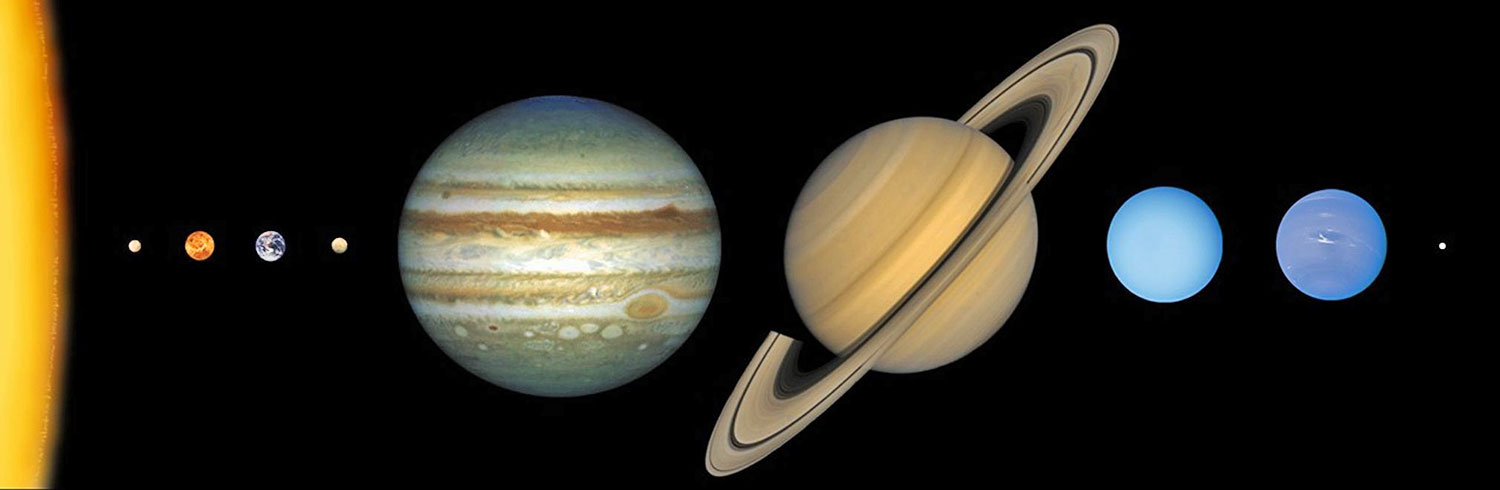
Of the eight planets in
our Solar System, the
four gas giant worlds are the least dense, with less
than half the density of the least dense rocky planet (Mars),
and with Saturn being even less dense than water.
(Credit:
NASA/Lunar and Planetary Institute) |
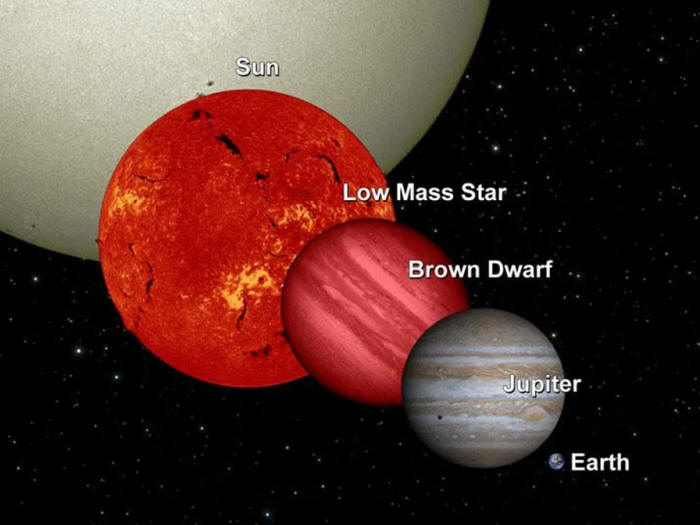
Stars barely outsize the largest planets, but
frequently get much larger.
|
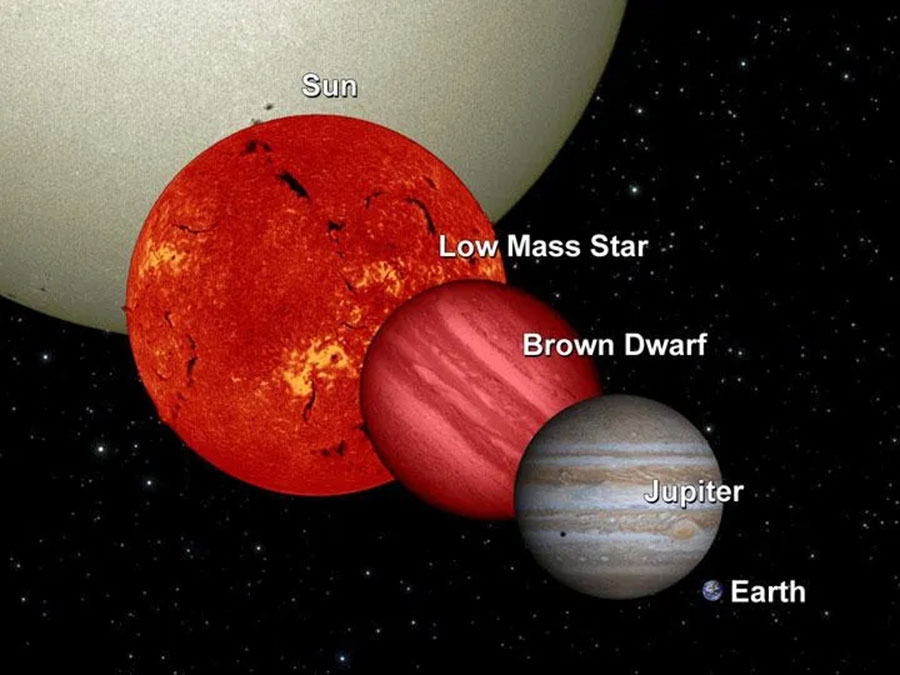
Brown dwarfs, between about
0.013–0.080 solar masses, will fuse protons+deuterons or
deuterons+deuterons into helium-3 or tritium, remaining
at the same approximate size as
Jupiter but achieving
much greater masses.
Red dwarfs are only slightly larger
but do initiate proton-proton fusion, but even the
Sun-like star shown here is not shown to scale here; it
would have about 7 times the diameter of a low-mass
star.
Stars can be up to nearly 2000 times
the diameter of our Sun within this Universe.
(Credit:
NASA/JPL-Caltech/UCB) |
The
biggest supergiant stars have
diameters exceeding billions of kilometers.

|
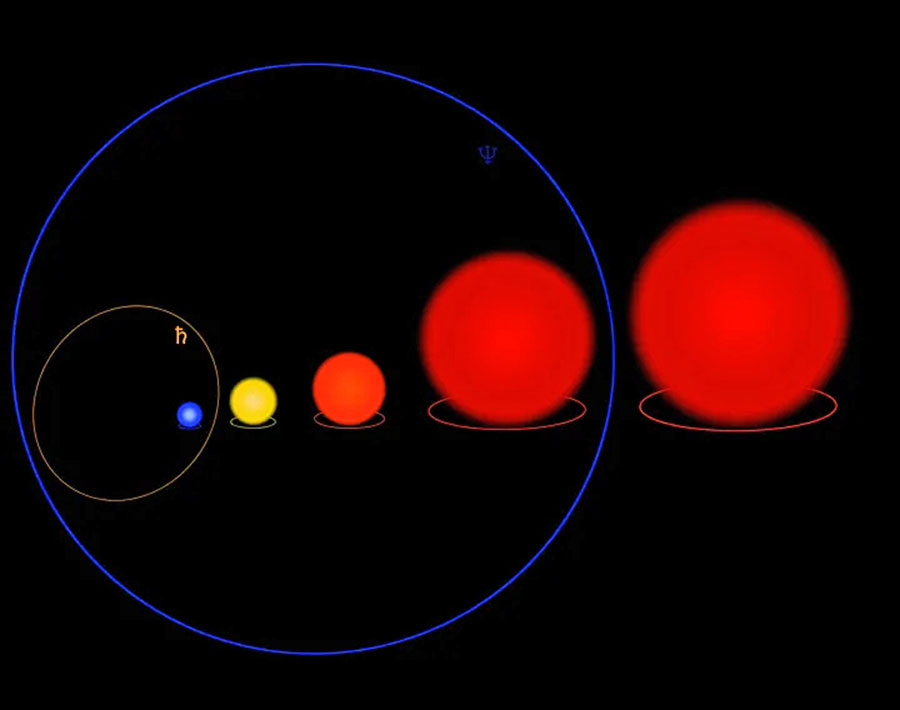
This illustration shows some of the
largest stars in the Universe, along with the orbits of
Saturn (brown ellipse)
and Neptune (blue ellipse) for comparison.
The stars, from left to right, are
the largest blue hypergiant, yellow hypergiant, orange
hypergiant, and then the largest two stars of all: the
red hypergiants UY Scuti and Stephenson 2–18.
The largest stars are approximately
2,000 times the diameter of our Sun, but the
temperatures at the surfaces of these stars range from
only a few thousand K all the way up to Wolf-Rayet
stars, with temperatures of ~200,000 K.
(Credit:
SkyFlubbler/Wikimedia Commons) |
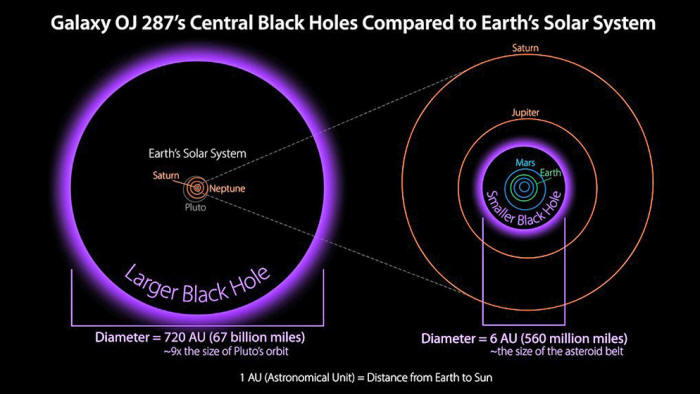
They're comparable in scale to the
heaviest supermassive black holes' event horizons.
|
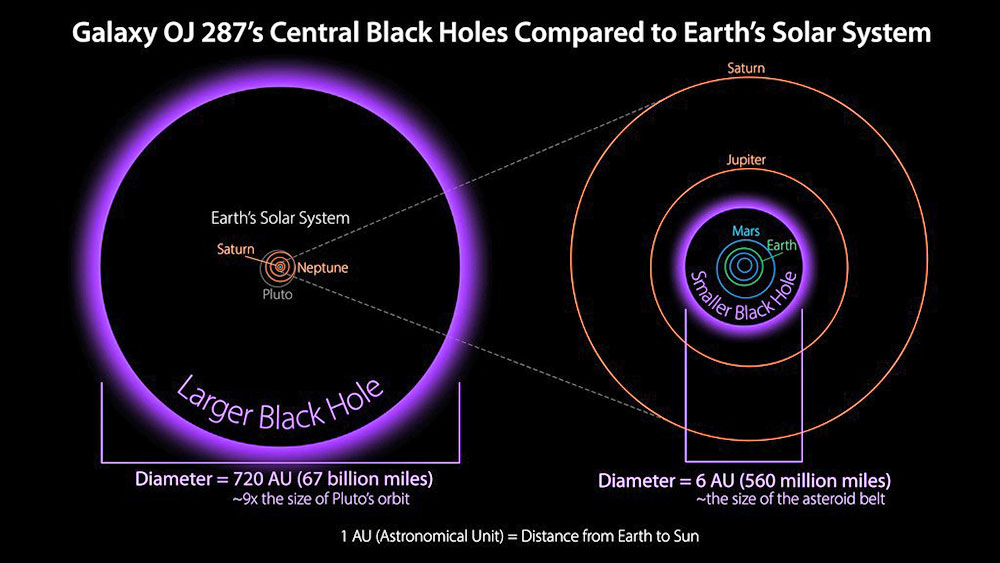
This diagram shows the relative sizes
of the event horizons of the two supermassive
black holes orbiting
one another in the OJ 287 system.
The larger one, of ~18 billion solar
masses, is 12 times the size of Neptune's orbit; the
smaller, of 150 million solar masses, is about the size
of the asteroid Ceres's orbit around the Sun.
The heaviest known black hole is only
a few times more massive (and hence, a few times larger
in radius) than OJ 287's primary.
(Credit:
NASA/JPL-Caltech/R. Hurt (IPAC)) |
But even the largest individual objects are no match
for extended, aggregate systems.
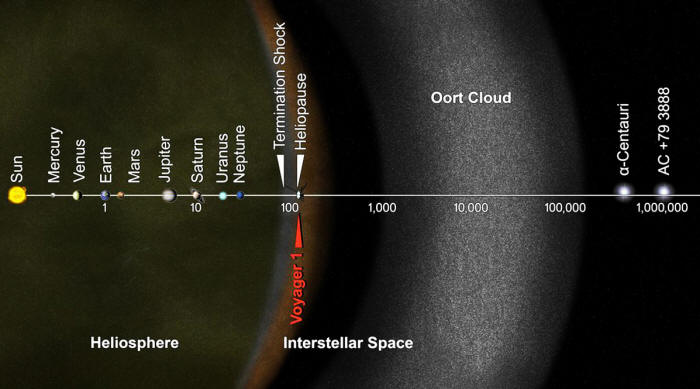
|
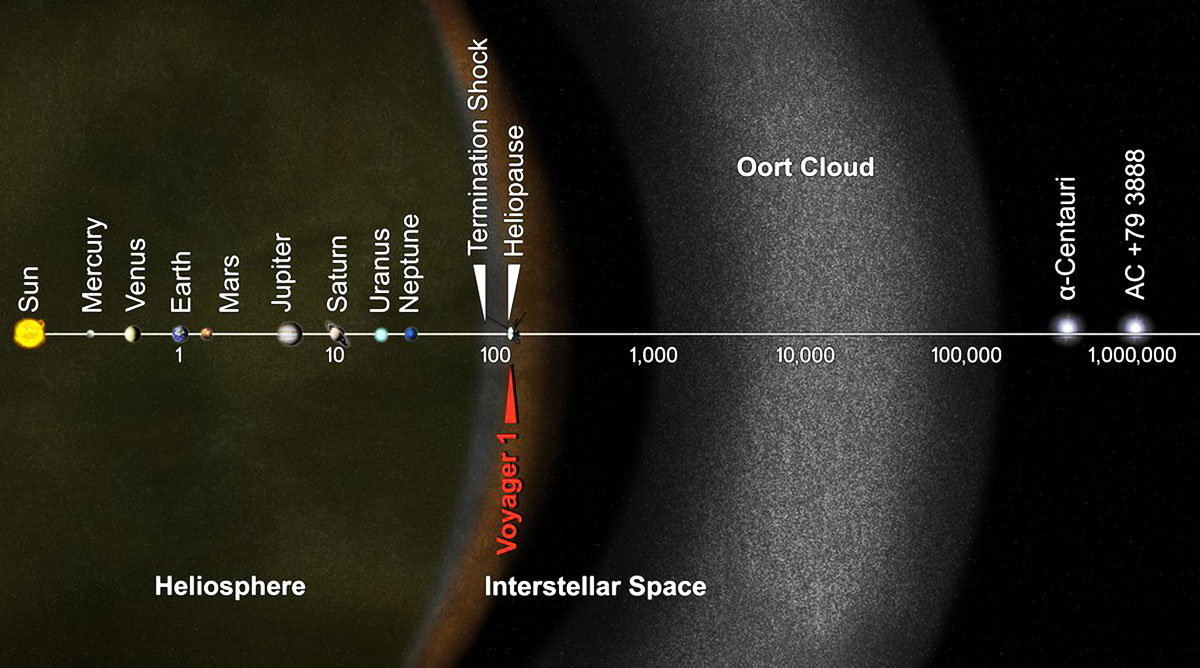
A logarithmic chart of distances,
showing the planets, the Voyager spacecraft, the Oort
Cloud, and our nearest star:
Proxima Centauri.
If we imagine building larger and
larger particle accelerators, every factor of 10 in
radius gets us another factor of 10 in energy, but
typically at the expense of another factor of 100 in
cost.
On planetary and stellar scales, this
can get prohibitively large very quickly.
(Credit:
NASA/JPL-Caltech) |
Surrounding every stellar system, Oort-like clouds
span multiple light-years: tens of trillions of kilometers.
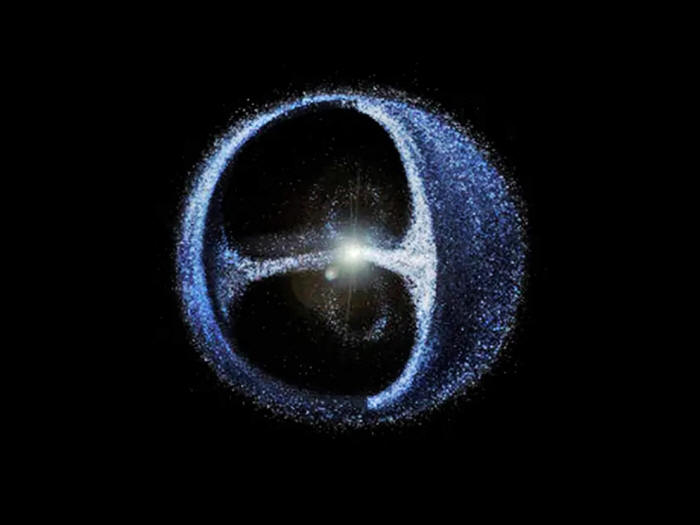
|
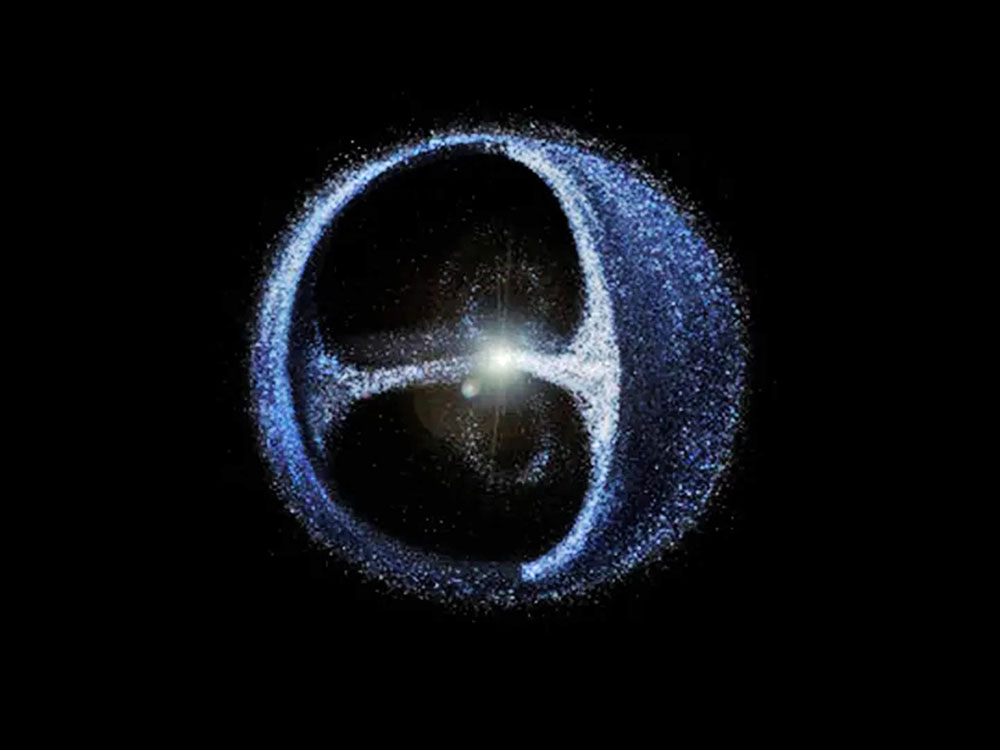
An illustration of the inner and
outer Oort cloud
surrounding our Sun.
While the
inner Oort cloud is
torus-shaped, the outer Oort cloud is spherical.
The true extent of the outer Oort
cloud may be under 1 light-year, or greater than 3
light-years; there is a tremendous uncertainty here.
Any massive object that passes
through the Oort cloud has a significant chance of
perturbing the objects within its vicinity.
(Credit:
Pablo Carlos Budassi/Wikimedia Commons) |
The stars themselves cluster together into great
galactic assemblages.

|
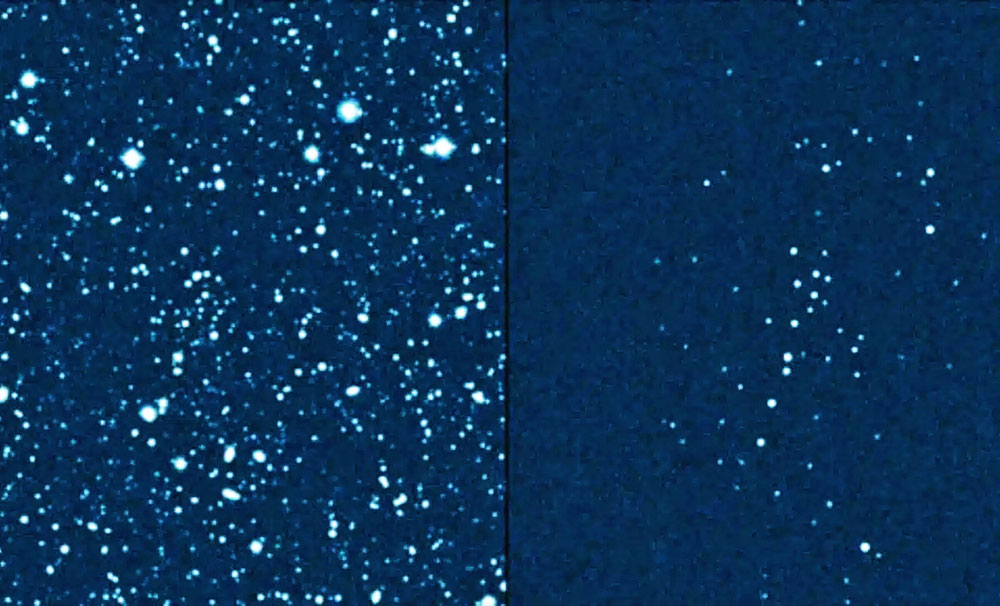
Within this dense star field, at
left, a few candidate members of an individual
structure, either a globular cluster remnant or a very
low-mass dwarf galaxy, can be pulled out by sorting the
stellar properties of the objects inside of it.
(Credit:
CFHT / S. Gwyn / S. Smith) |
The tiniest galaxies possess thousands of stars,
spanning hundreds of light-years.
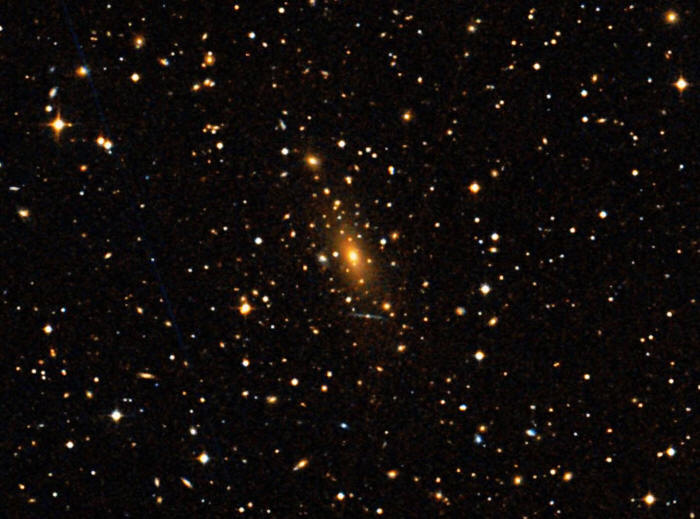
|
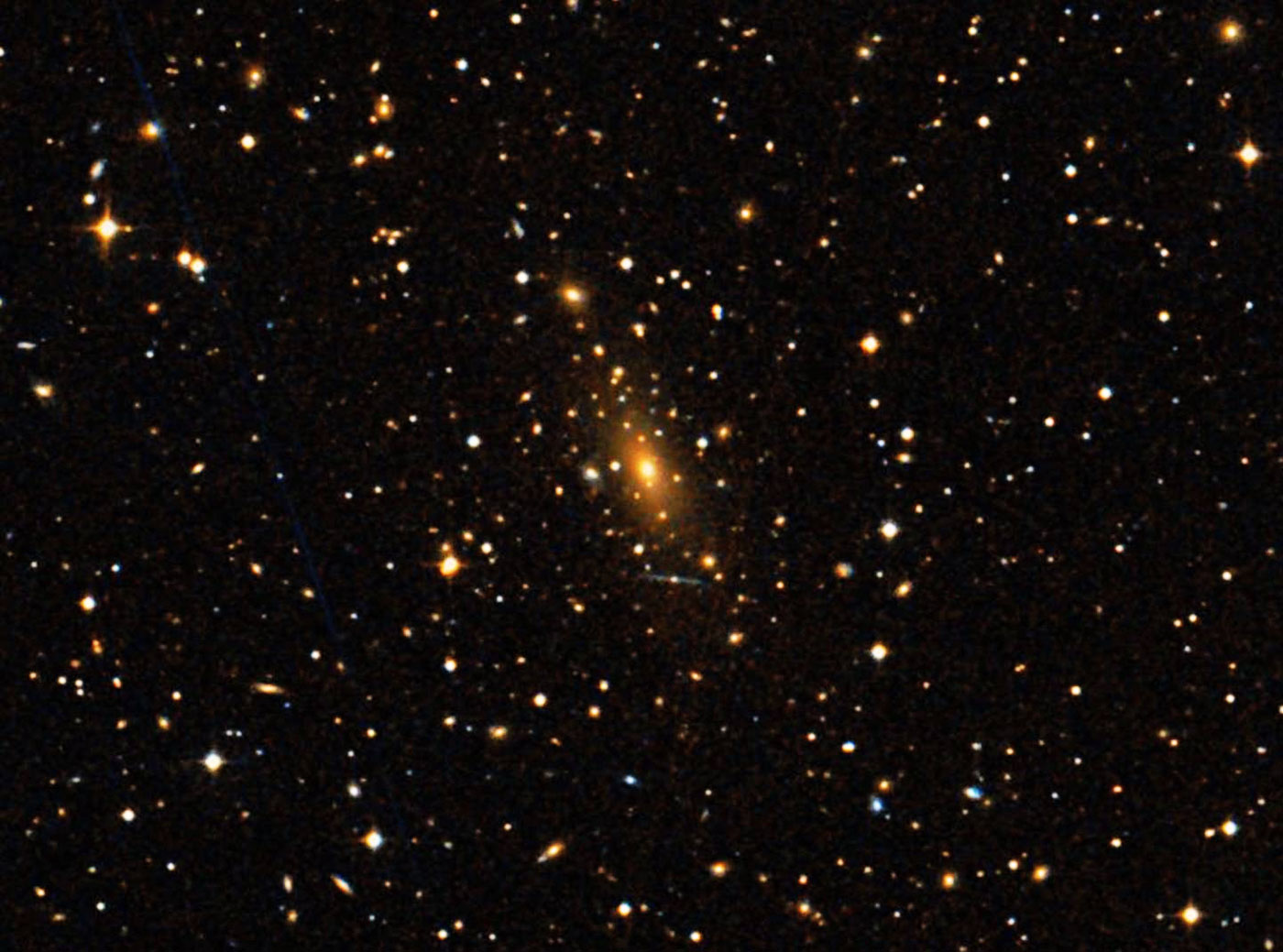
The giant galaxy cluster, Abell 2029,
houses galaxy IC 1101 at its core.
At 5.5-to-6.0 million light-years
across, over 100 trillion stars and the mass of nearly a
quadrillion suns, it's the largest known galaxy of all
by many metrics.
A survey of the brightest galaxy
within all of the Abell clusters reveals a cosmic motion
that's inconsistent with the CMB dipole.
(Credit:
Digitized Sky Survey 2; NASA) |
The largest galaxies contain over 100
trillion stars.
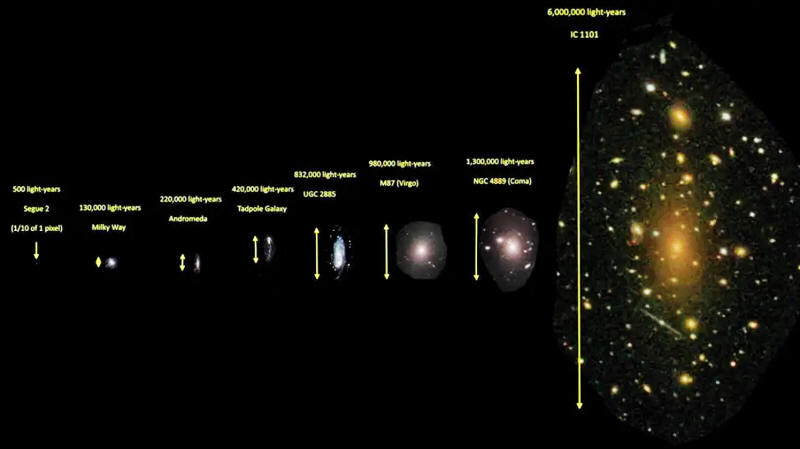
|
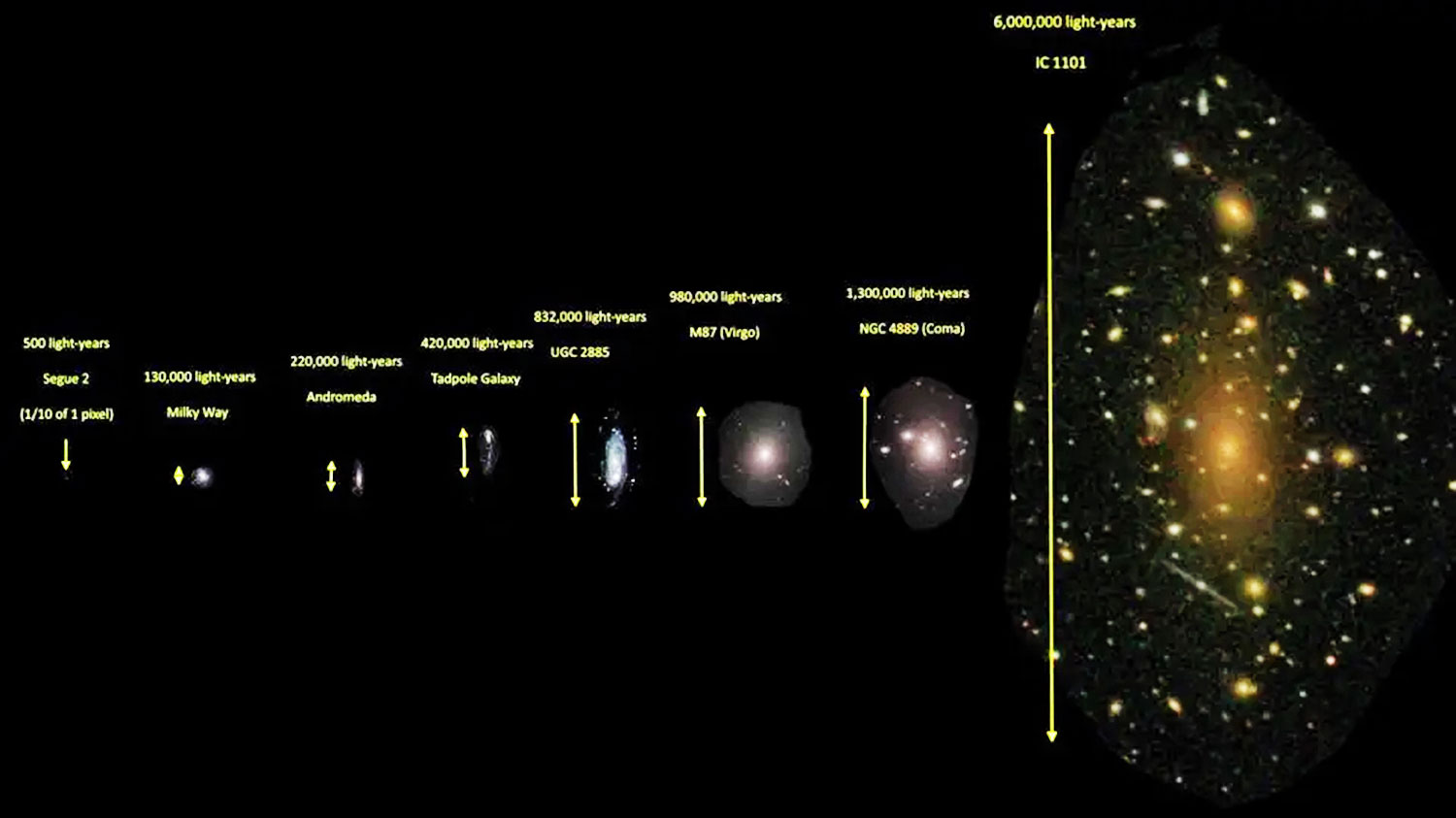
Composite of galaxies from the
smallest to the largest, shown (approximately) actual
size.
The giant elliptical galaxy at the
heart of cluster Abell 2029, IC 1101, is the largest
known galaxy in the Universe, at least in terms of
stellar extent.
It is much, much larger than the
Milky Way or Andromeda (or any spiral galaxy), but also
towers over even other typical giant ellipticals.
(Credit: E. Siegel) |
Quasar jets are larger still:
Porphyrion spans an unprecedented 24 million
light-years.
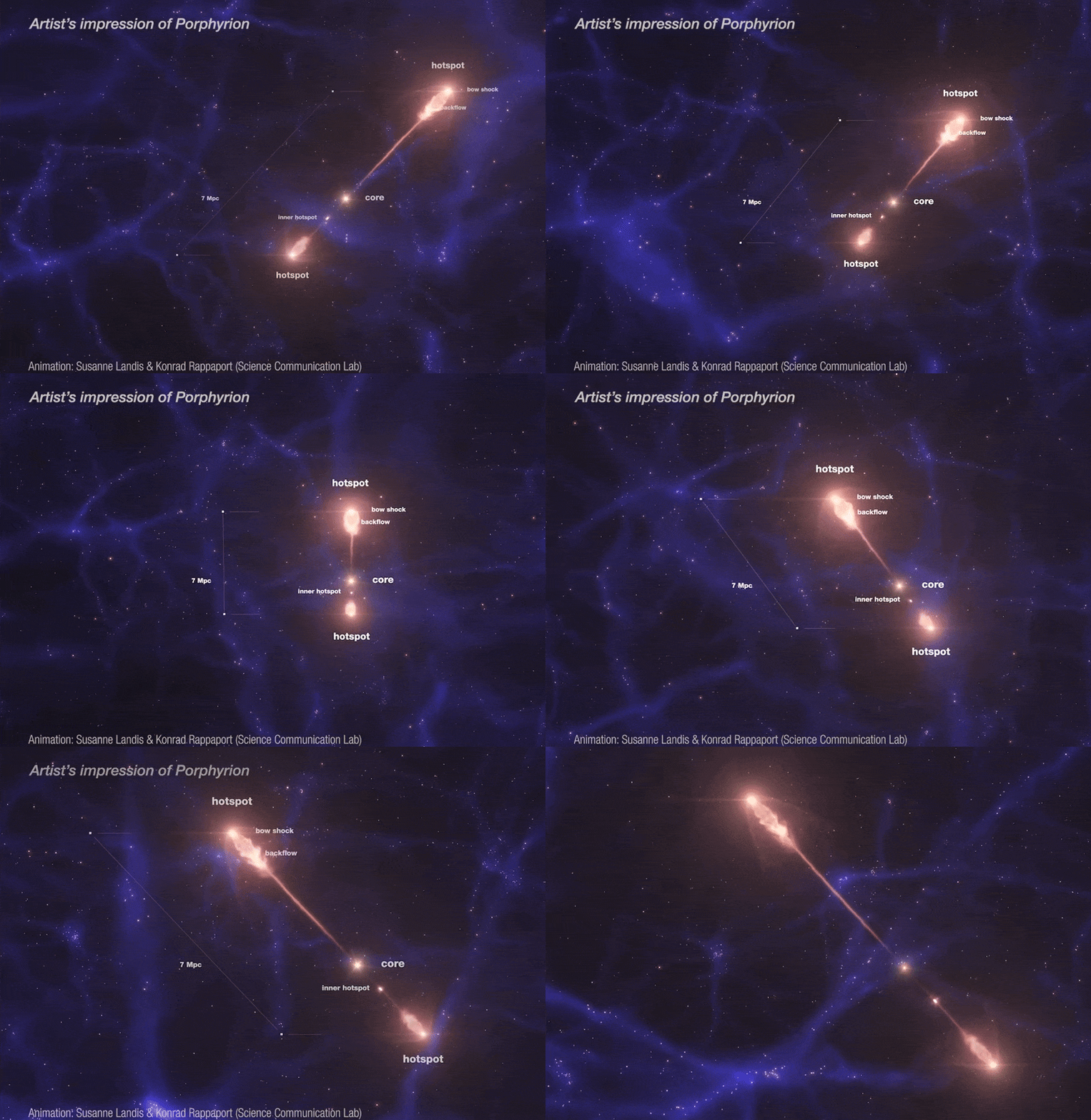
|
This animation showcases Porphyrion,
its extent, and many of the features observed in radio
wavelengths with LOFAR and GMRT.
This is the largest
black hole jet system,
at present, ever discovered.
(Credit: Susanne
Landis & Konrad Rappaport (Science Communication Lab)) |
On even larger scales, galaxies cluster together, forming structures
up to hundreds of millions of light-years across.
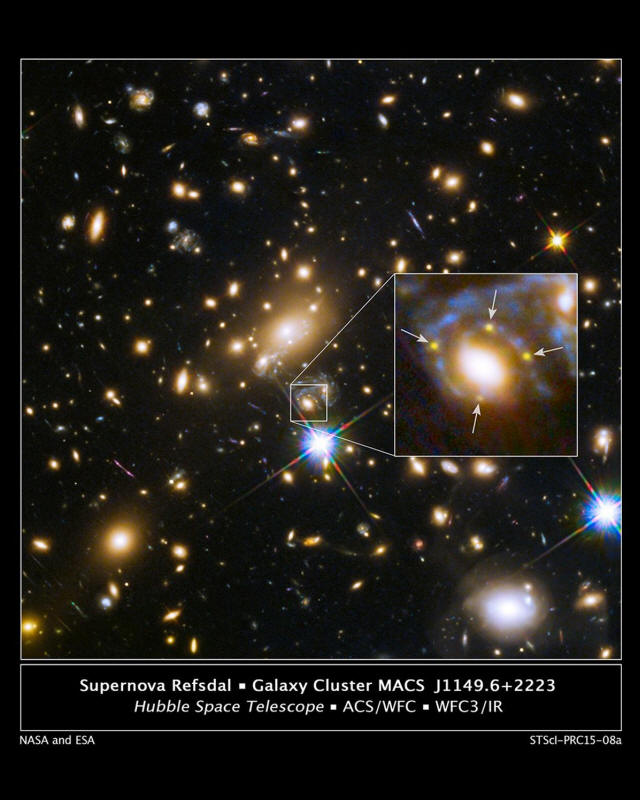
|
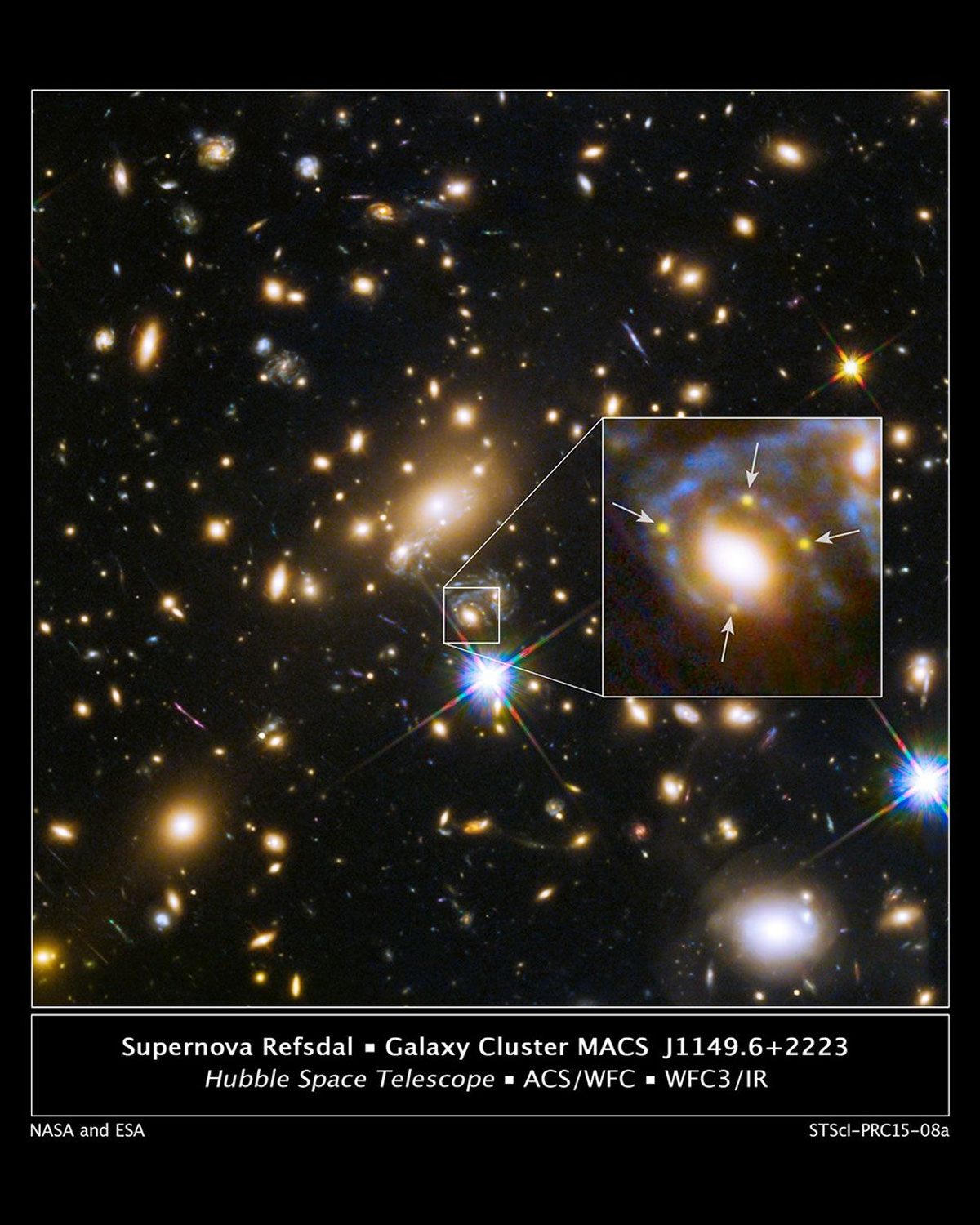
The impressively huge galaxy cluster
MACS J1149.5+223, whose light took over 5 billion years
to reach us, is among the largest bound structures in
all the Universe.
On larger scales, nearby galaxies,
groups, and clusters may appear to be associated with
it, but are being driven apart from this cluster due to
dark energy.
Superclusters are only apparent
structures, but the largest galaxy clusters that are
bound can still reach hundreds of millions, and perhaps
even a billion, light-years in extent.
(Credit:
NASA, ESA, and S. Rodney (JHU) and the FrontierSN team;
T. Treu (UCLA), P. Kelly (UC Berkeley), and the GLASS
team; J. Lotz (STScI) and the Frontier Fields team; M.
Postman (STScI) and the CLASH team; and Z. Levay (STScI)) |
The
largest superclusters, voids, and filaments
- although not gravitationally bound - extend for 1.4 billion
light-years.
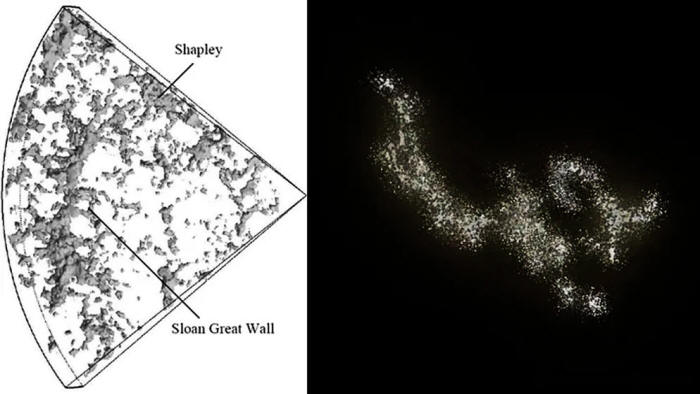
|
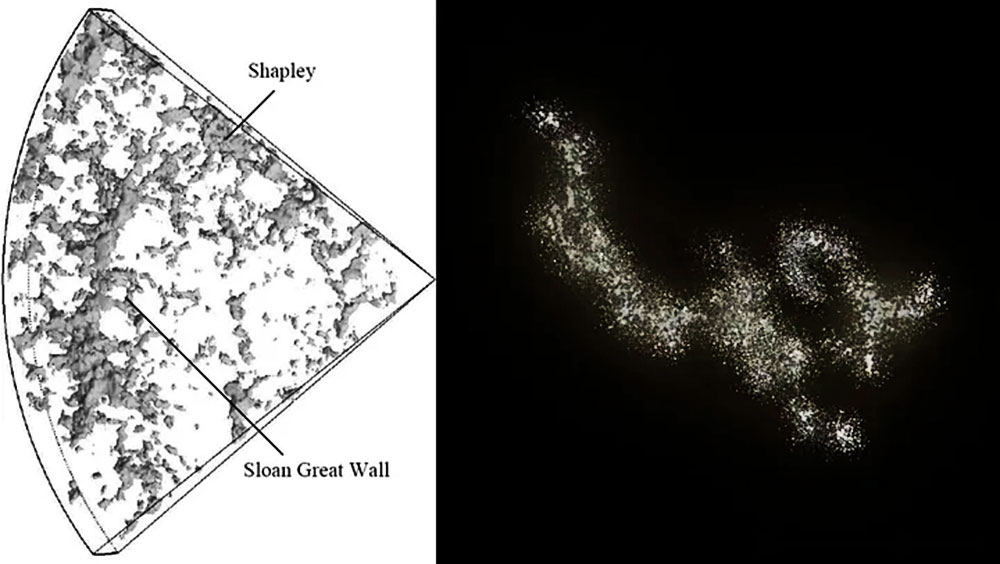
The Sloan Great Wall is one of the
largest apparent, though likely transient, structures in
the Universe, at some 1.37 billion light-years across.
It may just be a chance alignment of
multiple superclusters, but observations definitively
indicate that it isn't a single, gravitationally bound
structure, as dark energy is in the process of driving
it apart.
The galaxies of the Sloan Great Wall
are depicted at right.
(Credit:
Willem Schaap (L); Pablo Carlos Budassi (R)/Wikimedia
Commons) |
Overall, our observable Universe measures 92 billion
light-years.
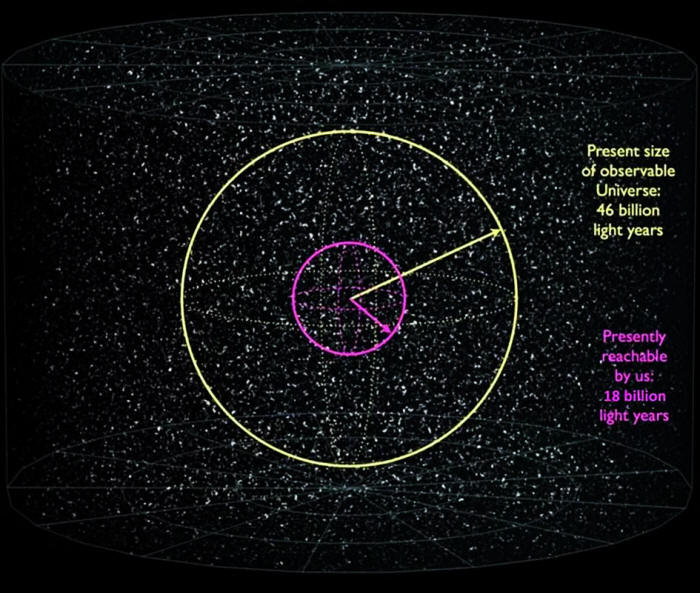
|
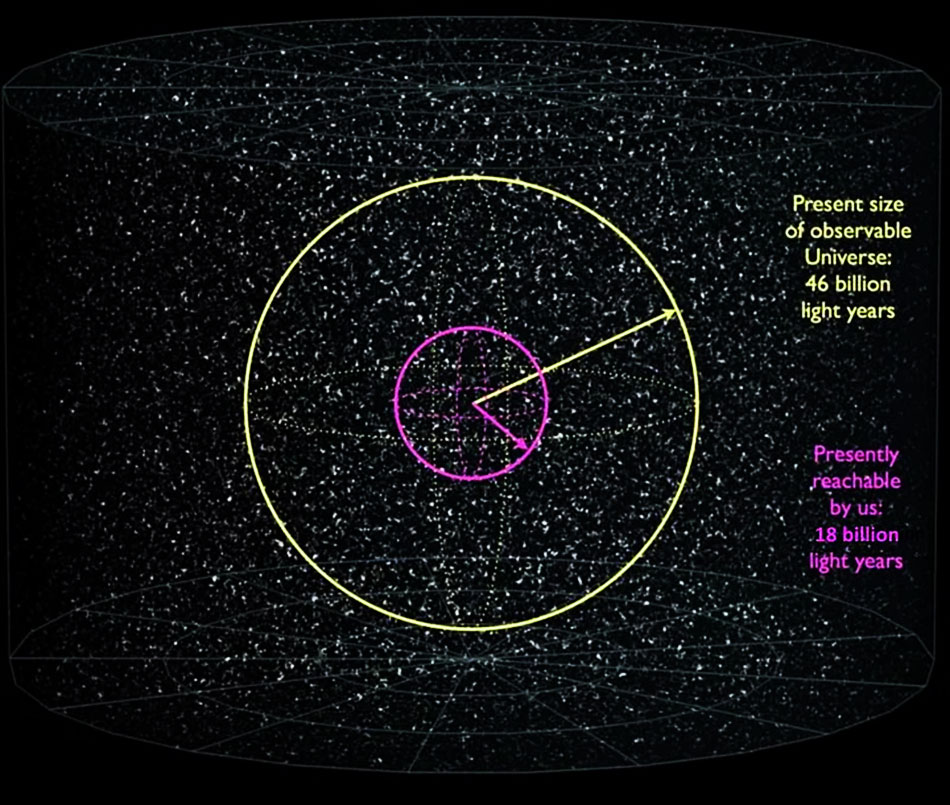
The size of our visible Universe
(yellow), along with the amount we can reach (magenta)
if we left, today, on a journey at the speed of light.
The limit of the visible Universe is
46.1 billion light-years, as that's the limit of how far
away an object that emitted light that would just be
reaching us today would be after expanding away from us
for 13.8 billion years.
Anything that occurs, right now,
within a radius of 18 billion light-years of us, will
eventually reach and affect us; anything beyond that
point will not.
Each year, another ~20 million stars
cross the threshold from being reachable to being
unreachable.
(Credit:
Andrew Z. Colvin and Frederic Michel, Wikimedia Commons;
Annotations: E. Siegel) |
But the unobservable Universe must
be
at least hundreds of times larger.
|
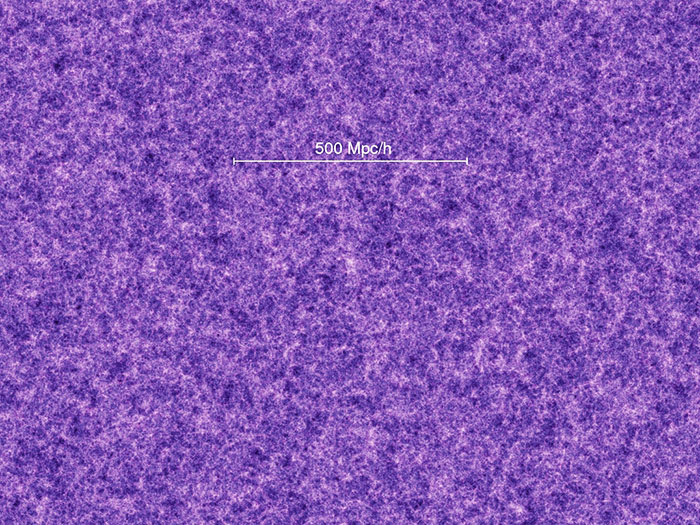
This simulation (click above image)
shows the large-scale structure of the Universe on the
scales of the actual cosmic horizon: approximately 93
billion light-years across.
At this level, even the largest
cosmic structures are reduced to mere blips, showcasing
just how uniform, smooth, and equal the Universe is on
the largest of cosmic scales.
(Credit:
The Millennium Simulation, V. Springel et al.;
Modifications: E. Siegel) |
For all we know,
the Universe may even be infinite.
|
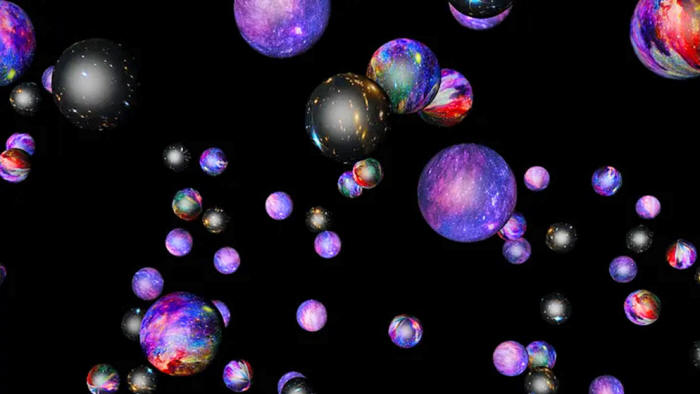
We can imagine a very large number of
possible outcomes that could have resulted from the
conditions our Universe was born with.
The fact that all 1090
particles contained within our Universe unfolded with
the interactions they experienced and the outcomes that
they arrived at over the past 13.8 billion years led to
all the intricacies of our experiences, including our
very existence.
It is possible, if there were enough
chances, that this could occur many times, leading to a
scenario that we think of as "infinite parallel
Universes" that contain all possible outcomes, including
the roads our Universe didn't travel.
(Credit:
MUSTAFABULENT / Adobe Stock) |
|