|

by Nicolas Hulscher
April 16, 2026
from
GlobalResearch Website

Epidemiologist Nicolas Hulscher
breaks down the findings
on Real
America's Voice.
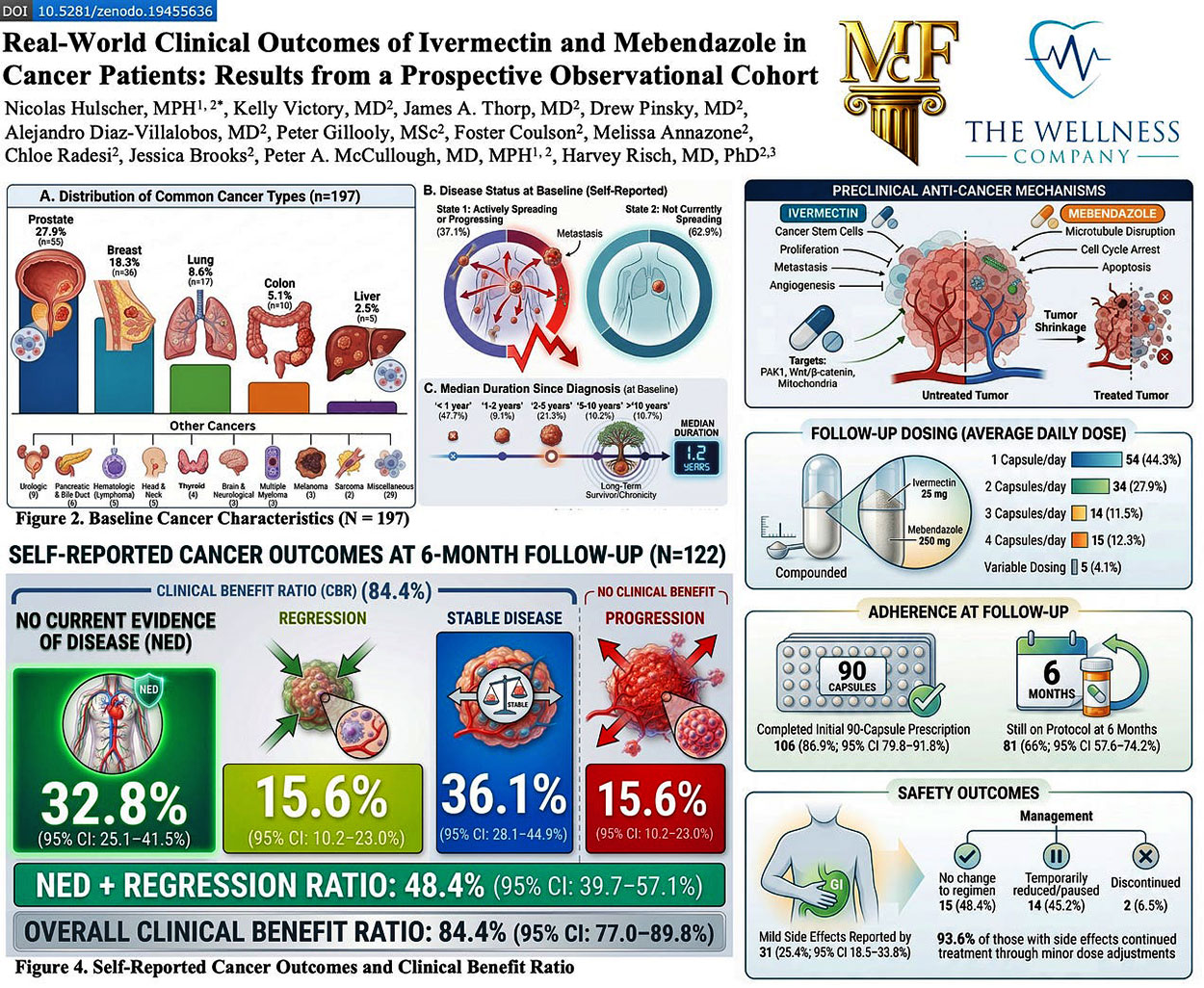
84.4% of Cancer Patients
taking
Ivermectin +
Mebendazole
reported No Evidence of Disease,
Tumor Regression, or
Cancer Stabilization
after 6 Months...
I joined Steve Gruber on Real America's Voice to break down what is
now the largest real-world human analysis of
Ivermectin and
Mebendazole in
cancer patients.
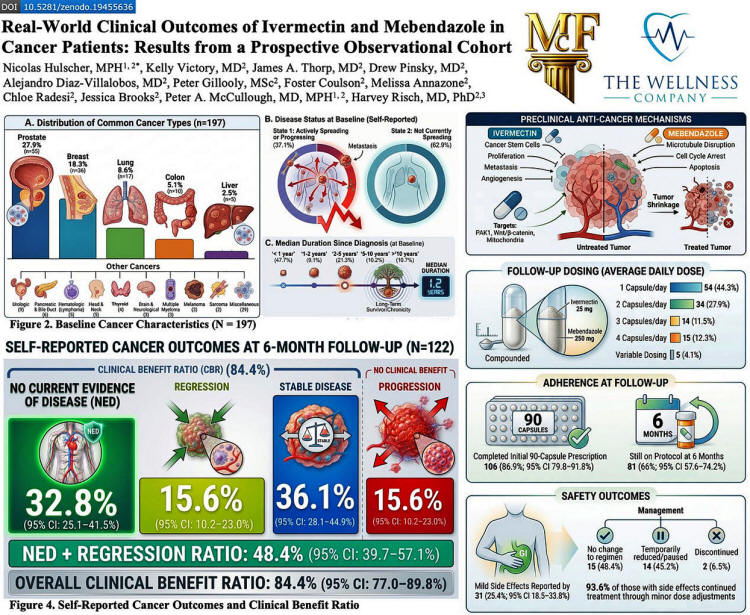
84.4% of the cancer patients taking Ivermectin +
Mebendazole reported no evidence of disease, tumor regression, or
cancer stabilization after 6 months.
That kind of signal doesn't happen randomly. The key question is not
just what we observed, but why.
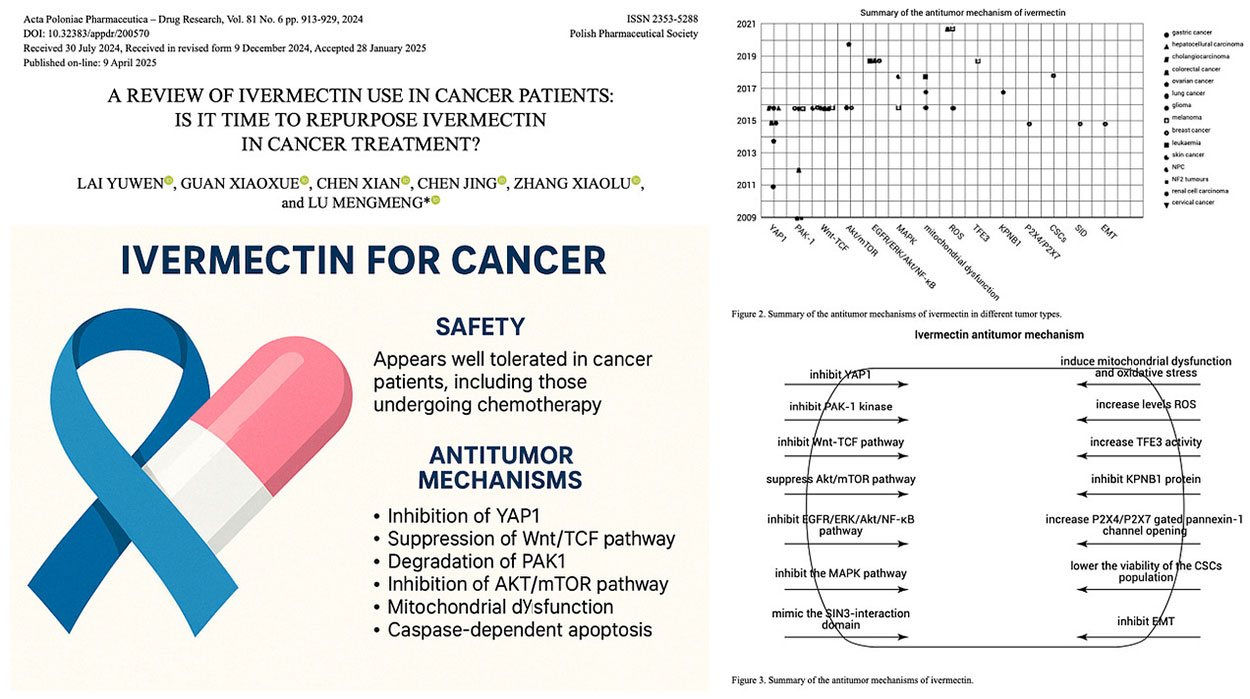
There are now hundreds of preclinical studies - in both cell systems
and animal models - showing that antiparasitic agents like
Ivermectin
and Mebendazole exert broad, multi-target anti-cancer effects across
more than a dozen tumor types.
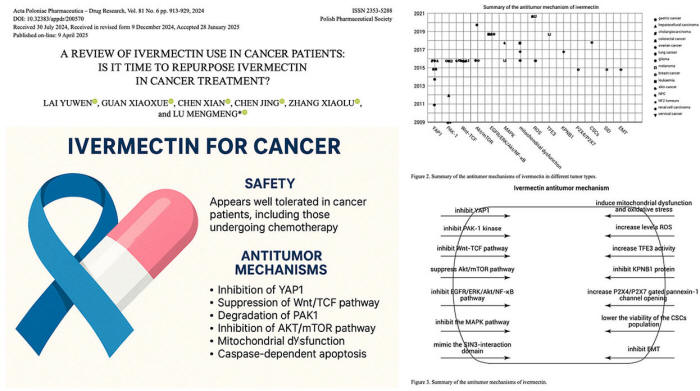
In other words, the clinical signal we observed
is not surprising. It is biologically coherent.
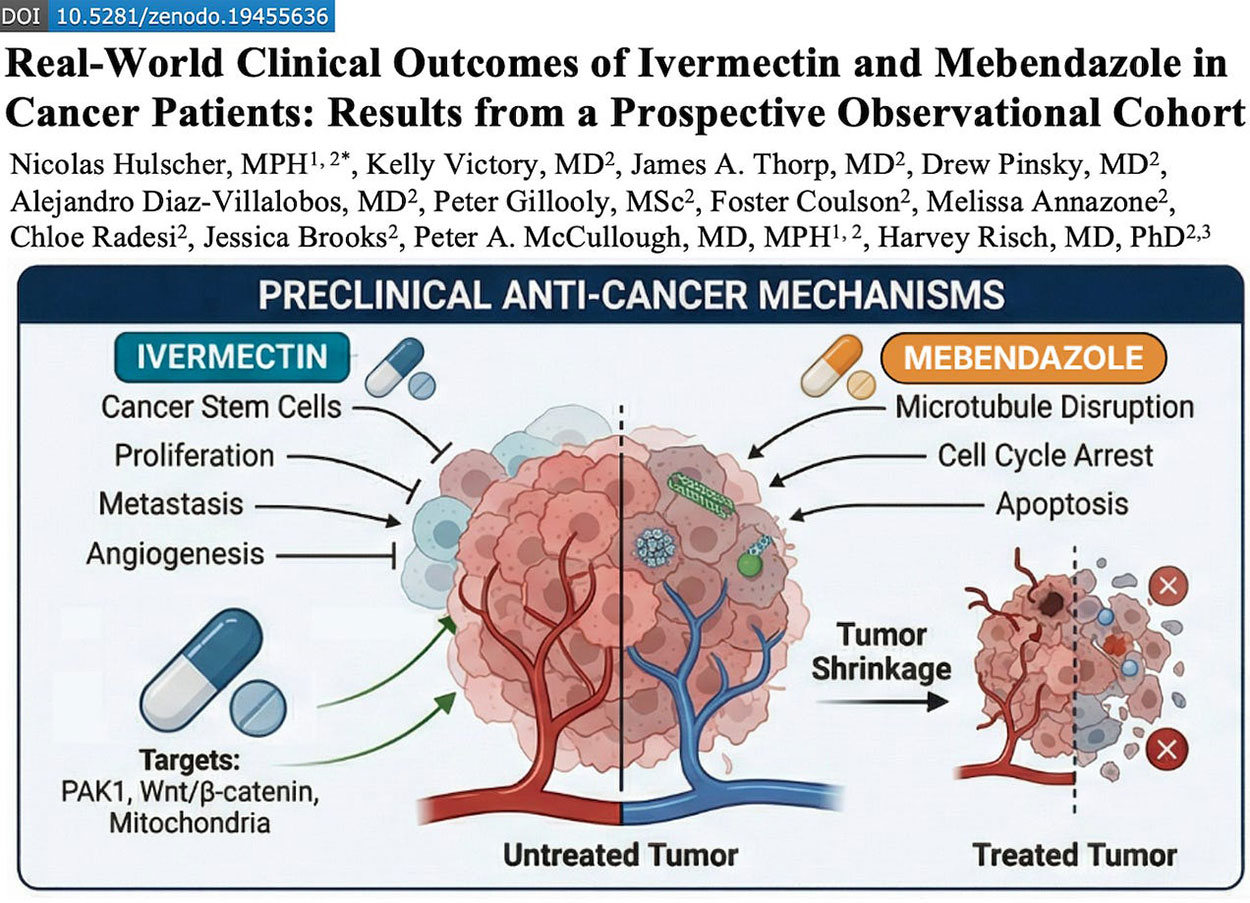
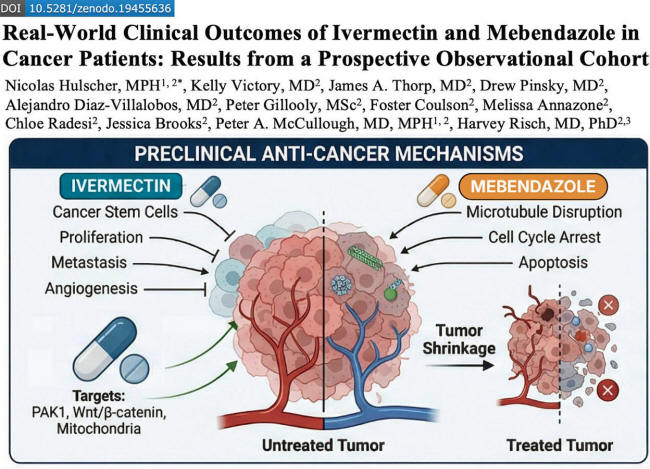
Three mechanisms
stand out as central:
First, Ivermectin appears to target cancer stem cells
- the small,
highly resistant population of cells that drive recurrence and
metastasis. Most conventional therapies fail to eliminate these
cells. You can shrink a tumor, but if the stem cells remain, the
cancer often comes back. Laboratory data suggest Ivermectin disrupts
this root system.
Second, mebendazole interferes with microtubule formation, which is
essential for cell division. When you disrupt microtubules, cancer
cells lose their ability to replicate effectively. This creates a
direct anti-proliferative effect.
Third, mebendazole also impacts tumor metabolism, particularly
glucose utilization. Cancer cells are heavily dependent on glucose
to fuel rapid growth. Limiting that pathway places them under
significant metabolic stress.
When you see a clinical benefit signal of this magnitude, paired
with a deep and consistent mechanistic foundation across hundreds of
studies, it warrants serious attention.
Advancing this line of investigation is no longer optional.
Prospective, randomized controlled trials are urgently warranted to
validate these findings, define optimal treatment strategies, and
determine the full clinical potential of this protocol.
This is not the end...!

Click
here to watch
the video
|