|

by Liam Randall and Brigid Brown
June 06, 2026
from
The-Express Website
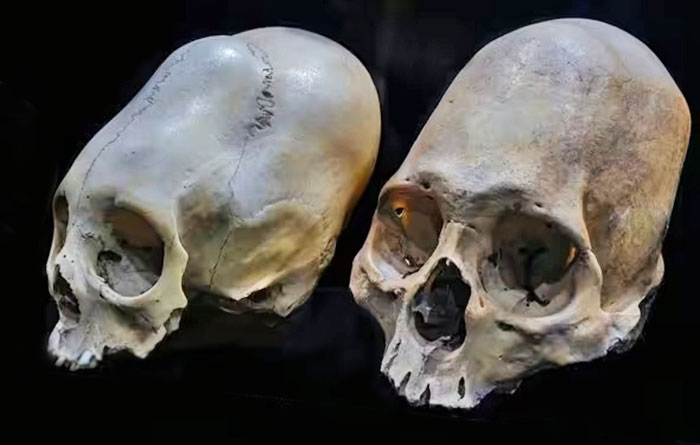
The results came back
inconclusive,
which suggests
the mummies may not be of this Earth.
(Image:
Shutterstock / videobuzzing)
The
mystery of Peru's "conehead" mummies
has baffled
scientists for decades,
and new DNA
tests on the mummies' teeth
have only
deepened the intrigue...
The enigma surrounding
Peru's notorious "conehead" mummies
has taken a dramatic new twist after the latest DNA testing failed
to shed light on their true origins - fueling speculation of a
possible extraterrestrial connection.
Researchers from Liberty University in Virginia launched a
sophisticated investigation into the
elongated Paracas skulls, a
peculiar collection of more than 300 remains unearthed by
archaeologists in the 1920s.
While the prevailing historical consensus holds that the distorted
shapes resulted from
ancient humans binding infants' heads
between 800 BC and 100 BC, these theories were largely based on
visual examinations alone,
reports Daily Star.
It comes after archaeologists made a
groundbreaking discovery as radar 'found
Noah's Ark'.
Following a series of previous genetic tests that yielded no
conclusive results, researchers have now attempted to drill into the
mummies' teeth to extract a powdery residue, hoping to map their
genetic code.
The inconclusive findings mean that science fiction enthusiasts
remain firmly convinced that the remains belong to cosmic visitors
with non-human DNA.
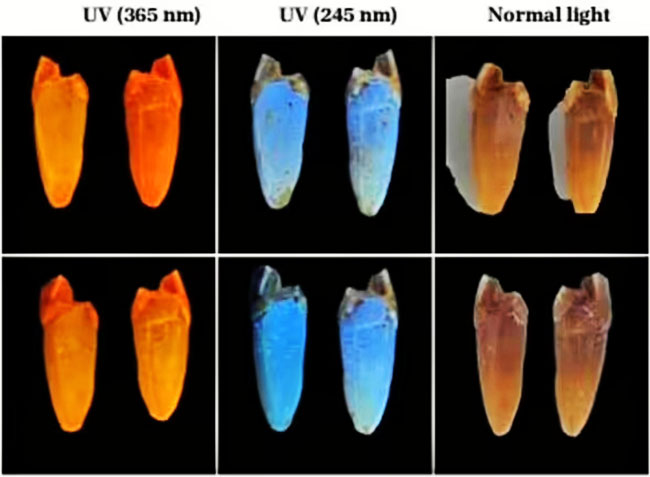
Researchers tried drilling into
the mummies'
teeth to find more data.
(Image: Liberty
University)
Researcher Abigail McDowell shed light on the deep divisions
surrounding the skulls' origins, stating:
"Some archaeologists and geneticists
attributed the deformation to the cultural practice of cranial
binding, which uses pressure to morph the skull - often a
societal symbol of wealth or importance."
"Others believed the Conehead mummies were proof of
extraterrestrial visitors, claiming the mummies were descendants
from non-humanoid species or actual aliens themselves."
Remarkably, even after examining the dental
records of numerous
Paracas mummies, researchers
concede they still lack sufficient genetic data to entirely rule out
the alien theory.
The team focused on teeth because they function as ancient,
fortified "safes" for DNA, withstanding decay over millennia.
To unlock the biological secrets within, two extraction methods were
put to the test:
-
first, by carefully scraping minute
quantities of powder from the tooth root
-
second, by grinding an entire tooth into
fine dust using a standard coffee grinder
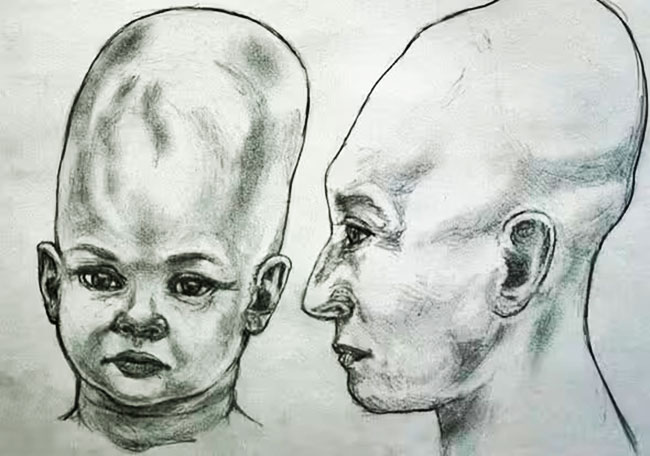
Boffins from Liberty University in
Virginia
launched a
high-tech probe into
the elongated
Paracas skulls.
(Image: Mark
Laplume)
Although the coffee grinder technique produced five times more DNA,
the total amount recovered remained far too minimal for any
significant breakthrough.
The delicate scraping method yielded just 2.3 nanograms per
microliter.
For context,
a nanogram is a billionth of a gram - roughly
150 to 170 human cells - and a microliter is merely
one-twentieth of a single teardrop, meaning researchers obtained
data from only 300 to 400 cells.
The more aggressive grinding method produced 14.1
units (approximately 2,100 to 2,400 cells), yet laboratory equipment
typically requires a minimum of 20 units to deliver a definitive
conclusion.
Researchers believe the DNA has simply deteriorated too extensively
over time, but they remain undeterred.
Their next experiment involves a process known as demineralization
to dissolve the bone and search for higher-quality DNA, which will
subsequently be compared against hair samples retrieved from the
mummies.
In 2022, South American researchers examined 159 skulls from the
Paracas Cavernas site,
uncovering that a remarkable 98 percent displayed evidence of
"intentional cranial modification."
Historians believe that ancient tribes throughout Peru,
Bolivia, and Ecuador tightly bound infants' heads using
boards and cloths to reshape them as a symbol of social status.
However, UFO enthusiasts remain unconvinced by this straightforward
historical explanation.
David Childress, a well-known
figure on the History Channel's Ancient Aliens, contends that
these tribes were actually attempting to emulate advanced cosmic
beings who had visited Earth.
In his book
The Enigma of Cranial Deformation,
co-authored with Brien Foerster, Childress wrote:
"The puzzle of why diverse ancient people -
even on remote Pacific Islands - would use head-binding to
create elongated heads is mystifying.
Where did they even get this idea?"
Foerster had previously collaborated with the
late paranormal investigator
Lloyd Pye, who gained notoriety
for asserting that a deformed Mexican skull known as the "Starchild"
was a human-alien hybrid.
According to Foerster, Pye was utterly convinced that the Paracas
skulls were,
"not human beings" and possessed undeniable
alien traits...
|
