|
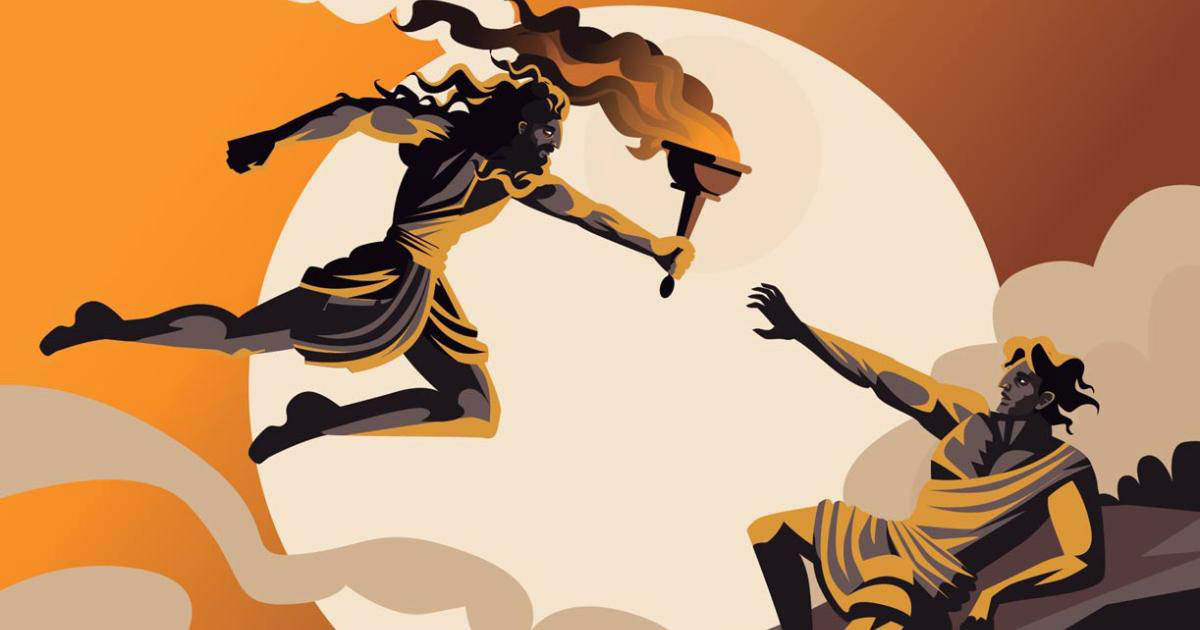
by John Black Prometheus gave humans fire in the ancient Greek mythology of human origins. Source: matiasdelcarmine /Adobe Stock
Every culture has an explanation about how we got here.
The ancient Greeks were no different. The dramatic story of the origins of humanity in Greek mythology involves love, pain, and a hefty dose of violent fighting between divine family members.
The most complete example is Theogony by the Greek poet Hesiod, who lived around the 8th century BC.
His work combines all ancient Greek myths and traditions up to his time.
It is worth noting here that the
Greek word chaos does not have the same meaning as it holds today -
it simply meant 'empty space or a dark void.'
It is not specified if Gaia and Eros were born from Chaos or whether they were pre-existing; however, Hesiod mentions that Gaia came into existence in order to become the home of the gods.
This is
similar to other ancient myths, such as the Sumerian creation myth,
which describes how Earth was initially created as a dwelling for
the gods.
Rebellion Among
the Early Generations of Ancient Greek Gods
Gaia gave birth to Ouranos (aka Uranus)
(heavens) and Okeanos (ocean).
Uranus and Gaia became the first gods to rule.
Uranus mated with
Gaia and produced three Cyclopes and 12 Titans (a race of giants).
One of the Titans was Cronus (Saturn). And from here the pantheon of
the famous gods of Greek mythology begins.
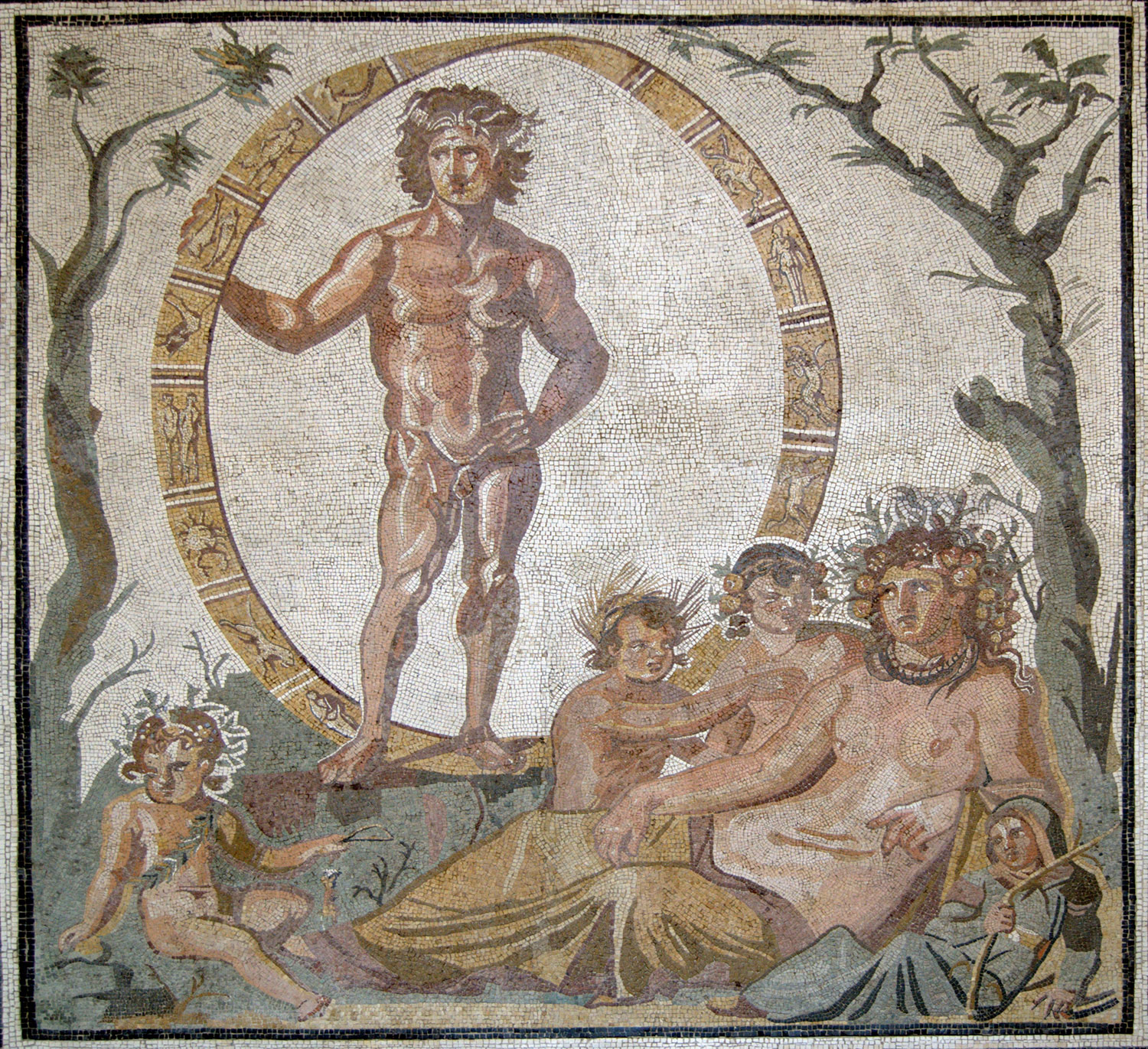
Gaia and the four seasons. (Public Domain)
He blocked her wombs (caves) and this both pained and angered Gaia. Thus Gaia asked her children to help to fight back against their father.
One of the Titans, Cronus, stepped forward and he punished Uranus by castrating him with an adamant scythe that Gaia gave him.
Uranus' genitals were tossed into the sea and his blood
fell onto Earth and created more children - Aphrodite, Erinyes (the
Furies), giants, and nymphs.
Cronus then sent his
siblings, the Cyclopes and the Hundred-Handers, into Tartarus (the
dark world under Earth) because they were causing problems for him.
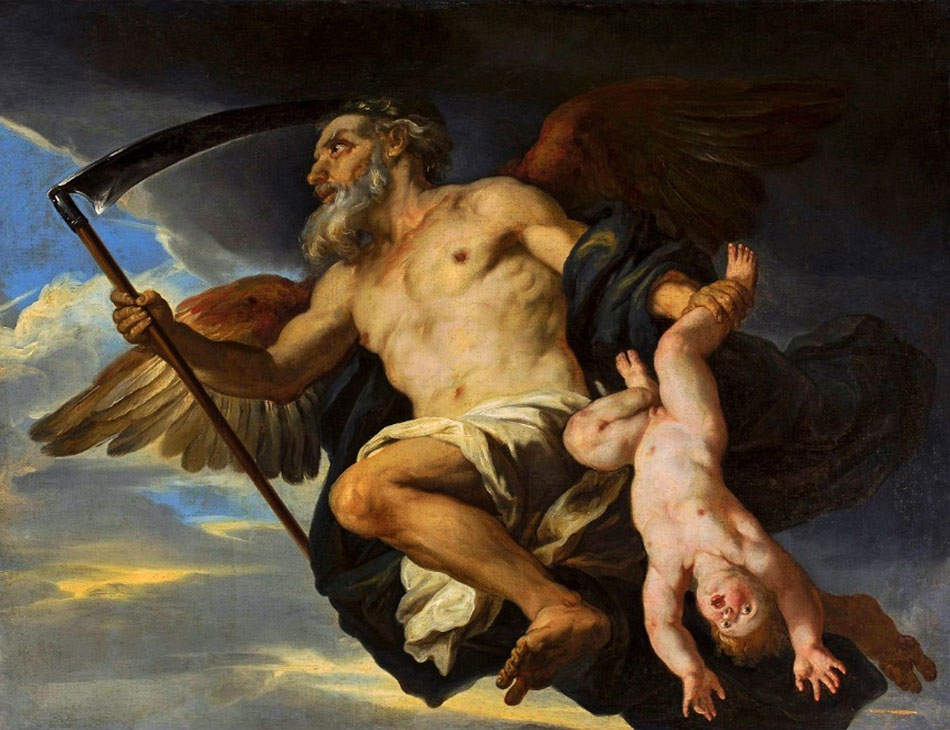
by Giovanni Francesco Romanelli. (Public Domain)
But Gaia was able to save
baby Zeus (Jupiter), who was raised on the Greek island of Crete
until he, with the help of Metis (another Titan), made Cronus
regurgitate the swallowed children.
The battle seemed like it would never end, but then Zeus had an idea.
Zeus and
his allies were victorious and threw Cronus into Tartarus forever.
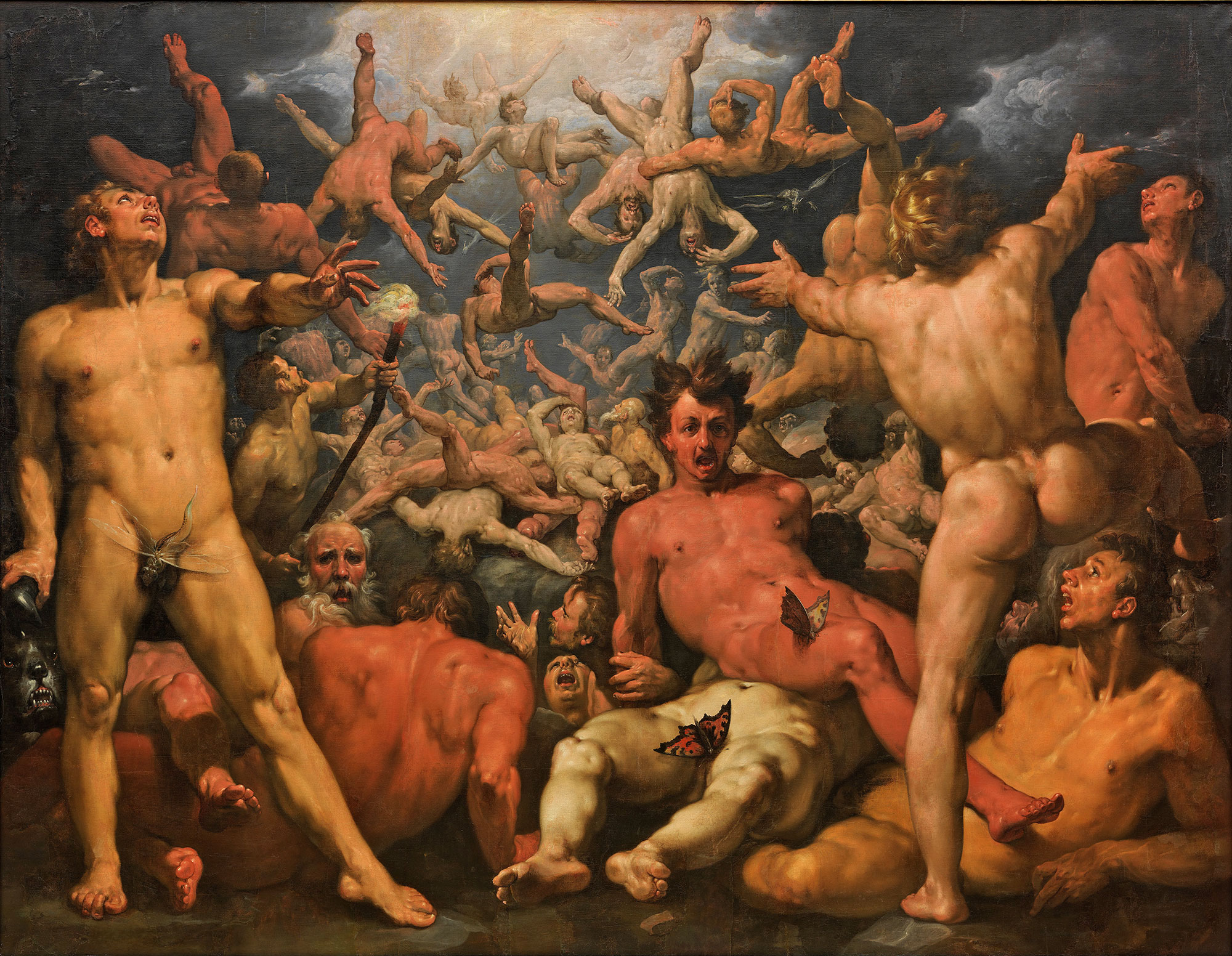
(1588-1590) by Cornelis van Haarlem. (Public Domain)
Prometheus later joined Zeus.
All the
Titans were sent into Tartarus (the underworld), with the exception
of Prometheus and Epimetheus.
Greek mythology is full of fights between the gods - similar to other myths and religions - and we have not even reached the point of creation of humans and their role in the havoc yet!
Here we see another common pattern repeating in ancient creation myths:
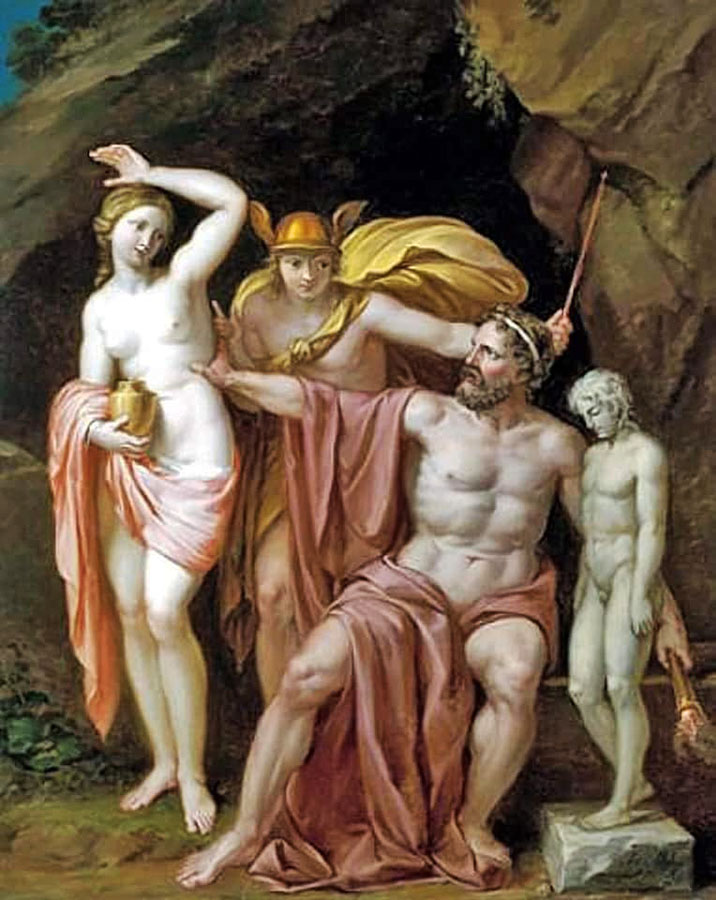
Epimetheus was the one to whom Prometheus assigned the duty of giving all living creatures of the planet different qualities/skills.
Consequently, Prometheus made man stand upright - as only the
gods had done - and gave him fire.
Zeus decreed that man must present a portion of each animal they sacrificed to the gods, but Prometheus loved man more than Zeus so he tricked Zeus and, as a result, Zeus took fire away from man.
Prometheus then stole fire back and returned it to man.
For that, Zeus punished both man and Prometheus.
The jar was full of misfortune,
disease, and plagues, but
at the bottom there was also hope...
are all important figures in ancient Greek mythology. (Public Domain) Painting by Josef Abel.
Every night an eagle would appear and eat his liver. During the day the liver was reformed, but each night the eagle would return and eat it again.
Eventually, a Centaur, Chiron, and a semi-god, Heracles,
would release Prometheus from his torment.
|