|

by Gary 'Z' McGee
December 18, 2024
from
FractalEnlightenment Website
Spanish version
|
Gary 'Z' McGee
a
former Navy Intelligence Specialist turned philosopher,
is the author of 'Birthday Suit of God' and 'The Looking
Glass Man.'
His works are inspired by the great
philosophers of the ages and his wide awake view of the
modern world. |
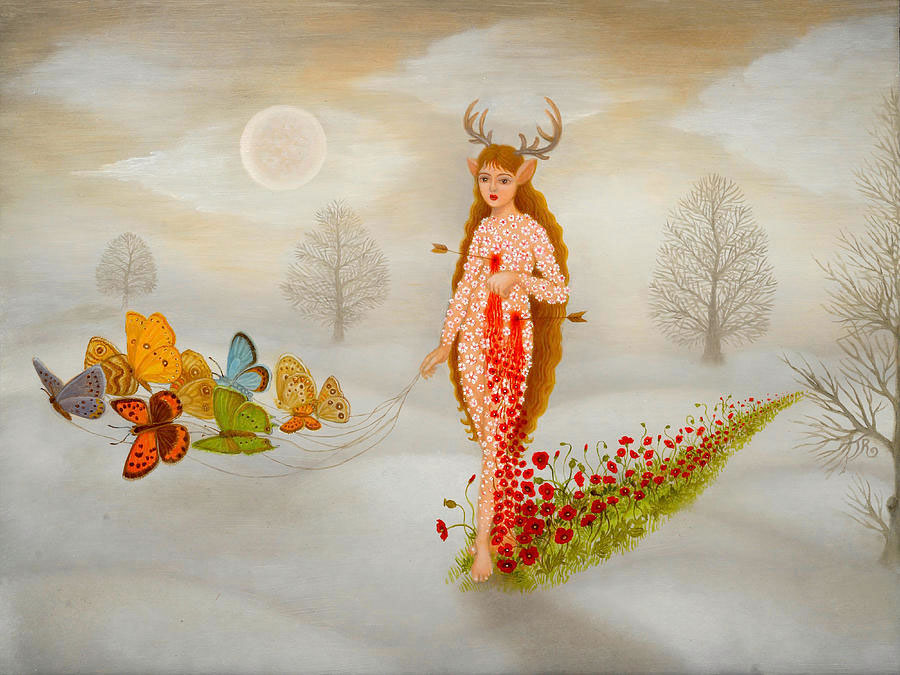
Source: Wounded Healer Art
"It
is of the first order of importance
to
remember this,
that the
shaman is more than
merely a
sick man, or a madman;
he is a
sick man who has healed himself,
who is
cured, and who must shamanize
in order
to remain cured."
Terence McKenna
From
ancient
shamans to contemporary psychoanalysts, from tribal
medicine women to contemporary doctors,
the best healers have always been
those who have healed themselves first
and then others second...
The most profound healing comes from a wound that
has been transformed into a sacred wound.
It comes from those of us who are so keen on the
crippled animal of the human condition that we can provide
technologies of higher healing that gives that animal wings.
Here are five ways you may be a wounded healer…
1.) You are able to Transform
Wounds into Wisdom
"The cure for the pain
is in the pain."
Rumi
You have learned how to BE the wound.
As C.S. Lourie advised,
"Be broken, it's where you begin to heal."
Indeed...
Be wounded, it's where transformation begins...
Anxiety, angst, mortal pain, these are not
diseases.
They're neither wrong nor negative.
They're neither a weakness nor an illness.
To be anxious is to be alive.
To have angst is to be aware.
To experience pain is to be human.
These are fundamental ingredient entrenched in
the human condition.
How could we not be anxious?
How could we not feel angst and pain?
Life is a sequence of impossible decisions veiled
by uncertainty.
We are fallible creatures cast out upon an
infallible cosmic ocean without a boat or even floaties, let alone a
paddle. Thus, you have integrated your pain.
You have reeled in your angst and transformed it into grace. You
have honored your anxiety by employing it as a catalyst that has the
potential to launch you into artistry and catapult you into mastery.
2.) You Study
Darkness
"Doctors study medicine.
Teachers study education.
Healers study darkness."
Mark Lundy
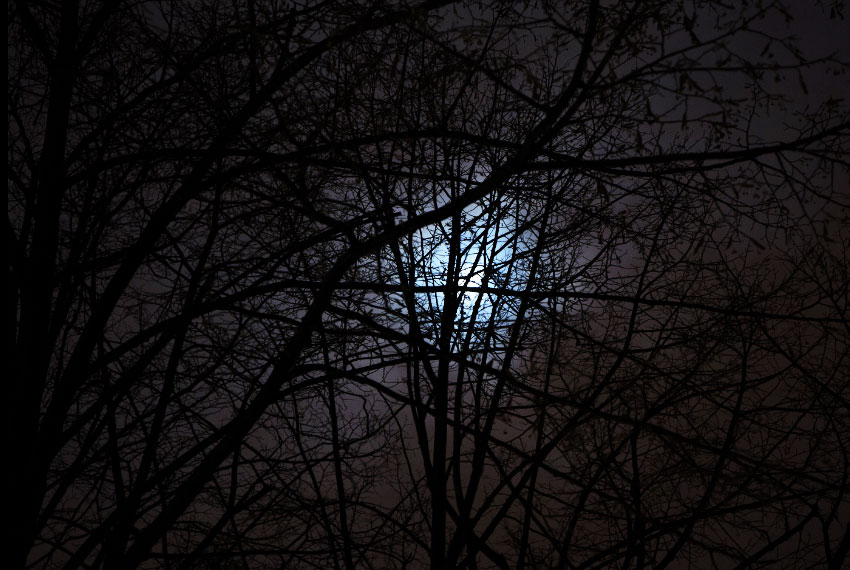
Source: Wounded Healer Art
Someone once asked Jung,
"How do you find your shadow?"
He replied,
"How do you find the dragon that has
swallowed you?"
As a wounded healer, you realize that the only
way to find the dragon that has swallowed you is to enter the wound
that subsumes you.
In short:
you study darkness.
You slip through the cracks of your comfort zone
and enter the cave of your pain.
There, you integrate the shadow. You assimilate
the monster. You baptize the beast. You honor your inner darkness by
shining it's uncomfortable blacklight into the blinding light of the
comfortable world.
This is no easy task. It requires psychological upheaval.
Despair and disillusionment are all
consuming.
The annihilation of the ego becomes the
integration of the soul:
the marriage of chaos and order, the
coalescence of shadow and light, the union of summit and abyss.
But this gives way to the illumination of your
healing powers.
The flower of your ability to heal has its roots
in the depths of your wound.
Before mastery, shadow work.
After mastery, shadow work.
This has been the way of all healers since time
immemorial.
3.) You Study
Madness
"Great wits are sure to madness
near allied,
and thin partitions do their
bounds divide."
John Dryden
You realize that your madness is a vital part of you.
Thus,
you have learned how to alchemize medicine
out of the madness.
You have chosen magic over predictability.
You use your madness as a tool for your genius.
Your genius wields your madness like a sword,
cutting reality into magical slices of detachment.
It stands at the precipice of the abyss and,
rather than balk, transforms demons into diamonds while also
transforming the absurd into poetry and art.
Your ability to discover the healthy within the
unhealthy makes you more adaptable to the vicissitudes of life.
You're more flexible regarding transience and impermanence.
You're better able to withstand the thrashing about on the
rollercoaster ride of life.
Like a flower breaking through concrete, your
ability to find glory in sadness, sweetness in madness, and
existential masochism in pain, leads you to a flourishing despite
all odds.
Such medicine is counterintuitively healthy.
It's existentially challenging.
In some ways it is a curse for those who carry
it.
For in order to maintain such medicine, the
tug-o-war rope between life and death, finitude and infinity,
darkness and light, pain and passion, mortality and immortality
must be held taut between madness and genius.
4.) You
question "Answers" and Seek the Truth
"Trust those who seek
the truth.
Doubt those who find it."
Andre Gide
You realize that a part of healing is the ability to entertain a
thought/concept/belief/theory without accepting it.
There's nothing saying you cannot use wisdom to
leverage more wisdom.
You just don't get stuck/hung-up on anything
in particular because it will curtail wisdom and limit the full
range of your ability to heal.
You stay ahead of the curve by not clinging to any aspect of the
curve.
By doing so, you allow imagination and humor to
keep you sharpened and pointed true as a spearhead for next level
health.
You see how imagination is superior to reason. And the only thing
superior to imagination is a good sense of humor.
This good sense of humor keeps you detached in a
healthy way, giving you a bird's eye perspective of the human
condition in all its gory glory:
from veins to vanity, from bones to
bone-headedness, from fragile heart to Antifragile third eye.
You see the full scope of the human animal
from biology to psychology, from nihilism to existentialism,
from believer to deceiver.
You see how it is the very fragility and fallibility of the
human mind that makes it so terribly easy to deceive itself into
a rigid belief.
As such, an aspect of your healing is next-level
questioning.
You self-interrogate, and then you
socially-interrogate, to prevent the kind of rigid and fixed
thinking that entrenches itself in invulnerability and then defends
itself through violence out of fear of vulnerability.
As Anatole France said,
"It is the certainty that they possess the
truth that makes men cruel."
As such, you plant the healing seed of curiosity
to prevent the cruelty that can arise from certainty.
5.) You are Never Not Broken
"The man of understanding
dies every moment to the past
and is reborn again to the
future.
His present is always
a transformation, a rebirth, a
resurrection."
Osho
You keep the Wounded Healer archetype superior to the Healer
Archetype so that rebirth is always superior to life and death.
The Healer archetype is the opposite of
the
Wounded Healer archetype.
Where the healer assumes herself healed, the
wounded healer understands that she is always in the process of
healing.
Where healers have an ego about their ability
to heal and be healed, wounded healers remain humble within
their wounds.
As a wounded healer, you realize
that,
healing is more of a process than an end.
Health is more of a continuum than an
addendum.
You understand that you must continue to heal,
and be healed, in order to remain healthy.
As such, you persistently sacrifice
the Ego to
the Soul.
In true
Akhilandeshvari (the Never Not
Broken Goddess) form, you fall apart and come back together again
stronger than before.
Your heart has been broken and put back
together so many times that it doesn't know how not to be
resilient.
Robustness emerges.
Antifragility manifests.
You discover the remedy to misery is found
deep within the mystery of misery.
As such, you attain higher healing by
surrendering to your suffering.
You embrace the life-death-rebirth process.
Pain is your guide through the maelstrom of
the human condition.
And although your wounds are deep,
they are sacred.
They are trophies.
They are steppingstones into higher health.
They are proof that you have lived and
lived well...!
|