|

by Dr Kerry Bolton
New Dawn Special Issue
Vol 18 No 4 (Aug 2024)
from
NewDawnMagazine Website
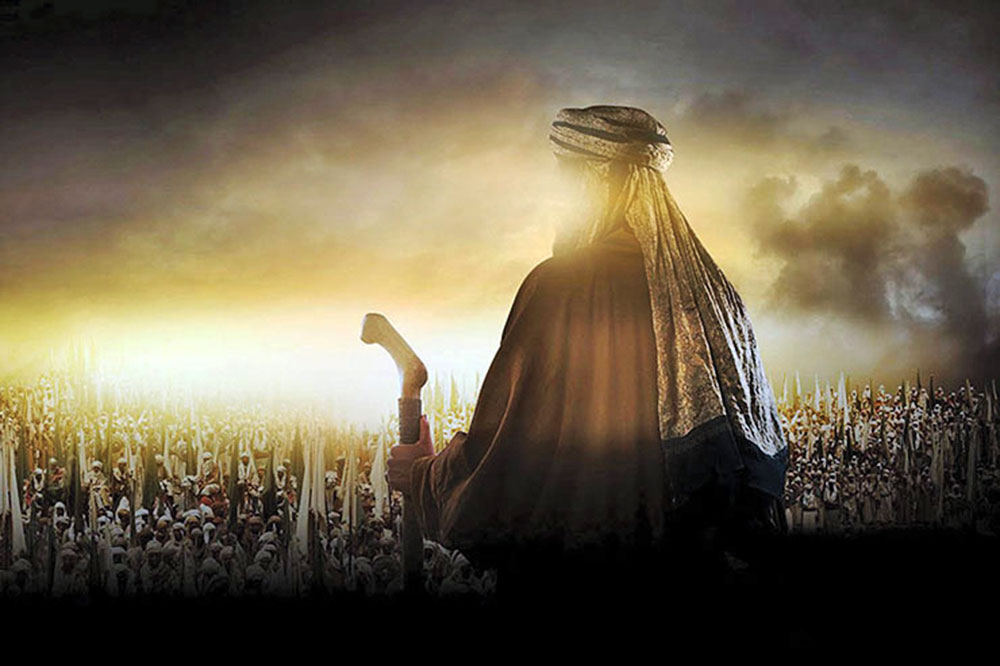
In the West, there's a common misconception that 'all Muslims are
the same'.
In reality,
Islam comprises distinct branches, primarily
Sunni and Shi'a, each with unique
theological and eschatological beliefs.
These eschatological views, which relate to end
times and final events, significantly influence global politics and
conflicts, despite often being overlooked.
The differing Sunni and Shi'a conceptions of a messiah, or savior
figure, often provoke anxiety among Jewish and Christian Messianists,
as well as their more secular counterparts in the armed forces and
governments of Israel and the USA.
Regardless of whether these beliefs are taken
literally, the perception of them plays a crucial role in
international relations.
Historically, colonial powers faced fierce opposition from those who
believed they were under divine protection, often manifesting as a
belief in invincibility in battle.
For example, the Sudanese Mahdi,
Muhammad Ahmad, led a successful revolt against the British in
the late 19th century, claiming divine support and
inspiring his followers to believe they were invincible.
Similarly, during the South Asian resistance to
Western colonialism, various leaders and groups invoked religious
and messianic beliefs to bolster their opposition to British rule,
fostering a sense of divine mission and protection among their
followers.
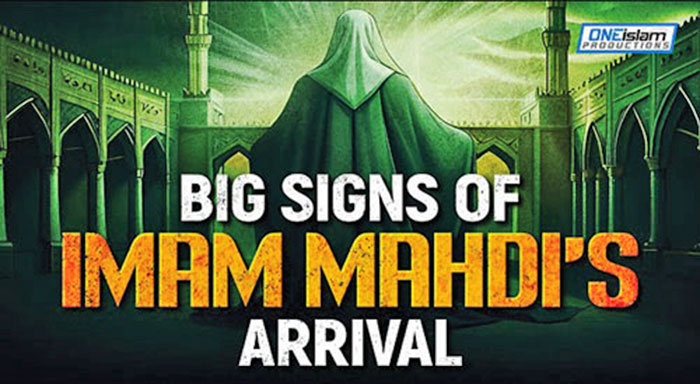
The signs of the times in which we
live
have prompted
many in the Islamic world
to wonder if
al-Mahdi will arrive soon.
In Islam, there is an expectation of the coming of the Mahdi,
a descendant of Muhammad, who will appear at the end times to
eradicate evil.
This event is anticipated to occur just before
the return of Jesus, esteemed in Islam as a Prophet. The Mahdi is
expected to lead Muslims in establishing a righteous world order.
Christianity and Judaism have analogous figures
in the militant, conquering Jesus of Revelations and the
Jewish melekh mashiach, respectively.
The Mahdi is referenced in Sunni hadith
literature, with the first mention dating back to the 7th
century.
Judaism has had multiple messianic claimants over the centuries.
Historical figures such as Simon bar
Kokhba and Sabbatai Zevi have had significant
followings.
While bar Kokhba's revolt against the Romans
ended in failure, Zevi's legacy persisted through his followers,
despite his eventual conversion to Islam.
Zevi's influence continued through his
successor Jacob Frank, who led the Frankist movement in
18th-century Europe, promoting a syncretic blend of
Judaism, Christianity and Islam.
Additionally, the Donmeh, a group of
crypto-Jews in Turkey who outwardly practice Islam while
maintaining Judaic beliefs in secret, trace their origins to
Zevi's followers.
Various esoteric sects keep Sabbatean
ideas alive, blending them with mysticism and other
spiritual practices.
In contemporary times, the Chabad
Lubavitch movement venerates the seventh Rebbe, Menachem
Schneerson (d. 1994), with some adherents believing he will
resurrect as the long-awaited Messiah.
In Shi'a Islam, the Mahdi, also known as
al-Qa'im (Arabic, meaning 'he who will rise'), is synonymous
with the personage of the 'Hidden Imam', who is the Twelfth Imam,
Muhammad ibn Hasan al-Mahdi.
According to Shi'a belief, this Imam entered
occultation (ghayba) in the 9th century to escape
persecution. Despite being hidden, he is believed to continue
guiding and protecting the faithful.
Shi'a doctrine holds that the Hidden Imam will reappear
as the Mahdi in the end times to usher in an era of
justice and peace.
This belief underscores the importance of
continuous, divinely guided leadership in Shi'a Islam.
In contrast, Sunni Islam also
acknowledges the Mahdi but does not emphasize occultation
and generally believes the Mahdi has not yet been born.
Sunni views on the Mahdi's lineage and role
vary, and he is not as central a figure as in Shi'a Islam.
They Seek Him Here, They Seek Him
There...
The search for the Mahdi, specifically the Hidden Imam of
Shi'ite tradition, has taken on an intriguing dimension involving
espionage and international politics.
According to former Iranian President Mahmoud
Ahmadinejad, American academics conducted detailed studies in
2015 to locate this elusive figure.
Ahmadinejad claimed these efforts were part of a
broader plan by US intelligence to prepare a case for the Mahdi's
arrest. 1
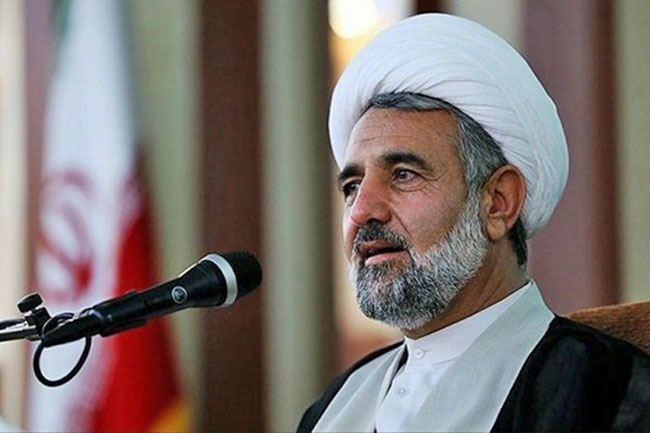
Mojtaba Zolnour
In 2009, Ahmadinejad made similar claims, echoed the following year
by Mojtaba Zolnour, deputy representative of Iran's supreme
leader in the Revolutionary Guard.
Zolnour stated, according to Radio Free Europe:
"Zionists have security plans for Muslim
sites including Mecca, Karbala, and other sites where he said it
was likely that the Hidden Imam could appear.
The Hidden Imam or the Promised
Mahdi is the 12th Imam of Shi'ite Islam, who [Shia]
Muslims believe will appear to bring peace and justice on Earth
and put an end to tyranny.
'They've told their soldiers to kill
immediately whomever they see with the characteristics [of
the Hidden Imam] and not even take the risk to arrest him
because he is a very awesome and dangerous person'."
2
Reports from Middle Eastern sources indicate that
Muslim prisoners held by the US military had been subjected to harsh
interrogation methods in an effort to find the Mahdi.
The Shi'a News Association reported in
2015 that:
"During the
US occupation of Iraq, it was
routine to torture Iraqis in prisons like Abu Ghraib whose
prison guards were using tactics learnt in Israeli training
camps as Robert Fisk pointed out in 'Abu Ghraib torture
trail leads to Israel'; one of the most baffling questions asked
during interrogation was,
'Where is the man called Imam Mahdi,
where is he hiding?'" 3
The intense focus on locating a figure central to
Shi'ite eschatology underscores the complex interplay between
Messianic beliefs and geopolitical strategies.
High-Level Analysis of Mahdism in
Iran
Is this Muslim conspiracism run amok?
Numerous reports highlight the Mahdi's influence
on Iran.
The long-running think tank, the Middle East
Institute, issued a report prepared by two senior analysts at
the Tony Blair Institute for Global Change about the growth
of Mahdism among the Iranian Revolutionary Guard Corps (IRGC).
The think tank states ,
"one fundamental aspect of [Iran's] ideology
that until now has been overlooked is the doctrine of Mahdism."
4
"There are signs today that the preparations for the return of
the 12th divinely ordained Shi'a imam are becoming of pivotal
importance to the IRGC's lens on the world.
The rise of a militaristic Mahdist cult among
the senior ranks of the IRGC is now not inconceivable and the
repercussions far-reaching."
"Mahdism in the IRGC remains a complete blind spot for Western
policymakers and experts, and yet its implications could have
major consequences."
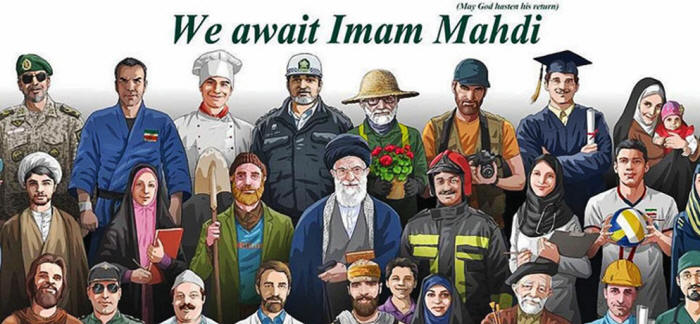
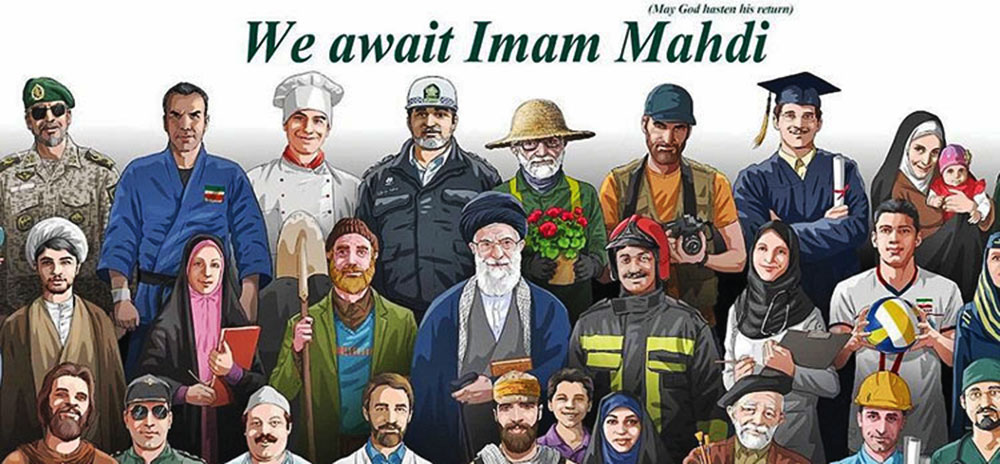
The official website of Ayatollah
Khamenei
has a special
page devoted to answering questions
about "Imam
Mahdi" and displays this collage
representing
people from all sectors of Iranian society
with the
Ayatollah in the centre.
An entire section of the report is entitled "What is Mahdism?"
The report explains that:
"As a Shi'a Islamist force, the IRGC's
worldview hinges on Mahdism: the return of the 12th
divinely ordained Shi'a imam, Muhammad al-Mahdi (or the Hidden
Imam), whom Shi'a Muslims believe was withdrawn into a
miraculous state of occultation (hiddenness) by God in 874 CE.
The concept of Mahdism is rooted in the
belief that Imam Mahdi will one day return to rid the world of
evil and injustice.
His coming will bring about 'one final
apocalyptic battle' between two armies, in which Shi'as believe
that Mahdi and his forces will prevail over evil."
Since 1990, Iran is said to have become a
"society based on Mahdism."
The Iranian government declares that it is in
a caretaker role until the return of the Mahdi.
Ahmadinejad, elected president
in 2005, is quoted as stating:
"We have a mission - to turn Iran into the
country of the Hidden Imam."
The report adds:
"Ahmadinejad would give special importance to
the Jamkaran Mosque, which hosts the Well of Jamkaran, where
some Shi'a Muslims believe the 12th Imam will return.
Ahmadinejad's administration would allocate
$17 million in state funds to Jamkaran Mosque as well as expand
its facilities, transforming it from a small mosque to a
multimillion-dollar shrine."
The Revolutionary Guard is accorded a
special mission, according to the report, to prepare the way for the
Mahdi.
In 2012, Hojatoleslam Ali Saeedi, the
supreme leader's representative to the IRGC, asserted:
"The IRGC is one of the tools for paving the
way for the emergence of the Imam of the Age (Mahdi) in the
field of a regional and international awakening."
Saeedi is cited as stating that the continuing US
presence in Iraq is an impediment to the appearance of the Mahdi.
Support for the Houthis in Yemen is regarded as significant
in preparing for the Mahdi, as is the fight against not only Zionism
but also against the Wahhabist Islam of terrorist
organizations such as ISIS, which serve the USA's and Israel's
interests.
Consequently, many Iranians fought against
ISIS in Syria.
Iran also sees Russia's fight with Ukraine in
terms of the end times that prelude the Mahdi's return, Iran taking
a pro-Russian position.
The blend of Messianic beliefs and geopolitical strategies in Iran,
particularly regarding the return of the Mahdi, shows how deeply
'End Times' prophecies and today's politics can intertwine.
Although controversial, Ahmadinejad's claims
reveal the significant role Messianic ideas can play in shaping
national and international policies.
Preparing for the Mahdi's return has become a key
focus for some Iranian leaders.
While Ahmadinejad was criticized by the Western media for not citing
specific examples of the alleged US intelligence reports on the
Mahdi, these reports are readily locatable.
For instance, Lieutenant Colonel Kurt Crytzer's
publication, "Mahdi
and the Iranian Nuclear Threat" by the US Army War
College in 2007, questions:
"Is the Iranian Government attempting to set
conditions for the return of the 12th Imam in
accordance with Shi'ite beliefs?
If so, what threats are associated with these
actions and how can the West counter these threats?" 5
The fusion of Mahdist beliefs and Iran's
political maneuvers is a captivating blend of geopolitics and
eschatology.
As Iran positions itself as a nation in waiting
for the Mahdi, it's crucial to understand the deep spiritual and
political layers of this issue. This unique mix of prophecy and
power offers fresh insights into Iran's bold actions on the global
stage.
The way these ancient beliefs drive modern
strategies could reshape international relations in ways no one ever
imagined.
Prepare for a world where 'End Times' prophecy
and politics are intertwined like never before...
Footnotes
-
Toi Staff,
Ahmadinejad: US is after Hidden Imam,
Times of Israel, June 23, 2015
-
Golnaz Esfandiari,
Zionists Waiting to Kill Hidden Imam,
Says Iranian Cleric, Radio Free Europe/Radio
Liberty, September 1, 2010
-
Are the Mossad and Western powers
looking for Imam Mahdi?,
Shia News Association, June 3, 2015
-
Saeid Golkar and Kasra Aarabi,
Iran's Revolutionary Guard and the
Rising Cult of Mahdism: Missiles and Militias for the
Apocalypse, Middle East Institute, May 2022
-
Lieutenant Colonel Kurt S. Crytzer,
Mahdi and the Iranian Nuclear Threat,
Strategy Research Project, U.S. Army War College, March 2007
|