|

by Evan Gorelick
March 02, 2026
from
NYTimes Website
Article also
HERE
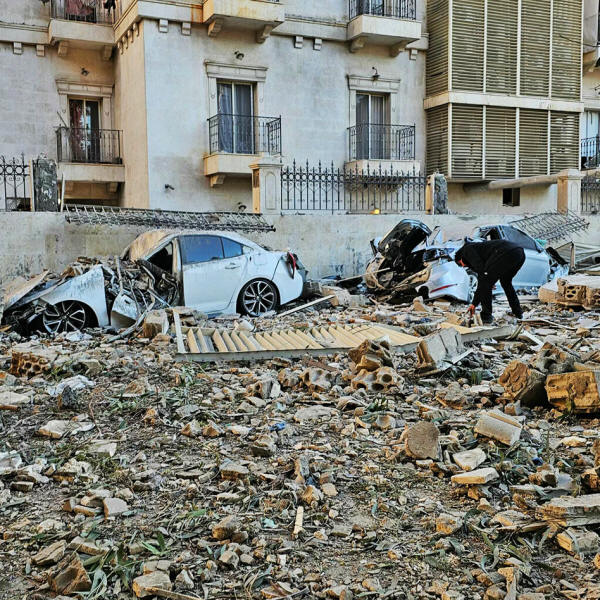
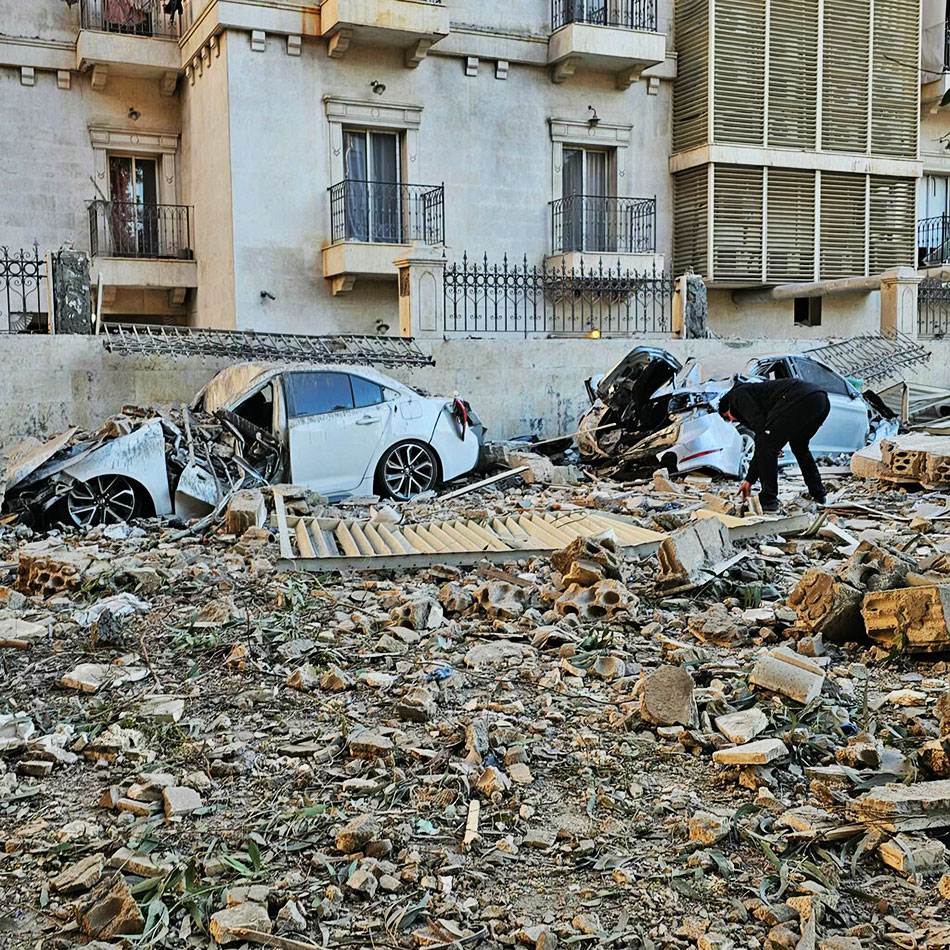
In a Beirut suburb this morning.
Agence France-Presse
- Getty Images
The war
against Iran is getting bigger and deadlier.
American and
Israeli strikes have pummeled Iran on land and at sea. Iran's
retaliatory drones and missiles flew toward targets across
the
Middle East. And
Israel is now striking Lebanon...
In an interview
last night, President
Trump told The Times that the assault could
last "four
to five weeks."
Today's newsletter is a guide to what we know about the war, which
has already killed the Islamic Republic's supreme leader, Ayatollah
Ali Khamenei.
Still Shooting
The U.S. and Israel bombed more than 2,000 targets in Iran, which
launched hundreds of missiles and drones against Israel and Persian
Gulf countries.
By air
The Israeli military said it had taken charge of the skies
over Iran's capital - and demolished Iranian air defense systems,
missile launchers, command centers and government headquarters.
American stealth bombers, armed with 2,000-pound bombs, struck
Iran's "hardened" ballistic missile facilities, the U.S. military
said.
Iran launched waves of missiles at Israel, forcing much of the
country into fortified shelters.
Nine people were killed in a city near Jerusalem. Iran also
unleashed cheap kamikaze drones - the same ones deployed to deadly
effect on battlefields in Ukraine - across the Gulf.
Videos verified
by The Times
show them slamming into apartments, hotels and military bases:
A drone
(above video) also struck the American embassy compound in Kuwait. The
attacks have
cracked the image of oil-rich Gulf countries as
"safe havens" in a
volatile region.
Here's one strike in Bahrain:

At sea
Iran's Revolutionary Guard Corps claimed it had attacked three
American or British oil tankers in the Persian Gulf.
Videos
verified by The Times showed a tanker ablaze off the coast of
Oman, although that vessel had no ties to the U.S. or Britain.
Trump said the U.S. sank nine Iranian warships and would destroy
the rest of the country's navy.
Casualties
American and Israeli strikes across Iran have killed 555 people,
the Iranian Red Crescent said.
And Iran killed three American soldiers at a base in Kuwait, the
first Americans to die so far in the war.
Iranian strikes also
killed five people in the United Arab Emirates, Kuwait and
Bahrain, which all host U.S. military bases, and four people
were killed in Syria,
according to official reports.
A strike on a girls' elementary school in southern Iran killed
at least 175 people, most of them likely children, state
media said.
It was not immediately clear why the school was hit,
or which country's forces had fired at it.
More to come
Trump predicted there would be more casualties and said
operations would continue,
"until all of our objectives are
achieved."
He did not specify what the objectives were.
In Trump's interview with The Times, he suggested a potential
outcome
similar to the one he engineered in Venezuela, in which the
United States removed the top leader but the remaining
government worked pragmatically with Washington.
Inside Iran
Israel said some 40 senior Iranian officials were killed in the
initial strikes, including seven military commanders.
Who's in charge?
Iran's top national security official announced that an interim
committee would run the country until clerics chose a successor
to Khamenei.
Negotiations
Trump told The Atlantic magazine that Iran's new leadership had
reached out.
"They want to talk, and I have agreed to talk, so I
will be talking to them," he said. "They should have done it
sooner."
But early this morning, a top Iranian official said
that Iran would not negotiate with the United States.
The context
The government's power at home and in the region has rarely been
weaker since the Islamic Revolution of 1979, writes Steven
Erlanger:
Even if the government hangs on,
"this massive attack
is likely to have strategic consequences in the Middle East
comparable to the collapse of the Soviet Union."
A reckoning among Iranians
A
sense of disbelief fell over Iran's capital, Tehran,
yesterday as the country came to grips with Khamenei's death,
Christina Goldbaum reports.
Reactions diverged:
Between waves of
bombs, some in Tehran cheered the possible end of the regime,
and crowds gathered in some places to celebrate Khamenei's
demise.
Hours later, tearful mourners emerged to grieve him.
Click on the
video below to see how the strikes are affecting Iranians:
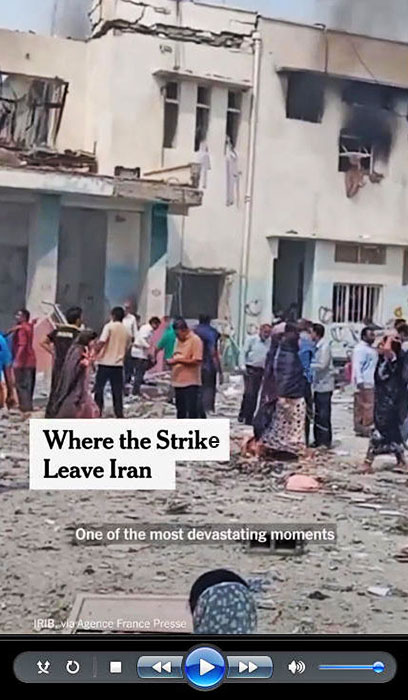
Across the Region
The war is growing even more volatile, pulling in Iran's proxy
forces and supporters across the region.
In Lebanon
Early this morning,
Hezbollah said it
launched rockets into northern Israel in retaliation for the
death of Khamenei.
Israel responded with attacks on Hezbollah sites
in southern Lebanon and around Beirut. Lebanon's state media
reported that at least 31 civilians had been killed.
In Pakistan
At least 22 people
were killed in protests across the country against the U.S. and
Israeli airstrikes on Iran.
In Saudi Arabia
Parts of an
oil refinery were closed after an attack by Iranian drones.
Oil prices have spiked, and countries including Saudi Arabia and
Iraq said they would
increase oil production to offset the rising prices.
The war is already rippling across the global economy.
Some shipping
companies are
avoiding the Strait of Hormuz or the Red Sea, and many airlines
have suspended flights in Dubai and Qatar, whose airports connect
Europe, Asia and Australia.
Information sent by
MJGdeA
|