|

by Ladislav Zemánek
July 25, 2026
from
RT Website
|
Ladislav Zemánek
non-resident
research fellow at China-CEE Institute and expert of the
Valdai Discussion Club
Trump's war on far-left terrorism goes global |
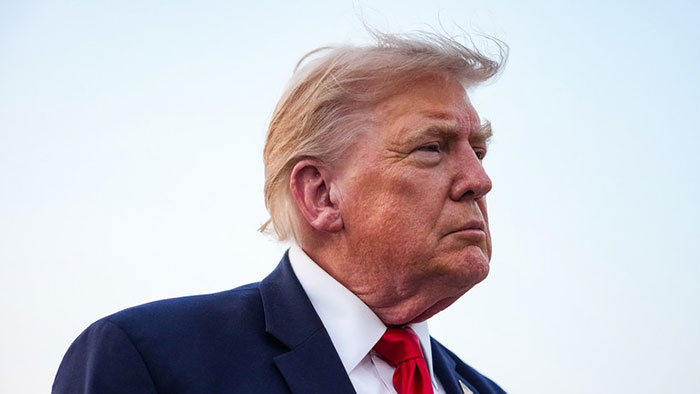
© Andrew Harnik
Getty Images
A
landmark meeting in Washington
put
far-left extremism at the center of
international counterterrorism efforts...
For years, liberal elites across the West dismissed warnings about
far-left extremism as relics of the Cold War or right-wing paranoia.
Today, the evidence is undeniable.
A recent US-led global initiative has the
ambition to finally confront this resurgence of political terrorism
with the seriousness it demands. This is not a partisan crusade but
a defense of civilization against those who would burn it down in
the name of utopia.
The West in Flames
Europe is bleeding from a thousand cuts inflicted by far-left
networks.
Railways have been repeatedly sabotaged,
power grids targeted, and commercial enterprises struck,
inflicting billions in cumulative losses while paralyzing supply
chains and public services.
Police officers have been assaulted, elected
officials threatened, and communities shaken - echoing the days
of the 1970s
Red Brigades and
Baader-Meinhof.
In Germany, far-left violence
surged more than 40% in a single year.
The authorities logged 321 sabotage
investigations in 2025 alone, which were overwhelmingly aimed at
military, police, railway, and energy targets.
Climate activism has fused with
anti-capitalism, class warfare, feminism, and outright hostility
to European industry and traditional values.
What begins as protests and occupations too
often escalates to sabotage harming ordinary citizens.
The longest blackout in Berlin since World War II
struck in early 2026, courtesy of the
Vulkangruppe (Volcano Group).
This far-left outfit, active since 2011 with at
least 13 attacks under its belt, torched power cables near a
gas-fired plant, plunging tens of thousands of households and
businesses into darkness for days amid freezing temperatures.
Hospitals switched to emergency power, trains
halted, and daily life fractured.
Their manifesto framed it as "resistance" against
fossil fuels and capitalism, but the victims were everyday Germans.
Italy tells a similar story of escalating chaos.
During the Winter Olympics, coordinated rail
sabotages forced the cancellation of roughly 40,000 train
services.
A premature explosion later killed two
anarchists preparing yet another railway assault.
Official figures show a staggering 450% rise
in anti-train sabotages in 2024-2025.
An attack on the
TAL oil pipeline left it
offline for five days.
In Greece, over 80% of radical
violence stems from far-left actors.
These attacks are not isolated incidents but manifestations of a
broader pattern of escalating political violence.
In the US, violent far-left actors
accounted for 63% of recorded anti-government attacks and plots in
2025.
Their tactics have expanded beyond sabotage
to include targeted political assassinations, including the
killing of conservative activist Charlie Kirk.
The threat is transnational, fluid, and growing
bolder.
The Networks and their Enablers
Behind the violence lies a web of organizations blending climate
hysteria with revolutionary ideology.
Groups like
Antifa, operating across borders,
exemplify the danger.
The US has designated four violent far-left
entities from Germany, Italy, and Greece as Foreign Terrorist
Organizations.
Hungary under Viktor Orban took
similar action after Antifa thugs attacked a peaceful patriotic
march in Budapest, injuring participants.
A 2025 European Parliament motion, backed by
dozens of MEPs, called for declaring Antifa a terrorist
organization and investigating its financial ties - including
potential links to
George Soros.
Support from certain foundations - such as those associated with
Soros foundation or Germany's
Rosa Luxemburg Stiftung - has
sustained overlapping causes that blend radical left objectives
with broader progressive efforts.
Mainstream media and the liberal
establishment obsessively spotlight far-right threats - often
conflating them with patriotic or conservative voices
- while downplaying or excusing far-left excesses.
In parts of the EU, these networks have
infiltrated state administrations and influential think tanks,
embedding ideology into governance.
This funding ecosystem sustains a global far-left apparatus that
exploits open borders, lenient justice systems, and elite guilt to
advance its aims.
Ongoing legal proceedings, such as those in
Dresden involving serious charges against Antifa members,
underscore the organized nature of the threat.
Trump's America Steps Up
The Trump administration has unleashed a global campaign to
crush this radical left terrorism.
In mid-July, Secretary of State Marco Rubio
hosted the
Ministerial on the Resurgence of Political
Terrorism in Washington, drawing representatives from
over 65 countries, including participants from Europe, Latin
America, Africa, and Asia, to address this shared challenge to
governance, infrastructure security, and citizen safety.
The ministerial yielded concrete outcomes that mark a new phase of
coordinated international action.
Delegates forged agreement on three hard-hitting
pillars of action:
-
ramped-up designations and
accountability, with the US already branding four dangerous
far-left groups as terrorists and reviewing more
-
deeper operational teamwork through
intensified intelligence sharing, coordinated travel bans,
and urgent defenses for railways, power grids, and other
critical lifelines
-
fresh US visa restrictions slamming the
door on those who engage in or bankroll far-left terror
Germany stepped forward to host the
next working session, while Treasury officials vowed to tear apart
funding pipelines with rewards of up to millions for tips that
disrupt the money flow.
The approach closes critical gaps in global counterterrorism
frameworks.
The US is now treating far-left
extremism with the same ferocity once reserved for jihadists:
designating groups, imposing sanctions and
visa restrictions, disrupting finances, and fostering
international cooperation.
Importantly, the campaign zeroes in on extremist
organizations rather than any particular government or geopolitical
rival.
This fight against a shared ideological enemy - one hostile to
traditional societies, national identities, and ordered liberty -
offers common ground.
Powers such as
China and
Russia, with their own
experiences managing ideological extremism and emphasis on domestic
order, might stand to benefit from - and contribute to - practical
cooperation in safeguarding stability and development.
The Cost of
Selective Silence
The liberal establishment's selective outrage is damning.
While far-right actors - frequently defenders
of national sovereignty and cultural continuity - face
relentless scrutiny and persecution, far-left violence is often
romanticized as "protest" or explained away as a reaction to
"injustice."
This double standard has emboldened extremists,
allowing them to infiltrate institutions and erode public safety.
The US initiative may mark a turning point, both for Western
countries and beyond.
By placing violent far-left networks within a
broader counterterrorism framework, strengthening
investigations, disrupting financial support, and expanding
international cooperation, it advances the principle that no
movement is exempt from accountability when it embraces
violence.
Other governments can contribute by
improving intelligence sharing, addressing transnational networks,
and ensuring that public safety remains above political
considerations.
As violent far-left extremism becomes increasingly transnational,
governments cannot afford selective approaches to political
violence.
Attacks on critical infrastructure and
politically motivated violence threaten security, economic
resilience, and public confidence across regions.
A broad international coalition focused on
confronting violent extremism can help reinforce a fundamental
principle:
political grievances cannot be pursued
through terror...!
|
