|
A
battle record, a casualty list, and one cold line about
what was done to the
survivors.
All
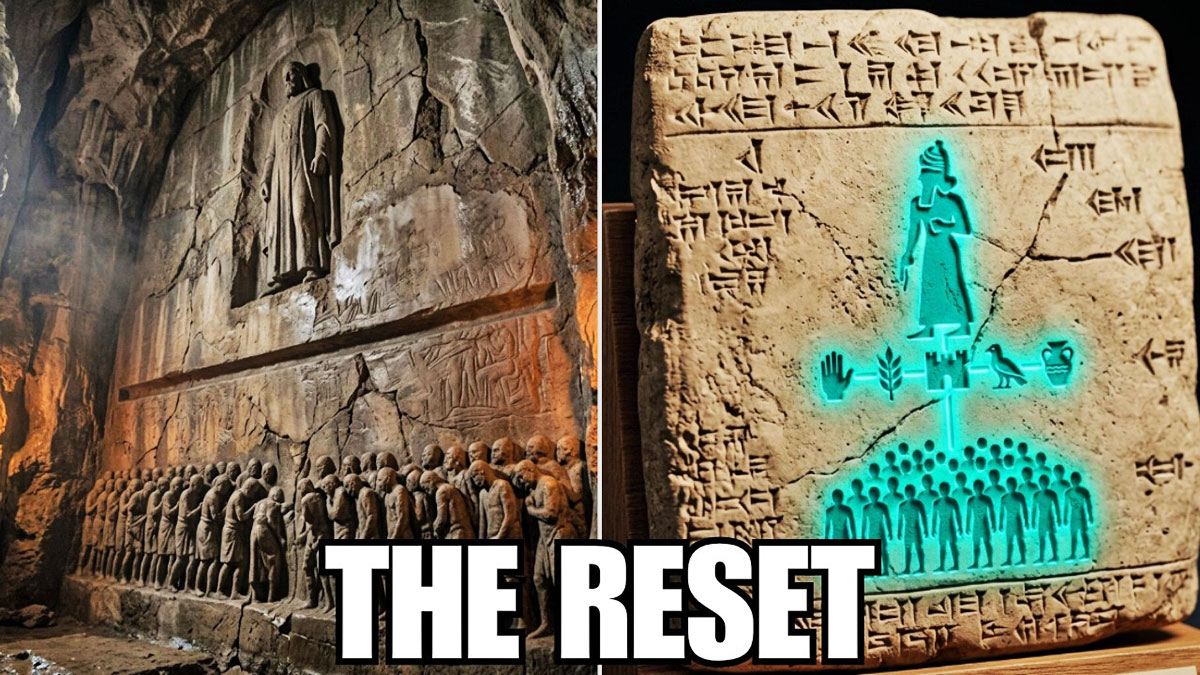
of it pressed into a single broken clay tablet that
almost no one outside a few museum basement has ever
read in full.
It
describes a war fought on this planet, over this planet,
thousands of years before the first city we are told to
call the start of history.
And
now that tablet has a working translation. It names the
side that won the second war for Earth.
It
describes in flat and unemotional language exactly what
the winners changed the moment the last weapon went
silent because for them winning was never the point.
Rewriting us was to understand what that tablet is
actually saying. You have to set aside almost everything
you were taught about where but because it starts the
story far too late.
The
version we inherited begins with mudbrick cities in
southern Iraq with farmers and priests and the slow
invention of writing.
The
tablet begins somewhere else entirely. It begins withthe
sky and with the beings the Sumerians insisted came down
out of it.
The
tablet itself is unremarkable to look at.
A
slab of baked clay cracked across one corner covered
edge to edge in the wedge-shaped script we call
ununiform.
It
looks like a thousand other tablets that record grain
shipments and temple debts. And that is part of why it
went unread for so long.
The
people who could translate the accounting tablets found
this one and set it aside because what it seemed to be
saying did not belong in any timeline they were prepared
to defend.
It
was easier to file it as a religious text, a piece of
temple propaganda, a story the priests told to keep the
population in line.
But
a myth does not usually read like a report.
It
does not usually list who did what to whom, in what
order, and what the outcome was measured in. This one
does.
And
when you stop treating it as scripture and start
treating it as a record written by someone who was there
or who spoke to someone who was, the whole thing changes
shape in your hands.
The
Sumerians called them
the Anunnaki.
The
name itself is usually translated as something close to
those who came down from the heavens to the earth.
These were not gods in the way we use the word now... |