|

by Frank Bergman
October 16, 2025
from
SlayNews Website
Similar report in
Spanish
Bill Gates's vision of controlling
the global food supply through
synthetic "meat" is crumbling
before his eyes.
Beyond Meat, once the darling of the plant-based protein
industry and valued at nearly $8 billion, is now virtually
worthless. The fake meat industry has been exposed as a Wall Street
bubble with no consumer appetite.
On Monday, the company's stock plunged 50 percent after it unveiled
a desperate plan to swap debt for new loans and flood the market
with hundreds of millions of new shares.
The move bought
Beyond Meat more time to pay
its bills but came at the expense of investors, who were left
holding an ever-shrinking stake.
The crash follows another steep 35 percent nosedive on September 28,
when the CEO begged investors for more money. Together, the twin
selloffs have gutted the company's value.
Once a market star, Beyond Meat is now worth just $79
million, barely a rounding error compared to its debt load of $800
million.
Analysts say the collapse isn't just about Beyond, however.
The company's failure is a reality check for the entire fake
meat industry, long propped up by celebrities and
globalist billionaires like Gates.
"Beyond Meat suffers from taste and texture
issues, high prices, and perhaps an 'ultra-processed food'
image," said
Jerry Thomas, CEO of Decision Analyst.
"The chances of the company surviving are meager."
The Rise and Rapid Fall of Fake
Meat
Beyond first hit grocery shelves in 2013, selling $10 packs of
meatless patties branded with a cartoon cow in a cape.
By 2019, the company had become the face of the globalists'
"meatless future," hailed as the climate-friendly replacement for
cattle farming.
Its
IPO stock price soared more
than 350 percent, with fast food giants scrambling to test the
craze.
McDonald's added Beyond patties, Dunkin' launched a
breakfast sandwich, and Burger King hyped the "Impossible
Whopper."
But reality soon bit back.
Consumers rejected the products, citing
taste, price, and distrust
of their heavily processed nature.
It also emerged that the products were up to
twenty-five times worse for the environment than real meat,
putting off the industry's target customers.
McDonald's and Dunkin' quietly dropped the options after sales
collapsed. Only Burger King still offers its plant-based Whopper.
Neil Saunders, managing
director at
GlobalData, said in a
statement:
"The problem for Beyond Meat is that
the company is not living up to its own hype.
"There is a market for fake meat, but consumers are broadly
skeptical of the category as it is not seen as particularly
natural and is viewed as being highly processed."
WEF's "Eat the Bugs" Agenda
The failure of Beyond Meat is also a blow to the World
Economic Forum's (WEF)
so-called "Great Reset" agenda.
The WEF has openly promoted replacing
traditional meat and dairy with synthetic proteins and even
insects...
For years, the WEF has urged governments and
corporations to steer consumers,
away from beef and pork and toward lab-grown
"meat," plant-based "substitutes," and insect-based proteins,
pitching these so-called "foods" as a "sustainable" solution to
"climate change"...[sic]
WEF white papers have declared that,
by 2030, people will "own
nothing and be happy," a vision that includes global
dietary control.
Bugs, synthetic proteins, and Gates's patented
fake "meat" products were supposed to replace ranching and
traditional farming, industries the elites have smeared as
"unsustainable."
But just like the push for electric cars and wind farms,
reality has undercut the utopian narrative...!
Consumers have rejected insect burgers
and cricket powders just as they are rejecting
Beyond Meat.
Gates's Farmland Monopoly
Source
The fake meat collapse also intersects with
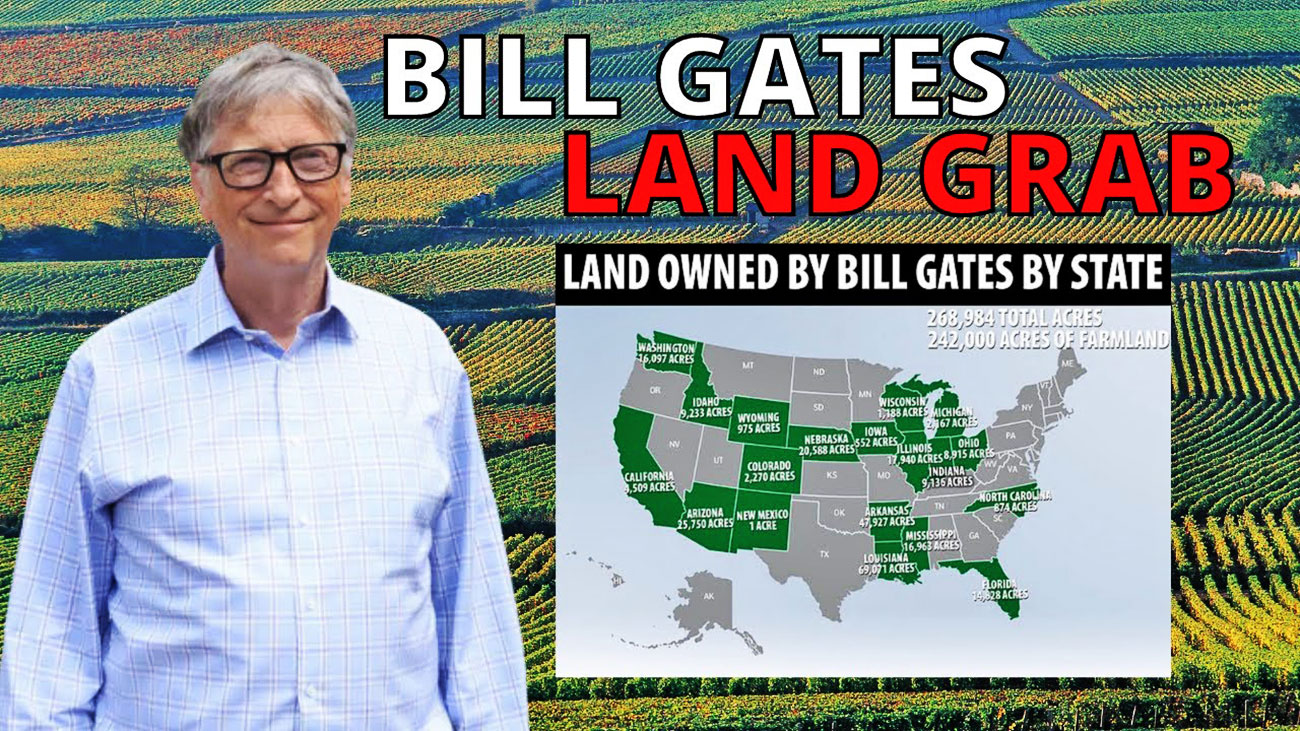
Bill Gates's land grab...
Gates is the largest private farmland owner
in the United States, quietly buying up hundreds of thousands of
acres.
Critics argue he is positioning himself to dictate the food
supply, shifting farmers away from beef and crops toward his
synthetic, globalist-controlled alternatives.
By controlling farmland and simultaneously
investing in fake meat and lab-grown proteins, Gates
hoped to engineer the market.
Instead, Beyond's collapse shows that people are unwilling to
abandon real beef, real dairy, and traditional farming for
elite-engineered replacements.
Beyond Meat's collapse is more than
a business story:
It's proof that
the globalist fake food
agenda is falling apart.
Despite billions in hype, corporate endorsements,
and media promotion, Americans still prefer real food over
Gates's ultra-processed experiments...
The company once pitched as the future of food has become a
cautionary tale:
when elites try to re-engineer human diets,
consumers push back.
|